Showing posts with label Gerry Conlon. Show all posts

Wednesday, 1 October 2014

INNOCENCE INNOCENCE CRY INNOCENCE INNOCENCE #JFTC2


First of all, I would like to thank everyone sincerely, who worked so hard for the release of Marian Price and Martin Corey both in Ireland and overseas. I am sure you're commitment did make a big difference and we are all happy about the outcome. Well done!

The case of the Craigavon 2, has been dragging on now over several years and Gerry Conlon of the Guildford 4, who is now deceased, was a passionate supporter of their cause. I knew Gerry sufficiently well enough, to know, that these two young men were genuinely innocent, before Gerry would get involved.

However, I was so weary over my lifetime campaigning, in both Ireland and England for innocent Irish political prisoners, that I just needed a break and decided to leave it to a younger generation, to take up their cause. Indeed many like me, are tired and would like to walk away, but the relentless injustices, just seem to never cease with the British in Ireland.

Like the Marian and Martin campaigns and I don't wish to be critical, I am frankly a little surprised by the photography used. I am frankly angry at all those careerist politicians, who rose to power on the backs of the hardship of Ireland's so many political prisoners and they appear to have done so very little, for the cause of all those interned without a proper trial, strip searched and of course, all those innocents who are used as political and policing scapegoats, for an inherently, rotten system.

Innocent young people, in every generation, since the foundation of both scum states in Ireland, have been incarcerated over the last Century and it still goes on into the 21st century. People who would otherwise, be just happy to get on with their everyday lives, are dragged back into it, time after time, year after, generation after generation. What a terrible waste of energy, of the best people, this island has to offer. We are too small as an island to make a difference on our own, in matters like this peacefully, while some of our best, over many generations, have emigrated. We need all of their help and their succeeding generations, as the British Government, seem hell bent, on creating the conditions of injustice, division and keeping them alive, that generates so much anger and bitterness. We need your help to deal with it, in a proactive, rather than reactionary way. Below is an explanation of the matter. Again thank you all so much for your help in the past and please help make this matter as international as possible,because there is massive political censorship, in both Ireland and Britain on these matters and the corporate media carries considerable disinformation on Ireland. 

beir bua! brion


Our Duty To Support The Craigavon Two #JFTC2

By  JULIANICHIM      

The illegal and criminal incarceration of the Craigavon Two by the British State is an example of everything that
is wrong with the British occupation in the north of Ireland. While the leadership of SF is currently meeting with
the commander in chief of British death squads and having tea and biscuits, the Craigavon Two are  sitting in a cell in
Maghaberry deprived of all basics rights, the most recent victims of the British Injustice system.

Their case and conviction, based on secret evidence, Diplock Courts,witness tampering and intimidation demonstrates that not much has changed since the signing of the GFA and the injustice of their incarceration is not just a crime against
them but rather an attack on justice and human rights of ALL people in the occupied six counties.

Despite the fact that their appeal has discredited any and all accusations against them, they are still sitting in
jail almost one year after this “awaiting a decision” in other words being continuously punished for their real crime, their politics. Like Price, Corey and many others the British state is trying to break them and break the movement by targeting all who are political but in this they will fail!!!

In J.P. Woottons own words (in a surprise letter that I received) he states(all spelling mistakes are mine):
“While I am confident…we will be back home again to our families and communities, it must be recognize that
this type of injustice is merely a symptom of a cruel and unjust system. Unless this is abolished it will continue
to affect more people. Take for example Gerry Conlon, Who has supported us in our quest for justice, he himself faced a similar outrage many years ago and here it is, happening again. Unless we treat the disease, the symptoms
will always reappear……If one good thing could come from all this I hope is that the real nature of the system
we live under is clearly exposed.”

It is clear to all those who are watching what is occurring under the occupation that the nature of the occupation has not changed, and any who speak out will be brutalised and criminalized and as such all who believe in the ideas of justice and human rights have an obligation to speak out and oppose this miscarriage of justice as well as to hold
the British accountable. I ask people to write to the Craigavon Two as well as contact whatever representative of British Injustice is in your area to demand their freedom now and demand and end to the illegal kidnapping of Irish Republicans by the British state.

For more info on their case please check out

http://www.justiceforthecraigavontwo.com

Those in KKKanada please contact the British Consulate 416 593 1290

Write to the Craigavon Two

Brendan McConville

John Paul Wootton

Maghaberry Prison
Upper Ballinderry Road
Lisburn, Co.Antrim
North of Ireland
Bt28 2Pt


BACKGROUND


On the 9th March 2009 Police Constable Stephen Carroll was shot and killed while responding to an emergency 999 call in the Craigavon area. The following day police arrived at the home of Brendan McConville, a local republican, and placed him under arrest. Later that morning, John Paul Wootton, another republican from the area, was arrested in the Craigavon area and had his vehicle seized.

Both men were taken to Antrim for interrogation where they, along with a number of other individuals, were detained while the vehicle owned by John Paul Wootton was taken to Maydown Barracks in Derry for examination. Some days later police recovered the weapon used in the shooting from the rear garden of a house in the Pinebank housing estate in Craigavon. Around the same time a brown jacket with traces of DNA from Brendan McConville amongst others, and a residue which was claimed might have come from a firearm, was taken from the boot of the vehicle owned by John Paul Wootton.

Based on this finding, and under intense pressure to get results, police focused their attentions on these two men and set about constructing a case against them. The reason the police were under so much pressure was that Constable Carroll was the first police officer to be killed since the Good Friday Agreement. Adding to the pressure was the fact that this shooting took place within days of an attack on Masssereen Barracks where two British soldiers were killed.

It later transpired that the car owned by John Paul Wootton had been subject to covert surveillance at the time of the attack by means of a tracking device which had been hidden either in or on the vehicle by the British Army. This device provided data on the movement of the vehicle around the time of the shooting. It would later come to light that data from this device was wiped while the device was still in the possession of the Army. No one could explain why this had happened. The remainder of the data was used to construct a circumstantial yet arguably weak case against the two men.

Eleven months after the shooting a local man contacted the police in the middle of the night on Valentines night and, under the influence of alcohol, claimed to have seen Brendan McConville close to the area from which the shooting occurred on the night of the shooting. It should be borne in mind that in the eleven months from the shooting to this man’s statement, Brendan McConville and John Paul Wootton had been charged with the shooting and their identities were widely broadcast throughout the media.

This man, known only to the court as Witness M, lied continuously under oath while giving evidence. He was adamant that he had no problems with his eyesight and when asked if he had been prescribed glasses he claimed that he did occasionally wear glasses, but only as a fashion item. It was only on day two of his testimony, when confronted with evidence acquired by Brendan McConville’s legal team from an optician in Lurgan where he had previously underwent an eyesight examination, that he conceded that he had been prescribed glasses but this time claimed that they were just for reading. Evidence later given in court would show that in fact Witness M suffered from both astigmatism and short sightedness and could only identify facial features up to half the distance at which he claimed to identify Brendan McConville. At the conclusion of the case the single judge, relying heavily on circumstance and inference, found both men guilty and sentenced them to life in prison. Both men continue to maintain their innocence and with an appeal fast approaching they ask that the facts be made public so that their quest for justice does not develop into another long running saga like that of the Guilford four or the Birmingham six.


News, INNOCENCE, CRY INNOCENCE, #JFTC2, Craigavon Two, Craigavon 2, Ireland, Gerry Conlon, Brendan McConville, John Paul Wooton, Wootton, #BoycottBritish

Sunday, 22 June 2014

GERRY CONLON BELFAST CHILD


Personal by Brian Clarke

The untimely death of Gerry Conlon, like the deaths recently of many people, intimate with some very important real history of the troubles, has rattled more than a few skeletons in my cupboard and I am quite sure many others. As anyone who has walked in the twilight zone, close to the reality of the Dirty War in British Occupied Ireland will tell you, it is extremely difficult to analyze facts from the fiction of this time, to separate the mowers from the growers and to connect the dots backwards. I am sure that many who have been under constant surveillance or the victims of Britain's dirty tricks, black ops and black propaganda will vouch for, it is constantly surreal and can drive the mentally strong, to drink drugs or insanity. The British operate on the basis of there being many ways to skin a cat.

A recent example of this personally, is that in the course of taking our dog for a walk with my wife, I have been almost run over, at the precise same spot, three consecutive nights in a row, while returning outside our home, by a motorbike at great speed, with the same unlit side car. I have had similar experiences regularly and consistently over the last few months. I can either put this down to paranoia or that certain leading figures around the Dirty War in Ireland believe I have secrets that they would prefer were not told.

I am but a grain of sand in the grand scheme of things but I am satisfied, that certain leading people in what was known as the Provisonals, have taken more than a passing interest in my affairs and have gone to great lengths to investigate, as have British spooks regularly. All of this is a very long story and I will not bore readers with the details or interfere in the private lives of others, I once counted as friends and family but there is considerable evidence, that the feral secret service of Britain, have besides false flag operations, spun elaborate webs for show trials and  secret state hysteria and propaganda. 

As the old saying goes, no one has a monopoly on the truth, there are many aspects to it but the other expression, that the truth is stranger than fiction, is equally valid. Many supposed historians of the people, engage regularly in subjective narratives and  self confessed censorship of critical important historical events, in the history of the risen Irish people, which distorts and disguises the essential facts, which I might remind them, also extends far beyond Belfast. This in my humble opinion is a grave crime against humanity. Those who engage in it, know who they are, mostly. 

All of this surreal reality, at one point, drove me to serious drinking, during which time, I made a very serious error, that I will eternally regret and what I can only hope, people will try to forgive, on the basis of my sincerest apology and efforts to amend. I haven't taken a drink for close to 28 years now or smoked for many, so I should be of reasonably sound mind in my observations. I can tell anyone reading, that the events in Ireland related to the ongoing troubles, for anyone intimate or emotionally involved with them, will drive most people insane, as it did in my case. There are many people who have died recently, who have taken secrets to their grave, to the considerable relief of political power brokers. I think the best way to describe the events I have witnessed in my lifetime in British Occupied Ireland, is very similar to Child rape.

As I once saw Sinead O'Connor describe it, Irish people are one of the most innocent races of people on the face of this Earth. Like most colonized peoples, they and their children have been raped, mentally, physically and spiritually, systematically for hundreds of years by the inheritors of the Roman Empire, the Roman Catholic Church and the British Empire. Like the child who has been beaten regularly by its parent, it is passed on to his younger brothers or sisters, until it reaches the family pet. It is very sad and distressing and as recent revelations in Ireland confirm, it is likely a pandemic, to the point of destroying the soul of Ireland. 

Like alcoholism it is a secret disease and will not be healed without the truth and consequently will have to be treated as a disease, first and foremost, I say that as reluctantly as anyone, who is abhorred by the enormity of this wrong but it will not start to heal, until the truth is told.This cannot be done within the environment of British Occupation, because they will continue to do what they have always done for centuries, exploit it to recruit blackmailed informers, provocateurs, politicians, most of the legal profession, etc..  

Note above, I have stated the Roman Catholic Church not the Celtic Church and the British Empire, not the English one. I believe as a result, the whole island of Ireland is dysfunctional, in almost every sense and place. That the ordinary decent working class people of England, as result of raising an army every generation, for their very profitable, war complex industrialists, are mostly militarized and addicted to foreign wars of aggression or piracy. Ireland like most colonized people worldwide, is being raped in every sense of the world on a daily basis. They must unite to remove the chief perpetrator, Britain. Those who don't work for this removal, are now in unjustifiable denial, perhaps for class, monetary or shame based reasons, but they are participating, in the most serious crimes against humanity and their own. Irish politicians and power brokers take note.

During the recent troubles, there have been many devastating bombs in Dublin, Monaghan, Le Mon, Enniskillen, Omagh, etc., which most informed opinion believes, were organized by the British secret services, without leaving their own personal fingerprints.  Many of the leading players in these events, were unwitting leading participants, just like children who are the manipulated victims of paedophiles, who honed the skills of manipulation, growing up or surviving an abusive homes. British secret services have been aware of these matters, for many decades, and they too have honed this in their black op, dark arts. I believe that Gerry Conlon was such a victim from long before he left Belfast. The establishment in London were very aware of all of this and will systematically remove witnesses to these facts. Leading players on all sides of the so called Peace Process, continue to collude in horrific crimes, that are ironically termed sanitized collateral. 

I lived in Gerry's place in London. The events around all of what happened to Gerry, continues to be as surreal today, as I am sure it is for those, who were close to these events all those years ago. Many have died young with the toll, few have survived intact. It is an unrelenting nightmare, that will remain in Ireland as long as the foreign invaders remain. Colonialism is like a bully from the house next door, breaking into you home, raping your wife and children, smashing it, occupying it, refusing to leave and then labeling you a terrorist for resisting. There really is no alternative at the end of the day but to resist. Smart people unite, reject the collaborators and stick together in the struggle to remove war criminals, like the British Empire and their collaborating war criminal, proteges.

Belfast Child
From Wikipedia, the free encyclopedia


"Belfast Child / Ballad of the Streets"


"Belfast Child" is a 1989 No. 1 UK Singles Chart[1] hit single by Simple Minds from their album Street Fighting Years. The single is also known as the "Ballad of the Streets" EP, highlighting both "Belfast Child" and "Mandela Day" (originally its B-side).


The song uses the music from the Irish folk song "She Moved Through the Fair", but has completely different words.

Jim Kerr recalled in 1000 UK No. 1 Hits why he used the melody, "I first heard the melody (of She Moved Through The Fair) a few days after the Enniskillen bombing (when a bomb planted by the IRA exploded during a Remembrance Day service at Enniskillen in County Fermanagh, killing 12 people and injuring at least 63), and like everybody when you see the images I was sick. In the second part of the song, I'm trying to relate to people in Northern Ireland who lost loved ones. I'm trying to talk about the madness, the sadness and the emptiness. I'm not saying I have any pearls of wisdom, but I have a few questions to ask".


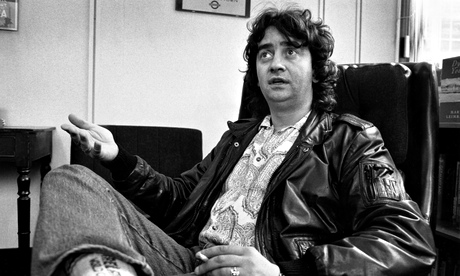
After finally gaining his freedom, Conlon underwent psychiatric treatment for post-traumatic stress disorder. Photograph: Frank Martin/picture library

I suffer from nightmares and have done so for many years. Strangely, I didn't have them ­during the 15 years I in spent in prison after being wrongly ­convicted, with three others, for the 1975 Guildford and Woolwich pub bombings. It was almost as if I was in the eye of the storm while I was inside, and everything was being held back for a replay later in my life.

Our case is well known now as one of the first of the big miscarriage of ­justice stories, and I am often contacted by ­people who, like me, spent many years in jail for something they did not do. People ask whether a case like ours could happen today. Of course it could. I know of innocent people still behind bars and I know there are echoes of what happened to us in cases that are still coming to light today.

What happened to us, after all, is not dissimilar to what happened toBinyam Mohamed, the British resident held for many years in Guantánamo Bay. Like him, we were tortured – guns put in our mouths, guns held to our heads, blankets put over our heads. The case against us was, like his, circumstantial. And like him, we tried to get people to ­listen to what had happened to us, and it took years before our voices were heard outside.

What has been happening in Britain since 2005 has created the same sort of conditions that helped to lead to our arrest. The same procedures are being followed – arrest as many as you can and present a circumstantial case in the hope that at least some of them will be convicted. The one difference, so far, is that juries seem less inclined to convict. But if there is another series of bombs, who knows if that will still apply?

It is still hard to describe what it is like to be facing a life sentence for something you did not do. For the first two years, I still had a little bit of hope. I would hear the jangling of keys and think that this was the time the prison officers were going to come and open the cell door and set us free. But after the Maguire Seven (all also wrongly convicted) – my father among them – were arrested, we started to lose that hope. Not only did we have to beat the criminal justice system but we also had to survive in prison. Our reality was that nightmare. They would urinate in our food, defecate in it, put glass in it. Our cell doors would be left open for us to be beaten and they would come in with batteries in socks to beat us over the head. I saw two people murdered. I saw suicides. I saw somebody set fire to ­himself in Long Lartin prison.

The first glimmer of home did not come until my father (Guiseppe Conlon, also wrongly convicted and posthumously cleared) died in prison in 1980. My father's last words were "my death will be the key to your release". That proved to be the case, because that was when a number of MPs started to become involved.

It was a terrible price to pay. What many people do not realise is how difficult it is to have your case reopened. It was in 1979 that I wrote to Cardinal Basil Hume about our case and he came to see me in prison. I remember it well: I had been playing football and I was called in to see him – he looked like Batman in his long cloak and he was great, but it was still another 10 years before we were free – even although the authorities knew full well by then who had carried out the bombings and that it was not us.

Since I came out of prison, I have suffered two breakdowns, I have attempted suicide, I have been addicted to drugs and to alcohol. The ordeal has never left me. I was given no psychological help by the government that had locked me up, no counselling. Since our case there have been perhaps 200 others we have heard about of innocent people being released, Sean Hodgson being the latest, and probably a few thousand others that have not had the publicity. I would say the vast majority have almost certainly had problems with drug addiction, have been estranged from their families and disenfranchised from society – yet they have been offered little in the way of help. The money we received in compensation went quickly as a lot of hangers-on arrived on the scene.

I am 55 now and I was 20 when I was arrested so what happened to us has taken up 35 years of my life. I am now with the girl that I met when I first came out of prison and I owe her an enormous amount of gratitude. ­Others have not been so lucky. I hope that what ­happened to us will always act as a reminder to people never to jump to conclusions, whatever the nature of a crime, and never to ignore the people who are now trying to get their voices heard so that the nightmare does not happen to them.


Saturday, 21 June 2014

GERRY CONLON DEAD IN THE BRITISH SCUM STATE OF OCCUPIED IRELAND


The Guildford Four: in the name of justice

As one of the Guildford Four, Gerry Conlon spent 15 years in prison for an IRA campaign he knew nothing about. More than 24 years later he has died still fighting for justice for others like the Craigavon Two.

Guildford Four - Gerry Conlon - in the name of justice
Image 1 of 2
Gerry Conlon: 'The Government knew we were being tortured' 
There are moments when I lose sight of Gerry Conlon through the fog of countless cigarettes smoked during our four-hour interview. He is in Liverpool to campaign for other victims of miscarriages of justice, and we meet in a rented apartment in the city's Chinatown. We are joined periodically by others who are there to support the cause. Each adds views on the various injustices they have suffered and each contributes to the cloud of thick smoke filling the room.
In 1974, the then 20-year-old Belfast-born Conlon was arrested over the IRA pub bombings in Guildford which killed five people. He had never been to Guildford. But along with the three other members of the group that became known as the Guildford Four, Conlon was sentenced to life in prison on the basis of false confessions made after days of mistreatment by Surrey police.
Conlon's father, Giuseppe, was also imprisoned as part of a group known as the Maguire Seven. The basis of their convictions was forensic evidence - later discredited - which the prosecution claimed proved they had handled explosives used in the bombings. The group, includingPatrick Maguire who was just 13 when he was arrested, were sentenced to between four and 14 years in prison.
In 1989 the Court of Appeal quashed the convictions of the Guildford Four when it was found that crucial alibi evidence - proving Conlon could not have done the bombings - had not been shown to the defence. There was also evidence of police collusion on fabricating the statements - the only evidence produced against them at the original trial. The Maguire Seven later had their convictions overturned, but by this time they had all served their sentences and been released, except Giuseppe Conlon who, already in failing health when he was arrested, died after five years in prison.
The Gerry Conlon that stood outside the High Court in London after his release was a triumphant and charismatic figure. He told massed press and supporters that he was an innocent man who had spent 15 years in prison for a crime he didn't commit. He vowed to clear his late father's name and fight for the release of others, like the Birmingham Six and the Bridgwater Three, who had been wrongly convicted.
This is the Conlon that played repeatedly on the news bulletins. And this is the man portrayed by Daniel Day-Lewis as the star of In the Name Of the Father, the partly fictionalised 1993 film based on Conlon's autobiography. But Conlon's feelings of triumph were short-lived and he was far from ready for the outside world.
"If you spend a few weeks in the Big Brother house, you get counselling when you leave to prepare you for life outside. I spent 15 years being moved from one terrible prison to the next, being treated like I was lower than the worst kind of paedophile. When I got released I was given £34.90 and told to go."
When long-term prisoners come up for release, they are slowly reintroduced to the outside world, with supervised day releases, then weekend releases. When wrongful convictions are quashed, prisoners leave straight away, with no preparation for how to cope with life on the outside.
Conlon was initially on a high after his release. He put everything into making good his pledge to get the convictions of the Birmingham Six overturned. After months of frantic campaigning, he went back to his mother's house in Belfast to take a break when suddenly the impact of what he had been through hit him.
"I came out of the bathroom and my father, who'd died years earlier, was sitting on the settee in prison pyjamas and a prison dressing gown. Since then I haven't been able to get the terrible images out of my head.
"I never had one suicidal thought in prison. Now I have them all the time. I haven't been able to have a relationship, I've turned to alcohol and drugs, it's a constant waking nightmare."
More than twenty years after his release, the man sitting in front of me is no less eloquent and determined than the angry 35-year old who stood outside court, but his mind has never escaped from prison. He speaks lyrically, without pause, recalling full names, exact dates and locations of the grim landmarks of his ordeal. But at every turn he is visibly haunted by the terrible memories that won't stay in the past and the injustices which continue in the present.
Conlon believes that because their case caused such political embarrassment, there was what he calls a "whispering campaign" around Westminster after their release. That although their conviction was quashed, the authorities wanted people to think they were freed on a technicality, but may actually have been guilty.
He is angry that nobody was ever punished for their wrongful imprisonment. He is also convinced that it was not just the police that lied to get them convicted. He believes the conspiracy to jail innocent people went right to the top.
"The Government knew, right from the start, that we were innocent. They knew we had nothing to do with the IRA, but they didn't care. That's why they have a 75-year immunity order on our case. Because they want all the people involved to be dead before they release our files."
Because this cloud of suspicion was allowed to remain, Conlon was denied access to psychiatric treatment. It was not until 2007 that he began getting regular therapy, and even then only one hour a week. This has helped, but is far too little, coming far too late, for someone who suffered trauma on the level that he did.
"I have what they call a disassociation problem: something comes in to my head and I'm back in prison. I'm back in Wakefield, being tortured... hands behind my back, gun in my mouth, it doesn't go away.
"The reason I took drugs and alcohol was because I couldn't deal with what my mind was projecting. To get some relief from the nightmares, day and night.
"But then the nightmares started breaking through with a sledge hammer, and once that happened it was a question of giving up the drugs and fighting to get professional help."
The effects of his wrongful conviction went far beyond Conlon and the others who were wrongfully convicted. Prison visits were supervised and any personal details discussed would be spread around by mischievous warders, so they stuck to discussing pleasantries.
"I'd spent months in solitary, in the dark. I'd been beaten, had people defecating in my food, putting glass in my food. I'd seen people murdered. Yet I had to tell my family they were treating me well.
"When you come out you find the relationship with your family during your time inside was built on falsehoods. I didn't know that my mother and my sisters were being strip searched and abused when they came to see me. You can't calculate the devastating effect it has on your family."
As we are speaking Conlon sees a news report on the TV screen behind me about the treatment of the former Guantánamo Bay detainee Binyan Mohamed.
"Nothing has changed. The Government knew we were being tortured in the 1970s. When I hear about Binyam Mohamed it all comes back. My mind flashes back to the beatings, the threats and the mental cruelty I suffered at the hands of the police."
Conlon has become frustrated by the lack of political will to help victims of miscarriages of justice. The Miscarriages of Justice Organisation (Mojo) was formed by Paddy Hill after he and other members of the Birmingham Six had their convictions quashed in 1991. Mojo is campaigning to have a trauma centre set up dedicated to helping miscarriage of justice victims after they leave prison. They get sympathetic noises from politicians but little action.
In 1997, Conlon was given half a million pounds in compensation. Giving money to victims of miscarriages of justice is likened by Conlon to giving them a "bottle of whisky and a revolver".
"They may as well say: 'here's the money, now go and kill yourself.'
"They gave me £546,000 - for taking me, torturing me and framing me; taking my father, torturing him and having him die in prison; then leaving me sinking in the quicksand of my own nightmares."
In 2005 the Guildford Four and the Maguire Seven finally got a personal apology from Tony Blair. Conlon told the then Prime Minister that the apology would only mean something if it came with more help for the victims.
"Blair turned to [parliamentary private secretary] David Hanson and said: 'David, get on to this right away.' Since then we've had no help. We followed up on Tony Blair's promise and were basically told to get lost. He lied to us - the apology means nothing."
"If there was a trauma centre, within a year, you could probably be living a normal productive life rather than being haunted by nightmares."
But picking up the pieces of those who have already been wrongly convicted is cure, rather than prevention. Seeing the mistreatment of suspects and innocent people going to prison makes him feel that Britain has not moved on since the 1970s.
"Back then it was the Irish, now it's Muslims. But nobody is safe, one of the Guildford Four was English. Everyone thinks this happens to other people, but it's closer than you think.
"Who's to say you're not going to be next. Look at Sally Clarke, she was a solicitor and she drank herself to death after she was wrongly convicted of killing her two sons."
What is striking about Conlon is that while he is angry, he is amazingly lacking in bitterness. He is clearly suffering greatly with the horrors of 15 years being treated "worse than a twisted child killer". He wants his case files released; he wants proper post-sentence care for other victims of miscarriages - but he is not consumed by hate.
A common theme he returns to is how trauma counselling is given to people who have experienced what, to him, would seem fairly mild. But every time he mentions another group getting "the best counselling available", he pauses, and slowly emphasises, "and so they should, and so they should. But what about us?"
Conlon is now "full of" psychiatric drugs, and his terrifying flashbacks continue. But through the pain caused by his years in prison he finds some purpose.
"I want my father's death to count for something. It's the hardest thing you can imagine to be put in prison for something you didn't do. If I can do something to stop it happening to other people my life will have meant something."


Friday, 18 January 2013

In the Name of Our Sister


Miscarriage of Justice victim Gerry Conlon depicted in the film with this article, has spoken out in support of Marian Price.Marian has been politically interned without trial since May 2011, after then Viceroyal for British Occupied Ireland, Owen Paterson revoked a non existing prison release licence, after a Royal pardon was either mislaid or shredded by the British.

There is considerable British censorship on this matter currently, so you are asked to re-share, pass it on via Facebook, retweet on twitter or share to your friends for a peaceful resolution of massive injustice in Ireland currently, despite a peace process that the British Tory Government is dismantling systematically, simply because there is no money in peace.

Judge Barney McElholm has said that "private, appropriate, secure and suitable accommodation" could be made available by hospital authorities, for a secret trial by her death bed, where Marian Price is essentially dying, after previous psychological torture of over one year of solitary confinement and previous force feeding for approximately six months.

Marian Price, who held up a piece of paper on a windy day, from which an IRA volunteer read, at a traditional Easter Commemoration ceremony, has been deteriorating mentally and physically in health, at an alarming rate since her political internment..Her lawyer Peter Corrigan told Mr McElholm, that it would be "wrong to hold a preliminary inquiry hearing in a pseudo court situation in hospital" and he said the charge which his client denied should be dropped.

He said, "The deterioration in her physical and mental health has been exacerbated by the prosecution of the charge against her." A prosecution lawyer claimed that if "all the appropriate measures" were in place, there was no reason why the trial could not proceed. The judge adjourned a decision but promised he would give it "as soon as possible". The Judge said, "I want the doctors to be advised about the nuts, bolts and practicalities of what such a hearing would be. I want doctors to understand she could not give evidence nor could she be cross-examined. He further said, "I want the doctors to be advised of the exact type of hearing and for them to come to a conclusion about her ability to take part from a medical viewpoint."

Miscarriage of justice victim Gerry Conlon, a member of the Guildford Four, who spent 14 years in jail after being falsely convicted of a bombing in England was at the court for the hearing. He said keeping her interned was an abuse of process. He said: "To think that a process of law is being usurped by politicians in order to hold a woman, without her lawyers being able to see the accusations against her, is an abuse of justice, it is a human rights issue.

"If there is evidence to say someone has committed a crime it should be placed before the court, their lawyer should have access to it and the accusations should be made open and public. Justice has to be fair, open and transparent and that it is why I am here. It is not fair, it is not open and it is certainly not transparent."

Marian Price is just one of several Irish people currently politically interned in British Occupied Ireland during which time lawyers have not been allowed to see any of Britain's ‘alleged’ evidence.

• She has been kept in solitary confinement in a ‘male’ high security prison
• She is effectively interned without a trial, sentence, or release date.
• She has not been given any timescale for any investigation.
• She has not been allowed to see the evidence that the state claims to have
• Her release has been ordered on two occasions by judges. However, on both occasions the British Vice royal has overruled those decisions.
• The Vice royal claims they ‘revoked Marian’s license, ’despite Marian never being released on license. She was given a Royal Pardon.
• Marian’s Royal Pardon has ‘gone missing’ from the home office (the only time in history). The British Vice royal has taken the view that unless a paper copy can be located – it must be assumed that she does not have one. It is generally agreed that MI5 shredded her majesty's pardon.
• Despite no ‘license’ existing for her release from prison in 1980, it is the non-existent licence that is being used to keep her in prison.
• She can only be released by Theresa Villiers the current Vice royal responsible for Marian's internment.

Recently the charges against Marian were thrown out of court because of a lack of evidence. Now the very same charges have been re-instated against Marian again before the same Judge.In secret courts, being introduced, MI5 the British secret services are pushing for secret trials, with secret evidence by secret witnesses, that the defendant's appointed lawyer is not allowed to know, see or refute. The length of sentence is also kept secret, under penalty of a long jail sentence by Britain's Official Secret's Act. This trial of Marian Price is believed to have already happened in secret by the UK SS, with the public hearings and showtrial being simply a public rubber stamp, for the injustice against Marian Price in of British Occupied Ireland.

Gareth Pierce, a lawyer who successfully campaigned for the release of the Guilford 4 after 10 years of campaigning has commented, that the bureaucrat "is giving himself/herself the powers of a dictator". Detentions without trial and house arrest, have often been used by brutal dictatorships, who learned their techniques from their former British colonialist masters.This internment in British Occupied Ireland is a thin end of a wedge. At some stage, anti-irish measures, will also be extended to Britain itself, to includes political activists, trade unionists, etc.

There has been considerable opposition to internment, from within the British legal profession, with Ian MacDonald QC, who was-appointed to a panel of lawyers, to represent suspects in secret courts, resigning, saying; "My role has been altered to provide a false legitimacy to indefinite detention, without knowledge of the accusations being made and without any kind of criminal charge or trial. Such a law is an odious blot on our legal landscape and for reasons of conscience I feel that I must resign".

If the Guildford Four, Birmingham Six were wrongfully convicted in open court, what chance has an innocent victim in secret trials, with secret evidence by secret witnesses, that the defendant's appointed lawyer is not allowed to know, see or refute in British Occupied Ireland.