Perhaps because the industrial revolution never happened in Ireland, preceding my political education, I have always had a greater affinity with Tone's term of "the people of no property," rather than the Marxist term "working class." However there is much from my experience, that would confirm Trotsky's observation, "the working class could only trust its own forces in order to achieve." A good example of this, would be the lack of 'consciousness' in the Provo leadership of rural, South Armagh, which comes from my experience of working in Sinn Fein's offices in Newry, dealing with every day issues of the people of Newry. One particular incident stands out for me, with regard to all of this. When Tom Lonergan and I set up the offices in Newry, we were aware of various anti-social issues in the area, as a result of more than three generations of gerrymandered, massive unemployment, of up to 80%, created by the the sectarian, Orange, Stormont Junta. The offices were set up, in the wake of the death of the 10 hunger strikers and the election of Bobby Sands MP, for the purpose of garnering and organizing the people in the area, to effect a revolution in Ireland. Prior to the Hunger Strike and during the dirt strike, a few republican lads and myself, were protesting on Hill Street, outside the offices of Rory McShane, a prominent Social Democrat politician, who regularly passed us, with his fellow suits, sniggering at our protest. These SDLP suits, have now been replaced by Provo suits, who now snigger, at young people's protests, as happened with my fallen comrades on those protests and myself. Because of the re-drawing of the constituency boundaries, Newry became part of the South Armagh constituency, and as a result, heavily reliant for authentic leadership, politically, to South Armagh. One day an ex-IRA volunteer and ex-POW of Long Kesh, who had helped us politically with our work, came into our office and told me privately, that a supergrass, was about to break in Newry, which would betray many volunteers in the area, resulting in long terms of imprisonment for volunteers. Because my work in the area at the time, was being undermined by Belfast leadership, I asked my colleague, to go out to the leadership in South Armagh and explain all of the details carefully and mention, that I asked him to do so. Later I asked him about the results and he told me, that he was told, that there was no credibility attached to the report and had dismissed it. As I have previously written, I was considerably annoyed and as a result, went to Belfast, to clarify the matter but found the leadership there, totally inadequate. I had no option but to resign. I have strong feelings about this matter, but I am not getting into the blame game, there is much to go around, what goes around, comes around. People can decide for themselves. All I can do is strongly advise Irish people, to never forget the lessons of our history or we will definitely repeat them, with considerable unnecessary loss of life. Again, I would ask for the sake of future generations, if you feel remotely anything like I do, please share this article, as this will be mostly censored. I have not named the individual concerned publicly and refuse to do so, for the sake of their personal security. An article below from Wikipedia, gives a rough outline of events, approximately six months later. However, I do feel I am entitled to my opinion on the Paul Quinn matter and other killings in the area. A line needs to be drawn under all past crime in the area, including those who have engaged in being informers, and people need to find genuine forgiveness, for misdeeds committed.The problems in Newry, South Armagh cannot be resolved either by party or personality politics, while the British Occupation will exploit this, particularly when people are divided. I believe old Irish Brehon Law should be applied to these killings, to be adjudicated by the elders of the area, in a non-party political manner. Compensation needs to be made to the victim's families. Policing in this area needs to be carried out, strictly by locals, again, in a non-political manner, without any form of fascist violence. Any future informers to the British, need to be expelled from the area. The community needs to unite or be decimated. Because the British created the problem with their artificial border, there is no place for them in this solution and bringing the SAS back into the area, is treachery. Nobody should have a monopoly on smuggling on any part of the border, as everyone in the area has suffered deprivation as a result of being cut off from their natural hinterland and are entitled to supplement their income. People need to resolve this among themselves, as soon as possible, non-violently, without involving the British or outsiders from Belfast. The bottom line is still Brits Out!
Wiki....
Eamon Collins (1954 - 27 January 1999) was a Provisional Irish Republican Army paramilitary in the late 1970s and 1980s. He turned his back on the organisation in the late 1980s and later co-authored a book called Killing Rage telling of his experiences in the IRA. He was beaten and stabbed to death in 1999 near his home in Newry.
Collins grew up in Camlough, a small, staunchly Irish republican town in South Armagh.After finishing school, he worked for a time in the civil service in London before studying law at Queen's University (QUB). At Easter 1974, as Collins walked home to his parents' home in south Armagh, he saw his father being beaten by British soldiers. He was himself badly beaten when he tried to stop them, and both were detained.
Collins never completed his degree at QUB. After working in a pub for a period, he joined the Customs Service of Northern Ireland, located in Newry. Around this time, Collins got married. He and his wife, Bernadette, would have four children. §IRA career.
Collins joined the Provisional IRA at the height of the blanket protest by H-block prisoners in the late 1970s, which sought Special Category Status for republican prisoners. Collins became involved in street demonstrations at the time and was impressed by the left-wing politics of the new generation of republican leadership that had emerged in the late 1970s. He joined the South Down Brigade of the IRA, based around Newry. This was not one of the organisation's most active units, but it sometimes worked with the South Armagh Brigade, which was the most effective of the IRA's command areas. Collins says in his book Killing Rage that he never felt able to kill anyone himself, but instead became the South Down Brigade's "intelligence officer".
This involved gathering intelligence on intended assassination and bombing targets. His planning was directly responsible for at least five killings, including that of Ulster Defence Regiment Major Ivan Toombs. Many of the bombing targets of Collins' unit were of limited significance. For example, they destroyed the public library in Newry and a pub where a police choir drank after practice.
Collins became noted for his hard-line views on the continuance of armed struggle within the IRA and later becoming part of the Internal Security Unit. On the suggestion of the South Armagh Brigade, he became a member of Sinn Féin in Newry. The South Armagh IRA wanted a hard-line militarist in the local party, as they were opposed to the increasing emphasis of the republican leadership on the political over the military wing of the movement. Collins was not selected as a Sinn Féin candidate for local government elections. In part, this was due to his suspicion of the IRA and Sinn Féin leadership, whom he suspected of running down 'the war'. He had a public dispute with Gerry Adams at the funeral of an IRA man killed in a failed bombing, where Collins was accused of calling Adams a "Stick" (a derogatory name for Official IRAmembers, who were considered traitors by Provisional IRA supporters). InKilling Rage, however, Collins denied the claim, suggesting he only accused Adams of taking actions likened to those of a "Stick".
Despite his militarist convictions, Collins found the emotional strain of the IRA campaign, along with the pressure from the security forces, intolerable. On two occasions, he was arrested under anti-terrorism legislation, held in Castlereagh holding centre for seven days, and subjected to 24-hour interrogation. On the second of these occasions, in 1985, the Royal Ulster Constabulary were enraged by the killing, on the day of Collins' arrest, of nine of their colleagues in an IRA mortar attack in Newry. Towards the end of his time in custody, Collins reportedly "broke" and said that he was prepared to co-operate with the police.
In his book, Collins says that the strain of the interrogation exacerbated doubts that he had already had about the morality and direction theIRA campaign. He argues in his book that the republican leadership had already decided that the "war was over" by the mid-1980s and was already manoeuvering Sinn Féin to participate in what later became theNorthern Ireland peace process. §"Supergrass"
Subsequent to his arrest, Collins became an IRA supergrass, on whose evidence the state could prosecute large numbers of IRA members. Collins was held with other paramilitary informers in the Crumlin Road Prison in Belfast. After an appeal from his wife, however, who remained a republican supporter, Collins retracted his evidence against former colleagues. In return, he was given a guarantee of safety by the IRA, provided he de-briefed the organisation on his experience. Collins agreed and was then transferred to the republican wing of the prison.
As a result of losing his status as a protected informer, Collins was then charged with several counts of murder and attempted murder. When tried, Collins was acquitted due to a lack of evidence other than his own confessions, which he had since retracted. He then spent three months being interrogated by the IRA and was eventually allowed to relocate to the Republic of Ireland, but was not allowed to travel north of Dundalk. §Post-IRA life
Collins moved to Dublin and squatted in a deserted flat in the working class Ballymun area of the city. At the time, the area was experiencing an epidemic of heroin addiction and Collins volunteered to help a local priest, Peter McVerry, who ran programmes for local youths to keep them away from drugs. After several years in Dublin, Collins lived in Edinburgh, Scotland for a period, where he ran a youth centre. In 1995, he moved back to Newry. An IRA order exiling him from Northern Ireland had not been lifted but with an IRA ceasefire in operation, he judged it safe to move back in with his wife and children. In 1995, he also appeared on British television to tell his account of his experiences in the IRA.
In 1997, he co-authored 'Killing Rage', with journalist Mick McGovern, an exposé of the IRA and the Troubles. He also contributed to the bookBandit Country by Toby Harnden about the South Armagh IRA. In 1998, Collins gave evidence against leading republican Thomas "Slab" Murphy, in a libel case Murphy had brought against the Sunday Times, over a 1985 article naming him as the IRA's Northern Commander.[5] After his testimony, Collins was heard to shout, "No hard feelings Slab". In the immediate aftermath of the trial, Collins' home was attacked and daubed with graffiti calling him a "tout" (slang for informer). Since his return to Newry, his home there had frequently been attacked. His family home in Camlough was burned to the ground. Threats were made against his children, who were bullied in school. Graffiti was painted on the walls of the streets where his family lived. §Death
Eamon Collins was murdered on 27 January 1999, while walking his dogs near Barcroft Park, Newry. He was stabbed and beaten so badly, that police initially thought he had been hit by a car. One reason is thought to have been revenge for Collins' writings against the IRA and for his court testimony in Dublin against Murphy.[1][6] The Sinn Féin chairman of the local Newry district council, Brendan Curran, a one-time PIRA volunteer, stated "As far as I am concerned, Eamon Collins was a dead man walking. I am not sad at his death. He will not be missed. I have no feelings for Eamon Collins.". Gerry Adams stated the killing was "regrettable" but added that Collins had "many enemies in many, many, many places". Collins' death is attributed at the CAIN website to "unknown republicans". Collins is buried at Monkshill Cemetery, Newry, not far from Albert White, a Catholic officer of the RUC, whose assassination Collins engineered.
Trotsky and the struggle for a Revolutionary International (1933-1946) – Part One Written by Patrick Larsen
The figure of Leon Trotsky has created a new wave of interest among historians and writers of all types. Recently two new books about the Russian revolutionary have appeared; the first being the work of U.S. Professor Robert Service and the second of Bertrand M. Patenaude, a historian at California University. Both of them belong to that class of commercial literature typical of the bourgeoisie, full of factual errors, which tries to present Trotsky as an authoritarian politician who only lost to Stalin because he lacked tactical skills. Introduction
Another work, much more sympathetic in its style and its content, is the new novel by Leonardo Padura, “The man who loved dogs”. It tells the stories of Trotsky and his assassin, Ramón Mercader, both stories projected on the life of Iván, a Cuban who represents the post-revolutionary generation on the island.
We have dealt with this important contribution elsewhere. But although it has great value in reclaiming the general legacy of Trotsky, it does indeed contain some mistakes in the appreciation that the author has of aspects of Trotsky's political activity.
The main reason is that the majority of facts about his life which are presented in the book have been taken by Padura from Isaac Deutscher's trilogy – The Prophet Unarmed, The Prophet Armed and The Prophet Outcast. This biography, although it contains some interesting facts, has the major disadvantage of having been written by a person who lacked a firm comprehension of the method of Trotsky. He therefore fell into a whole number of misinterpretations of key elements of his life, especially concerning the last phase of it.
What all these books have in common is the absence of a serious analysis of Trotsky's attempt to found a new revolutionary international, the Fourth International. All of them regard it with a certain suspicion, emphasizing its reduced numbers, its isolation from the working masses and the splits which took place in the movement.
While most of Trotsky's biographers were full of praise for his great literary works such as My life or the History of the Russian Revolution they never understood why the creator of the Red Army spent countless hours of his last years writing letters, critiques, manifestos and programmes which only reached a handful of people and in many cases dealt with practical questions in the day-to-day work.
In our opinion this great flaw was mainly due to the fact that all of these writers were intellectuals on the margins of the workers' movement. They did not have the knowledge or the experience of aparticipant and consequently their books were not written with the methodology of a revolutionary militant.
However, when one reads the hundreds of letters that Trotsky wrote to create and train a new Marxist leadership, and when one studies the activity of his followers during the Second World War, it is impossible not to be impressed, faced with the magnitude of the lessons that this epoch contains for the future.
The objective of this article is, on the one hand, to serve as an introduction to the reading of Trotsky's last writings, and on the other hand also to extract the principal lessons of the attempt to create a Fourth International. For reasons of space, we cannot go into a detailed analysis of the subsequent history of Trotskyism and we will therefore limit ourselves to give an overview of the main reasons for the decline of the Fourth International after the end of WW2. For a more complete history, we recommend the work of Ted Grant:History of British Trotskyism, The origins of the collapse of the Fourth International by Fred Weston and The theoretical origins of the degeneration of the Fourth - Interview with Ted Grant.
In the work of researching the material for this article, it has been necessary to reclaim the real Trotsky, buried under a mountain of distortions and manipulations. By saying this we are not only referring to the monstrous lies of Stalinism nor only to the caricature presented by the bourgeois historians. We also refer to the “theoreticians” of the small self-styled Trotskyist sects, who have hijacked the name of the great revolutionary.
Always fond of internal rows and personal antagonisms, these gentlemen always had a modus operandi, a style and a life completely separated from the real mass movement. Their hysterical denunciations and their schematic views never allowed them to enter into contact with the living workers' movement and consequently they gave a very bad name to Trotskyism; something which has alienated many workers and made them refuse to collaborate with the 4th International and its subsequent fractions.
Trotsky himself, who had a profound knowledge of the psychology of the masses, did everything to throw out sectarianism and educate the cadres in the Bolshevik method of winning the majority. In this article we will show how he made several attempts to push his followers towards the mass organizations, not only to influence them, but also to constantly renovate his own movement, give it new life blood and break with the vicious circle of the small-group environment. “The most important work of my life”
It was in the year of 1933 that Trotsky came to the conclusion that a new revolutionary international was necessary. Before this, he had maintained the position of building an opposition within the official Communist Parties in order to fight for a genuine Marxist programme. But it was a huge political event which made Trotsky change his mind: the catastrophe in Germany, where the crazy “theory” of the Third Period and the consequent refusal to form a united front with the Social Democrats, whom they called “social-fascists”, which opened the gates for Hitler to come to power.
From that moment on, Trotsky came to the conclusion that the Party and the International not only had been incapable of taking a correct stance in the decisive moments. They had also been organically incapable of learning from their mistakes and they had proclaimed the big defeat of the German working class as if it was a victory (“After Hitler, our turn!”). He therefore thought that such an organization was doomed and could not be reconquered as an instrument for the proletarian revolution.
Contrary to his biographers, Lev Davidovich considered that the task of forging this new International was the “greatest work of his life”. In 1935, in one of his lesser-known works, Diary in Exile, he wrote the following:
"And still I think that the work in which I am engaged now, despite its extremely insufficient and fragmentary nature, is the most important work of my life—more important than 1917, more important than the period of the Civil War or any other.
“For the sake of clarity I would put it this way. Had I not been present in 1917 in Petersburg, the October Revolution would still have taken place—on the condition that Lenin was present and in command. If neither Lenin nor I had been present in Petersburg, there would have been no October Revolution: the leadership of the Bolshevik Party would have prevented it from occurring—of this I have not the slightest doubt! If Lenin had not been in Petersburg, I doubt whether I could have managed to conquer the resistance of the Bolshevik leaders. The struggle with ‘Trotskyism’ (i.e., with the proletarian revolution) would have commenced in May, 1917, and the outcome of the revolution would have been in question. But I repeat, granted the presence of Lenin the October Revolution would have been victorious anyway. The same could by and large be said of the Civil War, although in its first period, especially at the time of the fall of Simbirsk and Kazan, Lenin wavered and was beset by doubts. But this was undoubtedly a passing mood which he probably never even admitted to anyone but me.”
“Thus I cannot speak of the ‘indispensability’ of my work, even about the period from 1917 to 1921. But now my work is ‘indispensable’ in the full sense of the word. There is no arrogance in this claim at all. The collapse of the two Internationals has posed a problem which none of the leaders of these Internationals is at all equipped to solve. The vicissitudes of my personal fate have confronted me with this problem and armed me with important experience in dealing with it. There is now no one except me to carry out the mission of arming a new generation with the revolutionary method over the heads of the leaders of the Second and Third International. And I am in a complete agreement with Lenin (or rather Turgenev) that the worst vice is to be more than 55 years old! I need at least about five more years of uninterrupted work to ensure the succession."[i] The first steps: The bloc of the four
According to Trotsky, the new international would of course not fall from the sky from one day to another, but would be the result of a process of formation. It would include different sectors of the workers' movement who had arrived at the same conclusion or were drawing close to it. The degeneration of the Third (Communist) International and the bankruptcy of the Second International, in the context of the rise of fascism and the worst crisis in the history of capitalism created a vacuum on the political scene.
It was in such a situation that Trotsky received with great enthusiasm the news of the formation and the rapid turn to the left of the ILP, the Independent Labour Party of Great Britain. The leaders of the ILP were even for a short time flirting with the idea of setting up a new revolutionary international, although they subsequently abandoned that position. Other organizations, especially left-wing splits from the Socialist parties in Europe, were coming closer to the very same conclusion.
The followers of Trotsky, the Bolshevik-Leninists, participated in that debate and in the conference which was held by fourteen labour organizations and parties in Paris in August of 1933. This meeting had certain similarities with the conference of Zimmerwald in 1915, which, in spite of the enormous theoretical confusion, organized those who opposed the First World War. Just as in Zimmerwald, in the Paris conference a left and a rightwing appeared. The adherents of the left were four organizations who came out signing a declaration for a new International. These included, apart from the International Left Opposition, the SAP of Germany and two Dutch organizations, the RSP and the OSP.
This initiative, in spite of the programmatical limitations and the subsequent disagreements, showed how Trotsky was absolutely willing to collaborate with other groups, even with people who came from other traditions within the workers' movement. He was never afraid of an open and honest discussion with groups or individuals who were moving in the direction of Bolshevism. However, at the same time he insisted on transparency and honesty on the part of his allies and reserved the right to always put forward his own position:
“Revolutionary irreconcilability consists not in demanding our “leadership” be recognized a priori, not in presenting our allies at every occasion with ultimatums and threatening with a break, with the removal of signatures, etc. We leave such methods on one hand, to the Stalinist bureaucrats, on the other to some impatient allies. We realize full well that disagreements between us and our allies will arise more than once. But we hope, more than that, we are convinced, that the march of events will reveal in deeds the impossibility of participating simultaneously in the principled bloc of four and in the unprincipled bloc of the majority. Without resorting to any unbecoming “ultimatums”, we claim however our full right not only to raise our banners but also to state openly to our allies our opinions regarding what we consider to be their mistakes. We expect from them the same frankness. Our alliance will thus be strengthened." The French Turn
Trotsky was completely conscious of the weakness of his forces, not only from a numerical point of view, but also from the point of view of the lack of political experience of his followers. In one of the discussions he had with a visitor in his house in April of 1939 he explained it in these terms:
“We have comrades who came to us, as Naville and others, 15 or 16 or more years ago when they were young boys. Now they are mature people and their whole conscious life they have had only blows, defeats and terrible defeats on an international scale and they are more or less acquainted with this situation. They appreciate very highly the correctness of their conceptions and they can analyze, but they never had the capacity to penetrate, to work with the masses and they have not acquired it.”[ii]
This was one of the main reasons why he began to recommend a sharp turn towards the Socialist parties, and especially their youth organizations, beginning in France. In his opinion, the Trotskyists should enter these organizations to win the best proletarian elements. This tactic, which was later referred to as “entryism”, was not only about getting a numerical growth in terms of militants, but also about giving new life to the internal regimes of the Trotskyist groups.
This was a vital point for the educating of Marxist cadres in the harsh school of the class struggle. From the Old Man's point of view, it was not sufficient merely to comment on the life of a party from the perspective of an external observer. On the contrary, it was crucial to converge with the masses in revolutionary action, fighting shoulder to shoulder with the left against the right:
“It is not enough for a revolutionist to have correct ideas. Let us not forget that correct ideas have already been set down in Capital and The Communist Manifesto. But that has not prevented false ideas from being broadcast. It is the task of the revolutionary party to weld together the ideas with the mass labour movement. Only in this manner can an idea become a driving force.
“A revolutionary organization does not mean a paper and its readers. One can write and read revolutionary articles day in and day out and still remain in reality outside of the revolutionary movement. One can give the labour organizations good advice from the sidelines. That is something. But that still does not make a revolutionary organization.(...)
“In relation to the Socialist Party, the League has shown not only insufficient initiative but also a hidebound sectarianism. Instead of taking for its task the creation of a faction inside the SFIO just as soon as the crisis in the latter became obvious, the League demanded that every Socialist become convinced of the correctness of our ideas and leave his mass organization to join the group of La Verite readers. In order to create an internal faction, it was necessary to pursue the mass movement, to adapt oneself to the environment, to carry on a menial daily work. Precisely in this very decisive field the League has not been able to make any progress up to the present – with very few exceptions. A great deal of valuable time was allowed to be lost. (...)
“The criticism, the ideas, the slogans of the League are in general correct, but in this present period particularly inadequate. The revolutionary ideas must be transformed into life itself every day through the experiences of the masses themselves. But how can the League explain this to them when it is itself cut off from the experience of the masses? It is necessary to add: several comrades do not even see the need of this experience. It seems to them to be sufficient to form an opinion on the basis of newspaper accounts they read and then give it expression in an article or in a talk. Yet if the most correct ideas do not reflect directly the ideas and actions of the mass, they will escape the attention of the masses altogether” (Trotsky, The League Faced with a Turn, June 1934[iii])
Afterwards, Trotsky made the same recommendations for his followers in England concerning the ILP and in the United States concerning the Socialist Party. In many cases his followers received the advice with a lot of conservatism and opposed entering the organizations in question, or in some cases only a handful entered and did so too late to influence the left-wing tendencies that were developing in the rank and file of the Socialist parties. Trotsky and the Spanish Revolution
The country where this refusal on the part of Trotsky's comrades to accept his advice generated most controversy was Spain. The study of Trotsky's position in regard to the Spanish Revolution could merit a whole article or a book apart[iv], but in this occasion we will limit ourselves to the most important lessons.
Since the proclamation of the Second Republic in April of 1931, Spain had lived through a revolution of enormous dimensions in all spheres of social and political life. The subsequent incapacity of the republican-socialist government to keep its promises, especially the agrarian reform which would have benefitted the poor and exploited peasants, led to the electoral defeat of the left in the elections of November 1933. What followed afterwards is known as the “bienio negro” (the two black years).
The heroic resistance on the part of the workers, when faced with the entry of the ultra-right-wing CEDA party in 1934, represented the beginning of the armed insurrection and the proletarian commune in Asturias. This experiment was only cut across by the ferocious repression on the part of the army, led by general Franco. This was the very same officer who led a new coup d'etat in July of 1936 with the aim of destroying the revolution once and for all. But the brave workers of Catalonia and in other parts of Spain rose up and prevented a Fascist victory. In effect they made themselves the masters of Barcelona and other parts of Spain. Thus the Spanish civil war commenced in July 1936 and lasted for three years, up until Franco's final victory in April of 1939.
This was the context in which Trotsky tried to build a revolutionary party which could play the same role as the Bolshevik Party had played in Russia in 1917. A victory for the revolution in Spain would have acted as a real earthquake, which in turn would have changed the whole balance of forces internationally. That is why the amount of attention which Trotsky paid in dealing with the Spanish revolution, (something that the majority of his biographers ignore), is completely justified.
From 1930 onwards, one of his old friends, his former secretary, Andreu Nin, had been living in Spain. Nin was a relatively experienced cadre who had been many years in the Soviet Union, working as the President of the Profintern, the Federation of red trade-unions. From his arrival in Spain, he began to correspond with Trotsky about the problems of the revolution and the tasks of the Spanish communists. Nin began to develop more and more differences with the Old Man. While the former wanted a fusion with the right-wing-Communist group of Joaquín Maurin on an eclectic programme, Trotsky insisted on maintaining ideological clarity and discipline.
In the course of the year 1934, the same phenomenon of radicalization of the Socialist Youth which had been seen in France was repeated in Spain. The Spanish Socialist Youth even reached a point where they invited the Trotskyists to enter the Socialist Party in order to “bolshevize” it[v]. The main leader of the Socialist Party left, Largo Caballero, who organized his followers around the paperClaridad, spoke in favour of the “dictatorship of the proletariat” and quoted the writings of Lenin on more than one occasion. But instead of grasping this historic opportunity, Nin and his friends opposed Trotsky's call to enter the PSOE and the FJS (Socialist Youth Federation). The Stalinists were more intelligent and they managed to make a fusion between their own miniscule youth organization and the Socialist Youth, thus conquering a solid base in the working class youth.
The fusion of Nin's group (Izquierda Comunista) with Maurin's Catalan group (The BOC), led to the formation of the POUM (The Workers' Party for Marxist Unification). Although it was very much accused of being Trotskyist by the Stalinists and although its members showed a lot of courage during the civil war (including Nin himself who was brutally tortured and murdered by the Stalinists), the POUM was never a Trotskyist party. Instead of carrying out the revolution from below, building the power of the workers' and peasant committees, it vacillated between reformism and revolution.
It recognized the legitimacy of the Catalan bourgeois government, the Generalitat, and even entered it with Nin as Minister of Justice. They accepted the dissolution of the militias and the disarmament, something which the government was promoting with the excuse of creating a single professional army. The leaders of the POUM also decided to call upon its militants to abandon the barricades during the famous May Days in Barcelona in 1937, when the Stalinists attempted to destroy workers’ control in the Telephone Exchange.
All these actions were severely condemned by Trotsky who in the last instance explained the defeat of the Spanish Revolution by the lack of a genuine revolutionary party. In his brilliant, unfinished article Class, Party and Leadership, he pointed out that the destruction of the Spanish Revolution was in no way due to a “low level of consciousness” on the part of the working class, but rather due to the betrayal of the leaders:
“The workers’ line of march at all times cut a certain angle to the line of the leadership. And at the most critical moments this angle became 180 degrees. The leadership then helped directly or indirectly to subdue the workers by armed force. In May 1937 the workers of Catalonia rose not only without their own leadership but against it(...)
“The proletariat may “tolerate” for a long time a leadership that has already suffered a complete inner degeneration but has not as yet had the opportunity to express this degeneration amid great events. A great historic shock is necessary to reveal sharply the contradiction between the leadership and the class. The mightiest historical shocks are wars and revolutions. Precisely for this reason the working class is often caught unawares by war and revolution. But even in cases where the old leadership has revealed its internal corruption, the class cannot improvise immediately a new leadership, especially if it has not inherited from the previous period strong revolutionary cadres capable of utilizing the collapse of the old leading party.(...)
“Victory is not at all the ripe fruit of the proletariat’s “maturity.” Victory is a strategical task. It is necessary to utilize the favourable conditions of a revolutionary crisis in order to mobilize the masses; taking as a starting point the given level of their ‘maturity’ it is necessary to propel them forward, teach them to understand that the enemy is by no means omnipotent, that it is torn asunder with contradictions, that behind the imposing facade panic prevails. Had the Bolshevik party failed to carry out this work, there couldn’t even be talk of the victory of the proletarian revolution. The Soviets would have been crushed by the counter-revolution and the little sages of all countries would have written articles and books on the keynote that only uprooted visionaries could dream in Russia of the dictatorship of the proletariat, so small numerically and so immature. [vi]
Incredibly, these very same arguments about a so-called “immaturity” and “low level of consciousness of the masses” are used by reformists in relation to the Venezuelan revolution today. Their aim is to hide their own incapability of completing the revolution by expropriating the capitalists, the bankers and the landlords.
Just as in Spain, in Venezuela the central problem is the lack of a real Marxist leadership which can guide the revolution. And as in Spain, the activity of the Venezuelan masses was also 180 degrees in contradiction with the activities of the reformist ministers during the 11, 12th and 13th of April 2002. While the latter were in hiding or fleeing from the coup d'etát, the masses courageously opposed the coup, taking the control of the streets and fraternizing with the revolutionary elements in the army.
But precisely as with the Spanish revolution, in Venezuela the revolution is running the risk of a defeat, because there is no mass Marxist leadership to drive all the energy of the masses towards the taking of power. The debates with the leaders of the American SWP:The method of transitional demands
The largest party of Trotsky's movement was without doubt the American Socialist Workers' Party. Its leaders had followed his advice and in a short space of time they had managed to make a successful fusion with the centrist party of A.J. Muste (The American Workers' Party), in reality with the purpose of winning the followers of the AWP over to Trotskyism, without allowing any political concessions. Afterwards they had entered the Socialist Party and effectively won over its youth organization, the Young Peoples' Socialist League. They had also managed to conquer important positions, as the one in Minneapolis, where they led the famous Teamsters Strike in 1934. The SWP had a membership of around 2,000 towards the end of the 30s.
However, Trotsky was completely aware of the theoretical shortcomings of the SWP leaders. He tried to prepare them for the great events that lay ahead by providing them with an insight to the dialectical method of analysis and a militant attitude towards the intervention in the mass movement. During 1938 and 1939 he held various discussions, with Cannon, Shactmann, Vincent Dunne, Joseph Hansen and other leaders of the American party.
The debates lasted for whole days at a time and had a widespread character, not just dealing with the particular problems of the practical work in the United States, but also about general problems of revolutionary tactics and strategy. The notes taken from the discussions were subsequently published and they constitute a real goldmine of lessons for revolutionary work.
The main point which ran through all the discussions was the methodwith which one could connect with the most active layers of the masses and consequently, the transitional demands to win them over. At that time, there was an increasing mood in favour of united proletarian action, but the class lacked a party on a national level.
Reflecting this mood, the LNPL (Labour's Non-Partisan League) was launched as a political instrument of the workers. However, the LNPL was launched by trade union leaders who merely wanted it to restrict it as being an office under their bureaucratic control which would recommend the vote for the bourgeois candidate Roosevelt. The SWP leaders were doubtful as to whether they should participate in the LNPL but Trotsky insisted on the struggle for “a policy which enables the trade unions to put their weight on the balance”.
He explained that it was necessary to counter-pose revolutionary demands to those of the reformists within the LNPL, in a concrete and audacious manner which could be understood by the workers:
“We are for a party, for an independent party of the toiling masses who will take power in the state. We must concretize it—we are for the creation of factory committees, for workers’ control of industry through the factory committees. All these questions are now pending in the air. They speak of technocracy, and put forward the slogan of ‘production for use.’ We oppose this charlatan formula and advance the workers’ control of production through the factory committees. (...)
“We say, the factory committees should see the books. This program we must develop parallel with the idea of a labour party in the unions, and workers’ militia. Otherwise it is an abstraction and an abstraction is a weapon in the hands of the opposing class. (...)
“Naturally we must make our first step in such a way as to accumulate experience for practical work, not to engage in abstract formulas, but develop a concrete program of action and demands in the sense that this transitional program issues from the conditions of capitalist society today, but immediately leads over the limits of capitalism (...)
“Then we also have the possibility of spreading the slogans of our transitional program and see the reaction of the masses. We will see what slogans should be selected, what slogans abandoned, but if we give up our slogans before the experience, before seeing the reaction of the masses, then we can never advance. .”[vii]
Faced with the scepticism, especially on the part of Shactmann, Trotsky pointed out that the slogan for a workers' militia was a necessity inherent in the concrete situation of the United States, even though this country was very far away and the threat of fascism seemed quite distant. He underlined that on the one hand the events of Europe would have a huge impact on the consciousness of the North American workers and on the other hand that the workers' militia could be proposed in a concrete way to protect shop stewards and picket lines from scabs and the bosses’ armed gangs.
Another controversial point was about the Ludlow amendment, by a bourgeois member of congress proposing a referendum on the participation of the United States in the Second World War. The schematic and abstract way of thinking of the SWP leaders had led the party to reject every attempt of using this slogan in favour of the referendum.
Trotsky opposed himself directly to Cannon and his colleagues and gave them an important lesson on how to tackle the question of democratic demands and connect them with the struggle for socialism. In the first place he explained that, until you can overthrow the bourgeois democracy, you have to take advantage of the means that it gives to you (regardless of how limited these are), in order to mobilize the masses in favour of your programme.
Of course he did not for one instance believe that a referendum could stop the outbreak of the war, nor decide whether the United States would take part in it or not. But Trotsky maintained that “We cannot dissipate the illusions [of the masses] a priori, only in the course of the struggle”. He added that it was crucial to say openly to the masses that the revolutionaries would fight side by side with their class brothers and sisters in favour of this referendum proposed by Ludlow, showing in practice that he wasn't really interested in realizing it, and that the working class could only trust its own forces in order to achieve such a referendum.
The words of Trotsky about the Ludlow amendment could perfectly have been written yesterday about the democratic demands in Tunisia and Egypt, where millions are struggling against the remnants of the dictatorships of Ben Ali and Hosni Mubarak. It is a good answer to all those sectarian elements who reject the necessity of giving support to democratic demands, among them for a Constituent Assembly.
In all these discussions we can observe the dialectical method of Trotsky in contrast with the mechanical ideas of sectarianism.
[iii] Writings of Leon Trotsky: The league faced with a turn, June 1934
[iv] Among the writings that analyze Trotsky's position on the Spanish Revolution, I would like to highlight the introduction written by Pierre Broué to the Spanish edition of his works on Spain and also the article by Juan Manuel Municio, “Trotsky, La izquierda comunista y el POUM” published in Marxismo Hoy No. 2, 1995.
[v] For a more detailed historical analysis of the development of the Spanish Socialist Youth, I recommend the following work: Pierre Broué: The Spanish Socialist Youth (When Carillo was a leftist), published in Revolutionary History, 2007.
Died May 21st, 1981 A quiet, good-natured and discreet republican
The third of the resolutely determined IRA Volunteers to join the H-Block hunger strike for political status was twenty-four-year-old Raymond McCreesh, from Camlough in South Armagh: a quiet, shy and good-humoured republican, who although captured at the early age of nineteen, along with two other Volunteers in a British army ambush, had already almost three years active republican involvement behind him.
During those years he had established himself as one of the most dedicated and invaluable republican activists in that part of the six counties to which the Brits themselves have – half-fearfully, half-respectfully – given the name ‘bandit country’ and which has become a living legend in republican circles, during the present war, for the courage and resourcefulness of its Volunteers: the border land of South Armagh.
Raymond’s resolve to hunger strike to the death, to secure the prisoners’ five demands was indicated in a smuggled-out letter written by Paddy Quinn, an H-Block blanket man – who was later to embark on hunger strike himself – who was captured along with Raymond and who received the same fourteen year sentence: “I wrote Raymie a couple of letters before he went to the prison hospital. He wrote back and according to the letter he was in great spirits and very determined. A sign of that determination was the way he finished off by saying: Ta seans ann go mbeidh me abhaile rombat a chara’ which means: There is a chance that I’ll be home before you, my friend!”
Captured in June 1976, and sentenced in March 1977, when he refused to recognise the court, Raymond would have been due for release in about two years’ time had he not embarked on his principled protest for political status, which led him, ultimately, to hunger strike.
FAMILY
Raymond Peter McCreesh, the seventh in a family of eight children, was born in a small semi-detached house at St. Malachy’s Park, Camlough – where the family still live – on February 25th, 1957.
The McCreeshes, a nationalist family in a staunchly nationalist area, have been rooted in South Armagh for seven generations, and both Raymond’s parents – James aged 65, a retired local council worker, and Susan (whose maiden name is Quigley), aged 60 – come from the nearby townland of Dorsey.
Raymond was a quiet but very lively person, very good-natured and – like other members of his family – extremely witty. Not the sort of person who would push himself forward if he was in a crowd, and indeed often rather a shy person in his personal relationships until he got to know a person well. Nevertheless, in his republican capacity he was known as a capable, dedicated and totally committed Volunteer who could show leadership and aggression where necessary.
Among both his family and his republican associates, Raymond was renowned for his laughter and for “always having a wee smile on him”. His sense of humour remained even during his four-year incarceration in the H-Blocks, as well as during his hunger strike where he continued to insist that he was “just fine.”
SCHOOL
Raymond went first to Camlough primary school, and then to St. Coleman’s college in Newry. It was at St. Coleman’s that Raymond met Danny McGuinness, also from Camlough, and the two became steadfast friends. They later became republican comrades, and Danny too then a nineteen-year-old student who had just completed his ‘A’ levels was captured along with Raymond and Paddy Quinn, and is now in the H-Blocks.
At school, Raymond’s strongest interest was in Irish language and Irish history, and he read widely in those subjects. His understanding of Irish history led him to a fervently nationalist outlook, and he was regarded as a ‘hothead’ in his history classes, and as being generally “very conscious of his Irishness”.
He was also a sportsman, and played under-sixteen and Minor football for Carrickcruppin Gaelic football club as well as taking a keen interest in the local youth club where he played basketball and pool, and was regarded a good snooker player.
When he was fourteen years old, Raymond got a weekend job working on a milk round through the South Armagh border area, around Mullaghbawn and Dromintee. Later on, after leaving his job in Lisburn, he worked full-time on the milk round, where he would always stop and chat to customers. He became a great favourite amongst them and many enquired about him long after he left the round.
RESISTANCE
During the early ‘seventies, the South Armagh border area was the stamping ground of the British army’s Parachute regiment, operating out of Bessbrook camp less than two miles from Raymond’s home. Stories of their widespread brutality and harassment of local people abound, and built-up then a degree of resentment and resistance amongst most of the nationalist population that is seen to this day.
The SAS terror regiment began operating in this area in large numbers too, in a vain attempt to counter republican successes, and the high level of assassinations of local people on both sides of the South Armagh border, notably three members of the Reavey family in 1975, was believed locally to have been the work both of the SAS, and of UDR and RUC members holding dual membership with ‘illegal’ loyalist paramilitary organisations.
Given this scenario and Raymond’s understanding of Irish history, it is small wonder that he became involved in the republican struggle.
JOINED
He first of all joined na Fianna Eireann early in 1973 and towards the end of that year joined the Irish Republican Army’s 1st Battalion, South Armagh.
Even before joining the IRA, and despite his very young age, Raymond – with remarkable awareness and maturity – became one of the first Volunteers in the South Armagh area to adopt a very low, security conscious, republican profile.
He rarely drank, but if occasionally in a pub he would not discuss either politics or his own activities, and he rarely attended demonstrations or indeed anything which would have brought him to the attention of the enemy.
It was because of this remarkable self-discipline and discretion that during his years of intense republican involvement Raymond was never once arrested or even held for screening in the North, and only twice held briefly in the South.
Consequently, Raymond was never obliged to go ‘on the run’, continuing to live at home until the evening of his capture, and always careful not to cause his family any concern or alarm.
Fitted in with his republican activities Raymond would relax by going to dances or by going to watch football matches at weekends.
WORK
After leaving school he spent a year at Newry technical college studying fabrication engineering, and afterwards got a job at Gambler Simms (Steel) Ltd. in Lisburn. He had a conscientious approach to his craft but was obliged to leave after a year because of a fear of assassination.
Each day he travelled to work from Newry, in a bus along with four or five mates who had got jobs there too from the technical college, but the prevailing high level of sectarian assassinations, and the suspicion justifiably felt of the predominantly loyalist work-force at Gambler Simms, made Raymond, and many other nationalist workers, decide that travelling such a regular route through loyalist country side was simply too risky.
So, after leaving the Lisburn factory, Raymond began to work full-time as a milk roundsman, an occupation which would greatly have increased his knowledge of the surrounding countryside, as well as enabling him to observe the movements of British army patrols and any other untoward activity in the area.
ACTIVITY
Republican activity in that area during those years consisted largely of landmine attacks and ambushes on enemy patrols.
Raymond had the reputation of a republican who was very keen to suggest and take part in operations, almost invariably working in his own, extremely tight, active service unit, though occasionally, when requested – as he frequently was – assisting other units in neighbouring areas with specific operations. He would always carefully consider the pros and cons of any operation, and would never panic or lose his nerve.
In undertaking the hunger strike, Raymond gave the matter the same careful consideration he would have expended on a military operation, he undertook nothing either a rush, or for bluff.
CAPTURE
The operation which led to the capture of Raymond, his boyhood friend, Danny McGuiness, and Patrick Quinn, took place on June 25th, 1976.
An active service unit comprising these three and a fourth Volunteer arrived in a commandeered car at a farmyard in the town land of Sturgan a mile from Camlough – at about 9.25 p.m.
Their objective was to ambush a covert Brit observation post which they had located opposite the Mountain House Inn, on the main Newry – Newtonhamilton Road, half-a-mile away. They were not aware, however, that another covert British observation post, on a steep hillside half-a-mile away, had already spotted the four masked, uniformed and armed Volunteers, clearly visible below them, and that radioed helicopter reinforcements were already closing in.
As the fourth Volunteer drove the commandeered car down the road to the agreed ambush point, to act as a lure for the Brits, the other three moved down the hedgeline of the fields, into position. The fourth Volunteer, however, as he returned, as arranged, to rejoin his comrades, spotted the British Paratroopers on the hillside closing in on his unsuspecting friends and, although armed only with a short range Stengun, opened fire to warn the others.
Immediately, the Brits opened fire with SLRs and light machine-guns, churning up the ground around the Volunteers with hundreds of rounds, firing indiscriminately into the nearby farmhouse and two vehicles parked outside, and killing a grazing cow!
The fourth Volunteer was struck by three bullets, in the leg, arm and chest, but managed to crawl away and to elude the massive follow up search, escaping safely – though seriously injured – the following day.
Raymond and Paddy Quinn ran zig-zag across open fields to a nearby house, under fire all this time, intending to commandeer a car. Unfortunately, the car belonging to the occupants of the house was parked at a neighbour’s house several hundred yards away. Even then the pair might have escaped but that they delayed several minutes waiting for their comrade, Danny McGuinness, who however had got separated from them and had taken cover in a disused quarry outhouse (where he was captured in a follow-up operation the next day).
The house in which Raymond and Paddy took cover was immediately besieged by berserk Paratroopers who riddled the house with bullets. Even when the two Volunteers surrendered, after the arrival of a local priest, and came out through the front door with their hands up, the Paras opened fire again and the Pair were forced to retreat back into the house.
On the arrival of the RUC, the two Volunteers again surrendered and were taken to Bessbrook barracks where they were questioned and beaten for three days before being charged.
REMARKABLE
One remarkable aspect of the British ambush concerns the role of Lance-Corporal David Jones, a member of the 3rd Battalion, the Parachute regiment. According to Brit statements at the trial it was he who first opened up on the IRA active service unit from the hillside.
Nine months later, on March 16th, 1977 two IRA Volunteers encountered two Paratroopers (at the time seconded to the SAS) in a field outside Maghera in South Derry. In the ensuing gun battle, one SAS man was shot dead, and one IRA Volunteer was captured. The Volunteer’s name was Francis Hughes, the dead Brit was Lance-Corporal David Jones of the Parachute regiment.
In the eighteen months before going on hunger strike together neither Raymond McCreesh or Francis Hughes were aware of what would seem to have been an ironic but supremely fitting example of republican solidarity!
After nine months remand in Crumlin Road jail, Raymond was tried and convicted in March 1977, of attempting to kill Brits, possession of a Garand rifle and ammunition, and IRA membership. He received a fourteen-year sentence, and lesser concurrent sentences, after refusing to recognise the court.
In the H-Blocks he immediately joined the blanket protest, and so determined was his resistance to criminalisation that he refused to take his monthly visits for four years, right up until he informed his family of his decision to go on hunger strike on February 15th, this year. He also refused to send out monthly letters, writing only smuggled ‘communications’ to his family and friends.
The only member of his family to see him at all during those four years in Long Kesh two or three times – was his brother, Fr. Brian McCreesh, who occasionally says Mass in the H-Blocks.
HUNGER STRIKE
Like Francis Hughes, Raymond volunteered for the earlier hunger strike, and, when he was not chosen among the first seven, took part in the four-day hunger strike by thirty republicans until the hunger strike ended on December 18th, last year.
Speaking to his brother, Malachy, shortly after Bobby Sands death, Raymond said what a great loss had been felt by the other hunger strikers, but it had made them more determined than ever.
And still managing to keep his spirits up, when told of his brother, Fr. Brian, campaigning for him on rally platforms, Raymond joked: “He’ll probably get excommunicated for it.”
To Britain’s eternal shame, the sombre half-prediction made by Raymond to his friend Paddy Quinn – Ta seans ann go mbeid me abhaile rombat – became a grim reality. Bhi se. Raymond died at 2.11 a.m. on Thursday May 21st, 1981, after 61 days on hunger strike.
Senior British government officials permitted a campaign of state-backed killings by unionist paramilitaries and the RUC (now PSNI) police to be conducted at the height of the conflict, a senior security adviser for the British government has finally admitted.
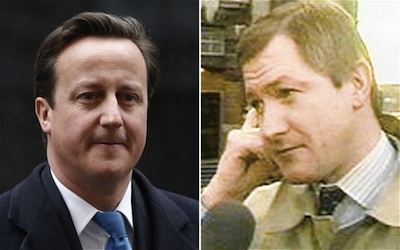
The admission in advice to British Prime Minister David Cameron comes after the Downing Street continues to block a genuine inquiry into the 1989 murder of Pat Finucane, a US congressional committee was told on Wednesday.
The point-blank assassination of the Belfast lawyer, who was gunned down in front of his wife and children as he ate his Sunday dinner, remains one of the most controversial state killings in the North.Last year, Cameron made an apology in the British parliament to the Finucane family, admitting “shocking” collusion in his murder between Loyalist paramilitaries and the RUC. However, he denied any political conspiracy existed, while refusing a public inquiry which could have exposed that claim as false.
However, a letter written in July 2011 by senior official Ciaran Martin admits that internal classified documents supported the Finucane family’s claims.
“[S]ome of the evidence available only internally could be read to suggest that within government at a high level this systematic problem with loyalist agents was known, but nothing was done about it,” said the letter.
“It’s also potentially the case that credible suspicions of agent involvement in Mr Finucane’s murder were made known at senior levels after it and that nothing was done; the agents remained in place. These two points essentially aren’t public.” Mr Cameron was accused of perpetuating a “massive injustice” for his continued refusal to allow a public inquiry or to admit that the collusion was politically sanctioned.In a hearing in Washington DC this week, Mr Cameron was accused of seeking to protect politicians and senior British government officials who had turned a blind eye to the murder.
Chris Smith, chair of the human rights sub-committee of the House Committee on Foreign Affairs castigated him for its refusal to allow a full inquiry.
“The British government has reserved one final, yet massive injustice,” he said, “it continues to protect those responsible for the murder of Pat Finucane.”
Mr Finucane’s son, Michael, told the committee that he believed the collusion with unionist paramilitaries “was a deep-rooted, officially sanctioned policy of selecting targets based on their degree of opposition to the State.
“The more troublesome the individual, the more likely the State was to deploy its killers-by-proxy to erase the ‘problem’.”
The British government had first offered a public inquiry into his father’s killing in 2001 during peace talks but then consistently “welshed” on the commitment, Mr Finucane said.
In 2004, a review by Canadian Supreme Court Justice Peter Cory called for a public inquiry, but after repeated delays the British government agreed in 2011 only to a’review’ of the case papers.
“My family would not be permitted to see any of the documents nor would we be allowed to hear witnesses called to give evidence or ask them any questions,” said Mr Finucane, arguing that the review was totally inadequate and repeating calls for a full judicial inquiry.
The existence of the security letter first emerged last month at a Belfast High Court hearing challenging Downing Street’s decision not to allow a full inquiry.
The judge ordered the government to hand over minutes of the July 2011 cabinet meeting at which the decision was taken to deny a public inquiry, and correspondence between Downing Street officials and MI5. It is still unclear whether the documents will actually be made available to the Finucane family.
"Four male prison officers tie you into the chair so tightly with sheets you can't struggle," says Price. "You clench your teeth to try to keep your mouth closed but they push a metal spring device around your jaw to prise it open.
"They force a wooden clamp with a hole in the middle into your mouth. Then, they insert a big rubber tube down that. They hold your head back. You can't move.
"They throw whatever they like into the food mixer - orange juice, soup, or cartons of cream if they want to beef up the calories. They take jugs of this gruel from the food mixer and pour it into a funnel attached to the tube.
"The force-feeding takes 15 minutes but it feels like forever. You're in control of nothing. You're terrified the food will go down the wrong way and you won't be able to let them know because you can't speak or move. You're frightened you'll choke to death."
Price was force-fed 400 times over six months. "I knew nothing about force-feeding beforehand," says Price. "I thought it was like when you hold a baby's nose and put a spoon in its mouth. Ignorance was bliss." Marian Price still politically interned 40 years later in British Occupied Ireland, in a supposed Peace Process without Due Process.Her sister Dolours died from the effects of 200 days on hunger strike. Please reshare or retweet to overcome censorship.
Goebbels rose to power in 1933 with Hitler and the Nazi Party and was appointed Propaganda Minister. His first acts was the burning of books. He exercised totalitarian control over the media, arts and information in Germany.
In November 1938, Goebbels got the chance to take decisive action against the Jews for which he had been waiting when a Jewish youth, Herschel Grynszpan, shot a German diplomat in Paris, Ernst vom Rath, in revenge for the deportation of his family to Poland and the persecution of German Jews generally. On 9 November, the evening vom Rath died of his wounds, Goebbels was at the Bürgerbräu Keller in Munich with Hitler, celebrating the anniversary of the 1923 Beer Hall Putsch with a large crowd of veteran Nazis. Goebbels told Hitler that "spontaneous" anti-Jewish violence had already broken out in German cities. When Hitler said he approved of what was happening, Goebbels took this as authorization to organise a nationwide pogrom against the Jews. He wrote in his diary:
Hitler decides: demonstrations should be allowed to continue. The police should be withdrawn. For once the Jews should get the feel of popular anger ... I immediately gave the necessary instructions to the police and the Party. Then I briefly spoke in that vein to the Party leadership. Stormy applause. All are instantly at the phones. Now people will act.
The result of Goebbels' incitement was Kristallnacht, the "Night of Broken Glass," during which the S.A. and Nazi Party went on a rampage of anti-Jewish violence and destruction, killing at least 90 and maybe as many as 200 people, destroying over a thousand synagogues and hundreds of Jewish businesses and homes, and dragging some 30,000 Jews off to concentration camps, where at least another thousand died before the remainder were released after several months of brutal treatment. The longer-term effect was to drive 80,000 Jews to emigrate, most leaving behind all their property in their desperation to escape. Foreign opinion reacted with horror, bringing to a sudden end the climate of appeasement of Nazi Germany in the western democracies. Goebbels' pogrom thus moved Germany significantly closer to war, at a time when rearmament was still far from complete. Göring and some other Nazi leaders were furious at Goebbels' actions, about which they had not been consulted. Goebbels, however, was delighted. "As was to be expected, the entire nation is in uproar," he wrote. "This is one dead man who is costing the Jews dear. Our darling Jews will think twice in future before gunning down German diplomats."
The concentration camps invented by the British followed. From Paelstine to Guantanomo to British Occupied Ireland , Goebbels is alive and well still torturing worldwide today. After World War 2 people worldwide asked how did the German people stand idly by and let it happen. Our children will ask the same questions about us today. What are YOU doing today?
Hunger Strike at Gitmo: ‘We Are Dying a Slow Death Here’ By Pardiss KebriaeiApril 13, 2013 "Information Clearing House" -"MSNBC" - I’ve just returned from Guantanamo, where my clients and a majority of the other 166 men there have been on hunger strike for over two months. Most of them have been cleared for release or will never be charged. But the Obama administration has refused to send them home.
I met with men who are weak and have lost between 30 and 40 pounds. They told me of other men who are skeletal and barely moving, who have coughed up blood, passed out, and one who tried to hang himself.
One of the men I met with, Sabry Mohammed, a Yemeni who remains detained years after he was approved for release by the Obama administration, said, “We are dying a slow death here.” Yet the authorities say they will not let men die–they will force-feed them when their body weight drops dangerously low, strapping them into chairs and forcing a tube up their noses that pumps formula into their stomachs. The military reports that so far, 11 men are being “saved” this way. Yet as one of the men put it, the irony is that “the government will keep us alive by force-feeding us but they will let us die by detaining us forever.”
Today, 166 men remain at Guantanamo, more than eleven years after they arrived in hoods and shackles. Most are being held without charge and will never be charged. The Obama administration has approved more than half of the men–86–for transfer, but hasn’t mustered the political will to overcome congressional hurdles, despite saying it can and will. As their indefinite detention stretches into a second decade, men are aging, declining and dying. Last September, Adnan Latif, a husband and a father, a man twice cleared for transfer under the Bush and Obama administrations, was the ninth prisoner to die. The current crisis at the base had specific triggers, but there has been an emergency at Guantanamo for years.
The strike was sparked in early February, when prison authorities ordered searches of the men’s Qurans. One man told me, “I won’t even touch the Quran without washing my hands, how could I use it to hide something dirty?” The men viewed the searches as desecration, which should hardly have been news to those in charge. A former Muslim chaplain at Guantanamo once described the handling of the holy books as “the most contentious issue” at the prison. Given the sensitivity of the practice and the history of religious abuse at Guantanamo–acts like throwing Qurans on the ground and shaving detainees’ beards as punishment–the authorities should have known better. Indeed, former commanders did know better. In a 2009 review of conditions at Guantanamo, ordered by the Obama administration, a commander at the base recognized that standard operating procedures “do not permit searching of the Koran.” The rule reflected an “elevated respect” for detainees’ religious concerns–a lesson learned from the early years. It is unclear why that changed. Another of my clients said, “They are taking the camp back to 2006.”
So far, prison authorities have defended their actions and downplayed the scale of the strike. Inside the prison, my clients have described various tactics used to make life even more difficult and break the strike. Some have been life-threatening, like delaying the delivery of filtered drinking water, forcing detainees to drink from the tap of sink faucets attached to toilets in their cells. Before, there used to be signs above the sinks saying it was not safe to drink the water. One man said he would rather go without water than drink from the sink.
As the strike enters its third month and the crisis deepens, the authorities must reach for a resolution before someone dies. My clients are asking for assurances that their Qurans will not be searched, or to hand them in altogether rather than see them desecrated.
But the solution to the broader calamity is closing Guantanamo, beginning with the release of men like Sabry. He told me he does not want to die, he wants to return to his family, but he and others are continuing the strike because they have been pushed too far and this is the only means they have to protest peacefully. The only thing they can control is their own bodies. It is an act of strength even as they are growing weaker. They are desperately wanting to believe there is still a life for them beyond the prison walls.
At the end of our meeting last week, Sabry showed me a painting he made recently, of the prison surrounded by mountains. But outside the high, tight-mesh fence that encloses Camp 6, where Sabry is held, there is ocean. “I don’t know what is outside. It is just what I imagine.” After more than eleven years, it is long past time for the United States to send Sabry home.
Pardiss Kebriaei is a senior attorney at the Center for Constitutional Rights who represents men detained at Guantanamo. She is lead counsel for CCR on the targeted killing case, Al-Aulaqi v. Panetta.
What's your response? - Scroll down to add / read comments
We emphathize strongly in Ireland with this hunger strike. People do not undertake such a matter, without a serious injustice being the cause. We can but try to publicize such a tragic human event.The British are also using the 9/11 narrative for torture and injustice in British Occupied Ireland currently.
The film Hunger portrays events around the last Irish hunger strike rather accurately We emphathize strongly in Ireland with this hunger strike. People do not undertake such a matter, without a serious injustice being the cause. We can but try to publicize such a tragic human event.The British are also using the 9/11 narrative for torture and injustice in British Occupied Ireland currently.
The film Hunger portrays events around the last Irish hunger strike accurately http://youtu.be/NLw1QcaxIwo
Oor country has lost 22 young men and Britain has currently got its own gitmo in Ireland , the most well known being Marian Price who was force fed for over 200 days by the British imperialists and is currently interned for the last 2 years without trial. Interment without trial or (cmps - secret trials)) are been misused using the 9/11 narrative as justification.
Solidarity and salutation to all these innocent internees and hunger strikers from all freedom loving Irish people throughout the world.
Tiocfaidh Ar La - Irish for - Our Day Will Come by Bobby Sands


 Another work, much more sympathetic in its style and its content, is the new novel by Leonardo Padura, “The man who loved dogs”. It tells the stories of Trotsky and his assassin, Ramón Mercader, both stories projected on the life of Iván, a Cuban who represents the post-revolutionary generation on the island.