Showing posts with label SPIRIT. Show all posts

Sunday, 15 February 2015

IRISH SPIRIT OF 2016 LIBERATION


Many International Socialists regard the Easter Rebellion of 1916 in Ireland, as a betrayal of the Cause of Labour, in that they regard it, as a Nationalist rebellion, led by leaders like Pearse of the Gaelic tradition and Connolly of Labour, rather than being a matter of self-determination and liberation. Some, particularly the revisionists, have even gone so far, as to accuse Padraic Pearse of neo-fascism, while Labour MPs in the House of Commoners in London, stood up and applauded the news, of the execution of Labour stalwart and working-class hero, James Connoly in a wheelchair. I have no doubt, that the Provos of the Stormont Junta today, would do the same if it did not cost them votes. You only have to look at their 2016 video promo and see how they have denigrated the Connolly contribution or examine their collaboration in the torture of Irish POWs today, which replicates the brutality, meted out to the ten hunger strikers. Their treatment and censorship of nationalist youth, has caused  considerable death, suicide and wholesale incarceration, within their constituencies and is well on the way to being as vicious, as the Blueshirts. They are morphing into American Republican Darwinism, at an alarming rate, in their pursuit of political power at all costs, paying only lip service to traditional Irish republican values. Of course their manipulative skills learned in surviving paedophile homes, are a great asset, in the orifice licking environment of political Ireland.

To return to the 1916 legacy, I see the Pearse tradition, as more an expression of Motherland, rather than Fatherland, found in writings and in his poem, The Mother, which foretells his own martyrdom and that of his brother William.


The Mother

I do not grudge them: Lord, I do not grudge
My two strong sons that I have seen go out
To break their strength and die, they and a few,
In bloody protest for a glorious thing,
They shall be spoken of among their people,
The generations shall remember them,
And call them blessed;
But I will speak their names to my own heart
In the long nights;
The little names that were familiar once
Round my dead hearth.
Lord, thou art hard on mothers:
We suffer in their coming and their going;
And tho' I grudge them not, I weary, weary
Of the long sorrow-And yet I have my joy:
My sons were faithful, and they fought.

Both Pearse and Connolly for me are very complex characters but then so is the truth, in political matters. Connolly, born in Scotland of Irish stock, by participating in the Easter rebellion, remained true to his class and his DNA. It appears to be a DNA, that only the colonially, oppressed understand. It requires EQ rather than IQ to comprehend, best expressed by Pearse at the grave of O'Donovan Rossa, when he stated," the fools, the fools, they have left us our Fenian dead, and while Ireland holds these graves, Ireland unfree shall never be at peace." 


Connolly was a politically desperate man, when he engaged the Pearse and Clarke tradition. he had already experienced the betrayals of Labour and it's careerists, over and over again, while experiencing daily, the misery of his class in the slum tenements of Dublin, along with Larkin. Once he took his first step with the Irish Citizen Army, Connoly would have known full well, his approaching fate. He was sufficiently acquainted with the Britsh Army, to know that there was no turning back. Anyone who tries to re-write history on this fact, fools themselves. 

On the other hand, it is not clear, whether Pearse and Clarke were entirely aware, of the international nature of the tradition, they were engaging with, in Connolly and the ICA. It also appears, that many, assuming their legacy today, are not remotely aware, either. The basis of Connolly ideology, was expressed by him, when he stated, "The Cause of Ireland is the Cause of Labour and the Cause of Labour is the Cause of Labour". The Cause of Labour is International and primarily material, while the Cause of Ireland is primarily of Spirit and Self- Determination. The Legacy of 1916 is both. The realization and fulfilment of both traditions are equally important elements, for any successful Liberation Movement to sustain itself and succeed.


.

Thursday, 12 February 2015

SPIRIT LIBERATES


PRESS RELEASE

THE HOODED MEN
We, The Hooded Men, and KRW LAW LLP successfully challenged the Irish government in its initial failure to refer the case of The Hooded Men back to the European Court of Human Rights to be examined again and for this time for the Court to declare that the treatment of The Hooded Men amounted to torture.
The Irish government decided not to fight the challenge and has duly made an Application to the ECtHR so that The Hooded Men case of Ireland v UK can be re-opened. This is significant in both legal and political terms as it send a clear message to the UK government from the Irish government that human rights violations in the past have to be accounted for in the present.
It also sends a message to the USA – specifically at Langley and the Pentagon – that the techniques they considered only inhuman and degrading now constitute torture.
In addition to this ECtHR Application, we are also issuing proceedings against the UK government to establish an independent investigation into the torture of The Hooded Men there having been no investigation to date. This action is being taken against the Secretary of State for Northern Ireland and the PSNI: the demand is for a statutory investigation into the use of torture by British security forces, including the RUC, during the period of internment and that this investigation must comply with Article 3 of the ECHR in that it must satisfy the jurisprudence of human rights compliant investigation. We argue that the PSNI is not able to conduct such an investigation and that the UK government has an on-going due to discharge its obligations toward The Hooded Men separate to the proceedings before the ECtHR. The fight to expose the wrongs committed against us, continues until truth and justice will out.
Jim McIlmurray, Case Coordinator for The Hooded Men, said: "There is a ‘pressing need’ for those in public office to be held accountable for what these men went through. The evidence that the British government deliberately withheld vital information from the courts is compelling. We have full confidence in our legal team and look forward to our day in court. Justice is not something to be awarded to those who are thought deserving and denied to those who are thought undeserving.”
“A significant amount of time has been spent in consultation with our solicitor, and we are now confident that we have secured a formidable legal team which will represent our interests, and succeed, in overturning the original decision, and finally revealing the truth.”
“In this we are fortunate enough to have instructed leading lawyers from Belfast, Dublin and London. As the consultation with our solicitor is ongoing, we do not seek to make any further comment at this stage”.
Darragh Mackin, of KRW LAW LLP said: “At this stage, the European Court has yet to make its determination on Ireland’s Application. Until such times as the case is communicated to the Respondent Government, the UK, we do not feel it appropriate to make any further comment.”
Jim McIlmurray

IRPWA Activists Assaulted By The PSNI

IRPWA Activists Assaulted By The PSNI
On Tuesday 10th February two IRPWA members, Alan Lundy from Belfast and Kevin Murphy from Tyrone, were travelling in a car in St James’s off the Falls Road.
Without warning, four unmarked cars surrounded the two activists and a number of men in balaclavas pounced from the vehicles with weapons (including automatic rifles) drawn. They proceeded to smash a number of windows in the car with rifle butts and batons, without indicating who they were. At no time during this ordeal did they state why Alan and Kevin were stopped or indicate which draconian legislation was in use, as they proceeded to assault them and trail them from the car. They continued their assault on the ground, cable tying their wrists together with a number of guns in their faces. Threats to kill were also made.
Both IRPWA activists were left on the ground for over an hour after being assaulted and searched, during which time they were verbally abused by the PSNI officers present. The car, which had already had windows smashed, was also further damaged during the prolonged invasion of privacy. As is the norm with Stop and Searches under the repressive legislation employed by the State, nothing was found and both were released without an arrest being made. Despite no evidence of any “wrongdoing” being found, the PSNI seized both men’s phones and other property.
This episode adds credence to the Republican position that the PSNI remains a vital part of the repressive state apparatus that Britain employs in Ireland. They are unreformed and irreformable, rejected by Republican Communities across the Six Counties.
At the same time, it is a reflection of the positive work that the IRPWA is engaged in – ensuring the welfare of Republican Political Prisoners and offering a positive outlet for those willing to campaign on their behalf. Recent weeks have seen an upsurge in public support for Republican Prisoners, due to the brutalisation in Maghaberry. This has been ably demonstrated by continuing IRPWA protest activity across Ireland.
These assaults on two Republican activists are the State’s response. They think that through violence and intimidation they will silence the IRPWA. They will fail. We remain committed to the cause of our Republican Political Prisoners, and take inspiration from them. Like the Prisoners, their comrades on the outside will not be bullied into submission by the State and remain committed to a campaign of Resistance.

A Moral Imperative: Release Aging and Long-

Term Prisoners

Tuesday, 10 February 2015 09:38By Jean TrounstineTruthout | News Analysis

It was only for a moment, but on January 20, 2015, this country's criminal punishment system got a general call for reform in President Obama's state of the union address. With 5 percent of the world's population and 25 percent of the world's incarcerated people, it's about time we heard this from our president. But what we didn't hear was an analysis of exactly what we can do to shrink this massive system.
While Attorney General Eric Holder and many others have urged an end to needless mandatory minimums - a good step toward decarceration - this is not going far enough. Research from a variety of nonprofits like the Sentencing Project and Human Rights Watch have shown that the majority of long-term prisoners, including many who have committed the most violent acts, are actually the best bet to exit prisons and not return to crime.

Who Are Our Long-Term Prisoners?

2014 study by the National Academy of Sciences reported that during the 1990s, the federal government and more than half the states enacted truth-in-sentencing and three strikes laws - all aimed at harsh punishment - both increasing the prison population and the length of sentences these prisoners are serving.

Age 55 is considered borderline geriatric in prison, because life expectancy is reduced for jailed men and women. The ACLU estimates that by 2030, "over one-third of all prisoners in the United States will be over 55.

Nationwide, as of 2012, the Sentencing Project reported that there were 159,520 people serving life sentences; that comes down to one of every nine individuals who were incarcerated in prisons. Nearly half of these men and women (more than 5,000 were female) were African American, and one-sixth were Latino. Ten thousand were sentenced before they turned eighteen, and in 2009, the Sentencing Project estimated that 77 percent of juveniles sentenced to life were youth of color. One in four were sentenced to life with no chance of parole. Therefore, clemency - the granting of relief from all or part of a sentence by a governor, in the case of state sentences, or by the president, for federal time - would be their only avenue to not dying behind bars, aside from an appeal or a new trial.
In 2009, the Sentencing Project estimated that nationally, the average length of time served by this population prior to parole eligibility was 25 years.
Add to this information a 2010 Human Rights Watch report that determined 124,400 prisoners were age 55 or older. Age 55 is considered borderline geriatric in prison, because life expectancy is reduced for jailed men and women, according to the National Commission on Correctional Health Care. The ACLU estimates that by 2030, "over one-third of all prisoners in the United States will be over 55."
As prison reform becomes a clearer goal on the national horizon, advocates are urging that we acknowledge the plight of aging and long-term prisoners and take into consideration the level of "risk" in releasing them.
Why Release?
Glenn Martin, who served six years in prison for armed robbery, became a paralegal, a policy analyst and a fundraiser when he got out, and now headsJustLeadershipUSA, founded on the principle that "the most compelling advocates of change are those who have been directly affected by incarceration." JustLeadership is dedicated to reducing crime and cutting the prison population in half by 2030.
In an interview with Truthout, Martin said that reducing the incarceration numbers is "all about identifying the person who doesn't belong behind bars" and that means those who are the least risk to reoffend. Some researchers believe that proper risk assessment tools can help us determine those few long-termers who are likely to recommit a violent crime. However, journalist Leon Neyfakh, in The Boston Globe, also labeled the value of these tools as a way to assess workable treatment and rehabilitative programs for those who have lived behind bars for years before exiting prison. There is no national agreement on how exactly to use risk assessment.
Glenn Martin said that even the discussion of risk assessment has a downside. "Instead of merely talking about people who do not belong in prison, we should be indicting the system itself," as it provides no clear access to jobs, housing or community support upon release. The discussion also means understanding that violent crime is most often situational. In other words, those convicted of a violent offense against another person were driven by what, Jonathan Simon, professor of law at UC Berkeley, calls "complex combinations of conflicts, propensities and accelerants like drugs and alcohol."
The best argument for release is a "moral argument," said Martin. If they are no longer a risk, why not give these men and women a second chance?

Of 860 people convicted of homicide and sentenced to life, the study found only five individuals (fewer than 1 percent) returned to prison or jail because of new felonies - and none for a crime that involved taking a life.

By 2012, per the Sentencing Project, 48 states had parole as a mechanism for lifers to get second chances - a way to release those no longer considered a danger to the community. Martin believes this form of releasing prisoners back into the free world can "give you someone in your corner," but that means a parole officer must be trained in treatment and support for his clients, not just in supervision. While parole is not without problems - parole officers can send people back to prison for noncriminal violations such as missing appointments or a failed drug test, and parole is not always used effectively in our states, and is banned in others - it can give people a second chance if there is real reentry support and not just a list of rules to follow.
According to a 2011 Stanford Law School study, California lifers who were eventually released on parole went back to committing serious crimes a "miniscule" amount. Of 860 people convicted of homicide and sentenced to life, the study found only five individuals (fewer than 1 percent) returned to prison or jail because of new felonies - and none for a crime that involved taking a life.
According to a 2009 study by the Michigan-based Citizens Alliance on Prisons and Public Spending (CAPPS), parolees originally convicted of homicide reoffended the least of all groups of ex-prisoners. Of 2,558 homicide parolees in that state, only 2.7 percent were returned to prison for any new crime, and larceny was the most common.

"We are never going to get to the root of the problem unless we get to the heart of the 'punishment paradigm,' and the way we can do that is ask when is punishment enough."

While the results may seem counterintuitive to the public, these studies are not surprising to men and women who have served time. Mujahid Farid, incarcerated for 33 years in New York, saw the parole board nine times before his release. "If the risk is low, let them go," he said in an interview with Truthout. This is the motto of the Release Aging Prisoners Project (RAPP), an organization Farid founded with colleagues in 2013 and currently directs. Many long-term prisoners are also elderly and sick or dying. RAPP has worked with heartbreaking cases - people who've served many years beyond what was a deterrent to crime and beyond any ostensible retributive value of incarceration.

One such person is Mohaman Koti, who at 86 is in a wheelchair, and far from the healthy 40ish-year-old convicted for attempted murder of a police officer. The New York Times stated that the case was so old that the parole board could not find a copy of the transcript from his sentencing. At his sixth parole hearing in 2013, suffering from a slew of medical problems, he heard a loud "No" to parole. As the Village Voice reported, "The board said he had a history of violence, was at risk to commit another crime, and letting him go would create disrespect for the law."

Laura Whitehorn, another RAPP founder who served more than 14 years behind bars and now advocates for aging prisoners, told Truthout that Koti finally earned parole in 2014 after he appealed the state decision. He was released by the state. However, the US government decided to intervene because of a federal parole violation based on old charges: "He was picked up by the Feds and pointlessly re-incarcerated in a federal facility," Whitehorn said. In no way does he present a threat to public safety, so activists like Whitehorn wonder why we are spending resources on keeping the elderly behind bars.
"We are never going to get to the root of the problem unless we get to the heart of the 'punishment paradigm,' and the way we can do that is ask when is punishment enough," said Farid. That means realizing that people age out of crime. As theStanford Law School report clarifies: most acts of violence are committed by people under age 30; the number declines drastically after age 40, and even more so after age 50.
Why Are There Public Misperceptions About Lifers?
The so-called tough-on-crime era brought us public officials who politicized crime, often to their advantage. The Sentencing Project's research indicates that states' reluctance to use parole or clemency mechanisms for lifers coincides with elected officials who fear looking "soft" on crime. The media too, has played into misunderstandings. First, there has been little explanation to the public about parole and how it can aid in reducing prison populations. Secondly, the media publicizes false statements from policy makers such as "life means life." As reported by the Sentencing Project, if the public believes that "life sentences require whole-life imprisonment," then "when a lifer is paroled, they often believe that somehow the system has failed."
An example is former California Gov. Gray Davis, who honed his tough-guy reputation with the pronouncement that those convicted of homicide would only leave prison "in a pine box" and that, "[i]f you take someone else's life, forget it. I see no reason to parole people who have committed an act of murder." He made good on his word: only eight lifers in California were released during his 1999-2003 term - in a state where, in 2003, some 20,000 prisoners were serving life sentences, eligible for parole at some point during their sentence.
Laura Whitehorn pointed out how people rarely consider that there are women serving long sentences. "I was locked up with many women serving enormously inflated sentences on 'girlfriend crimes.' They had been connected to a man who was a drug dealer, and due to the bizarre federal conspiracy laws, some of the women ended up with longer sentences than the men."
The public also has little idea of the cost of keeping people locked up, which varies from state to state. In Massachusetts, for example, according to the Massachusetts Executive Office of Public Safety and Security, it costs an average of $45,500 to house a prisoner in a state facility; contrast this with $5,000 to supervise her on parole. But if the person is sick or dying, the ACLU says, nationally, it costs more than $68,000 to keep that person behind bars - and that's a conservative figure for Massachusetts, where costs far exceed the national average of $34,000 per prisoner.
What Are We Really Afraid of?
Some policy makers and prisoner advocates worry that the discussion of how to release people from prison is fraught with race and class biases. Attorney General Eric Holder touched on this in a recent speech to a gathering of the National Association of Criminal Defense Lawyers: "By basing sentencing decisions on static factors and immutable characteristics - like the defendant's education level, socioeconomic background, or neighborhood - they may exacerbate unwarranted and unjust disparities that are already far too common in our criminal justice system and in our society.''

Risk assessment is yet another part of a punishment system which many have described as biased - from arrest to filing of charges, conviction, incarceration and to who gets parole. Activists and scholars like Professor Angela Y. Davis have writtenthat we must acknowledge that "criminality and deviance are racialized."
While policy makers claim our parole policies are harsh because they are afraid to release so-called dangerous people onto our streets, Glenn Martin is one who takes exception to the underbelly of the word "dangerous." He said, "What we are really afraid of is men of color - not crime." He added, "People lean on the criminal justice system as a way of keeping those scary people away from them."

RAPP's Mujahid Farid put it this way: "If we see people as 'the other,' we are less likely to have empathy towards them and respond to their needs, which touches on what we have experienced with the police." Speaking of what happened when Eric Garner recently was killed by a police officer in New York, he said, "How can we choke a man to death 11 times unless we feel that he is 'the other?' "
Radical Solutions Needed
Understanding the reality of those who live behind bars is one of the first steps toward solving the problem of mass incarceration. Increasing the use of executive clemency, which Families Against Mandatory Minimums reported in 2010 has been almost nonexistent for three decades, is crucial; restoring the role of parole for lifers is another important step. But Professor Jonathan Simon, author of several books and many articles on the justice system, offers new ideas that could actually help right the inequities plaguing our punishment system most quickly.
Simon told Truthout that we need a radical new approach to sentencing, "a dramatic reduction in length," because "there is no empirical foundation that lengthy sentences prevent recidivism. They are always justified as 'retributive,' " he said. "When we look around the world, 10 to 15 years is a standard used for homicide. Beyond 10 years, there is no deterrent value." Ten years would still be respectful to the victims of violent crimes, Simon added.
To deal with prisoners already serving long sentences, Simon suggests "an amnesty policy." This policy would apply across the board to prisoners who've served a determined amount of time. Simon advocates that, once that period of time is served, prisoners should be released wholesale. (Upon release, they would be provided with all the best possible help for reentry.)
This approach - "retroactively resentencing without individually considering cases" - is quite different than parole, in that it doesn't depend on risk assessment or on individual records. Simon said this amnesty policy could provide a "legal demarcation that our mass incarceration policies were wrong," and it would "underscore the fact that our justice system is really broken." He realizes that amnesty would take careful planning, but it could work quickly to release substantial numbers of people and shrink the size of the prison system as a whole.

As Simon wrote on October 21, 2014, about his home state of California's prison crisis, "We will need an initiative to roll back sentences on violent crime.  . . . The vast majority of people convicted of an offense against the person . . . are no more likely to commit such an act in the future than those who have not been convicted, but come from the same social circumstances and situation. There are far better ways to spend money on reducing violence than incarcerating aging prisoners who once did something violent. But for now, few even in the anti-mass incarceration community are ready to take on that fight."
It is a moral imperative to do so.

Thursday, 6 November 2014

IRISH SPIRIT @ WEBSUMMIT


http://websummit.net/


"Happiness is when what you think, what you say, and what you do are in harmony."
- Mohandas K. Gandhi 


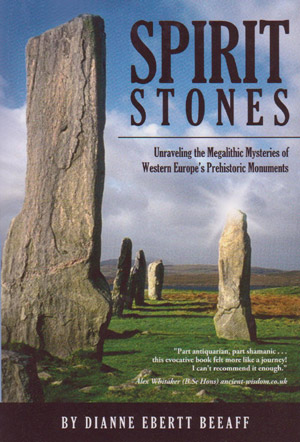
Spirit Stones

Spirit StonesSpirit Stones, Unraveling the Megalithic Mysteries of Western Europe's Prehistoric Monuments by Dianne Ebertt Beeaff.
Spirit Stones is a meticulously-researched work which unearths society’s ancient lessons; their secrets long-buried in the relics of the Neolithic Era and Bronze Age civilizations. Sharing both the pragmatic and spiritual significance of Western Europe’s prehistoric stone monuments, stone circles and burial chambers, Beeaff challenges readers to reflect on humanity’s common ancestry, culture and connection. “Spirit Stones has been, for me, a journey through some of the most powerful places in our civilization’s history,”she says. “When we stand and reflect in many of these places, as I have been privileged to do, they inspire us to live more fully in the present, to capture and apply the powerful concentration of life they express.”

Excerpts relating to the Boyne Valley


Chapter 2 - Form and Function: Megalithic Architecture (The Neolithic or New Stone Age)

"East of Slane Hill in the Irish Republic, the River Boyne makes a loop to the south. There, in the semi-circle it forms, are three great glacial mounds that support the massive Neolithic chambered tombs of Dowth, Knowth and Newgrange. The most famous of these, Newgrange, dates to about 3200 BCE and has a corbelled roof that has been watertight for more than 5000 years. Newgrange had a massive, white-stone facade -- now reconstructed -- that glistened under both the sun and the moon and could easily be seen from many miles away. When I was there in 2007, the wet weather suddenly cleared to a deep blue sky filled with sunshine and high, wind-rushed clouds. The mound, once covered with stones, is now green and grassy, but its brilliant white-quartz frontage gleamed as ever in the sunlight. Even in a bank of Irish mist, it could never have been very well hidden."


Chapter 7 - Heaven and Earth (Light)

"But in the same way that Heaven and Earth were likely considered intrinsically connected for the agricultural societies of our prehistoric past, so, too, were light and darkness. Ireland's Newgrange is certainly one of the most dramatic examples of this. Facing southeast on the summit of a low hill this magnificent passage tomb looks out on the lush Boyne Valley. Anyone fortunate enough to be inside on the morning of the Winter Solstice (December 21) will see the first rays of the rising sun filter through a gap in a roofbox above the entrance, gradually moving down the passageway to illuminate the dark central chamber. Well before the rediscovery of this roofbox, it was said that sunlight penetrated the passage on certain occasions and focused on the tri-spiral stone in the end chamber."


Chapter 10 - Body and Soul 
"Irish accounts tell us that the goddess of the River Boyne -- Boand -- lived in Newgrange, a burial mound within the ancient site of Bru na Boinne. According to myth, the Celtic solar deity known as The Dagda stole inside and impregnated Boand, who then gave birth to Óengus, the Irish god of love. In the Irish Fenian Cycle, the warrior Finn describes Newgrange as the "house of Óengus of the Bru." 

Newgrange is aligned to the Winter Solstice sunrise. It seems fitting then that Newgrange became the home of Óengus, whose father, at Óengus' conception, was said to have made the sun stand still for the nine months prior to his son's birth. Eternally youthful, Óengus is thus known as a solar deity who personifies the day. The son/sun of the New Year is born of Mother Earth at the lengthening of days. Nearby Knowth is connected with Englec, Óengus' lover. While at Dowth, believed to be the oldest passage tomb of the Bru na Boinne, the druid Bresial tried to build a Babel-styled tower to reach heaven. Notably, Dowth is sometimes referred to as Sid Bresial, "sid" denoting a dwelling place of gods."

About Dianne Ebertt Beeaff

A native of Kitchener, Ontario, Canada, Dianne Ebertt Beeaff has traveled the world extensively and combines a lifelong love of history with a quest for present-day understanding.

An acclaimed artist and writer, Dianne has authored two works of nonfiction—Homecoming and A Grand Madness, Ten Years on the Road with U2. Her award-winning first novel,Power’s Garden, was published in 2009; her poetry, watercolors, graphite sketches and magazine articles have been featured for decades throughout the United States and Canada.

Tuatha Dé Danann

From Wikipedia, the free encyclopedia
For other uses, see Danann (disambiguation).
"Áes dána" redirects here. For other uses, see Aes Dana (disambiguation).
The Tuath(aDé Danann (usually translated as "people(s)/tribe(s) of the goddess Danu"), also known by the earlier name Tuath Dé ("tribe of the gods"),[1] are a race of supernaturally-gifted people in Irish mythology. They are thought to represent the main deities of pre-Christian Gaelic Ireland.
Much of Irish mythology was recorded by Christian monks, who modified it to an extent. They generally depicted the Tuath Dé as kings, queens and heroes of the distant past who had supernatural powers or who were later credited with them. However, some writers acknowledged that they were once worshipped as gods. A poem in theBook of Leinster lists many of them, but ends "Although [the author] enumerates them, he does not worship them". GoibniuCredne andLuchta are referred to as Trí Dé Dána ("three gods of craftsmanship"), and the Dagda's name is interpreted in medieval texts as "the good god". Even after they are displaced as the rulers of Ireland, characters such as Lugh, theMorríganAengus and Manannán mac Lir appear in tales set centuries later, showing all the signs of immortality. They also have parallels in the pantheons of otherCeltic peoples: for example Nuada is cognate with the Britishgod Nodens; Lugh is a reflex of the pan-Celtic god Lugus;Tuirenn is related to the Gaulish TaranisOgma to Ogmios; and the Badb to Catubodua.

Name[edit]

The Old Irish word tuath (plural tuatha) means "people, tribe, nation";  is the genitive case of día and, depending on context, can mean "god, gods, goddess" or more broadly "supernatural being, object of worship".[2] In the earliest writings, the mythical race are referred to as the Tuath Dé(plural Tuatha Dé).[1] However, Irish monks also began using the term Tuath Dé to refer to the Israelites,[1] with the meaning "People of God".[3] Apparently to avoid confusion with the Israelites,[1] writers began to refer to the mythical race as the Tuath Dé Danann (plural Tuatha Dé Danann). The Old Irish pronunciation is [t̪uaθa d̪ʲeː d̪anan̪] and the Modern Irish pronunciation is [t̪ˠuə(hi) dʲeː d̪ˠanˠən̪ˠ] in the West and North, and[t̪ˠuəhə dʲeː d̪ˠan̪ˠən̪ˠ] in the South. A rough English approximation is tooə(hə) day danən or tooə(hə) jay danən.
Danann is generally believed to be the genitive of a female name, for which the nominative case is not attested. It has been reconstructed as Danu, of which Anu (genitive Anann) may be an alternative form.[1] Anu is called "mother of the Irish gods" by Cormac mac Cuilennáin.[1] This may be linked to theWelsh mythical figure Dôn.[1] Hindu mythology also has a goddess called Danu, who may be an Indo-European parallel. However, this reconstruction is not universally accepted.[4] It has also been suggested that Danann is a conflation of dán("skill, craft") and the goddess name Anann.[1] The name is also found as Donann and Domnann,[5] which may point to the origin being proto-Celtic *don, meaning "earth"[1] (compare the Old Irish word for earth, doman). There may be a link with the mythical Fir Domnann[6] and the British Dumnonii.[7]

Legendary history[edit]

The Tuatha Dé Danann were descended from Nemed, leader of a previous wave of inhabitants of Ireland. They came from four cities to the north of Ireland–Falias, Gorias, Murias and Finias–where they acquired their magical skills and attributes. According to Lebor Gabála Érenn, they came to Ireland "in dark clouds" and "landed on the mountains of [the] Conmaicne Rein in Connachta; and they brought a darkness over the sun for three days and three nights". According to a later version of the story, they arrived in ships on the coast of the Conmaicne Mara's territory (modern Connemara). They immediately burnt the ships "so that they should not think of retreating to them; and the smoke and the mist that came from the vessels filled the neighboring land and air. Therefore it was conceived that they had arrived in clouds of mist".
A poem in the Lebor Gabála Érenn says of their arrival:
It is God who suffered them, though He restrained them
they landed with horror, with lofty deed,
in their cloud of mighty combat of spectres,
upon a mountain of Conmaicne of Connacht.
Without distinction to descerning Ireland,
Without ships, a ruthless course
the truth was not known beneath the sky of stars,
whether they were of heaven or of earth.
Led by their king, Nuada, they fought the First Battle of Magh Tuireadh on the west coast, in which they defeated and displaced the native Fir Bolg, who then inhabited Ireland. In the battle, Nuada lost an arm to their champion, Sreng. Since Nuada was no longer "unblemished", he could not continue as king and was replaced by the half-Fomorian Bres, who turned out to be a tyrant. The physician Dian Cecht replaced Nuada's arm with a working silver one and he was reinstated as king. However, Dian Cecht's son Miach was dissatisfied with the replacement so he recited the spell, "ault fri halt dí & féith fri féth" (joint to joint of it and sinew to sinew), which caused flesh to grow over the silver prosthesis over the course of nine days and nights.[8][9] However, in a fit of jealous rage Dian Cecht slew his own son. Because of Nuada's restoration as leader, Bres complained to his family and his father, Elatha, who sent him to seek assistance from Balor, king of theFomorians.
The Tuatha Dé Danann then fought the Second Battle of Magh Tuireadh against the Fomorians. Nuada was killed by the Fomorian king Balor's poisonous eye, but Balor was killed himself by Lugh, the champion of the Tuatha Dé, who then took over as king.
A third battle was fought against a subsequent wave of invaders, the Milesians, from the northwest of the Iberian Peninsula (present day Galicia and Northern Portugal), descendants of Míl Espáine (who are thought to represent theGoidelic Celts). The Milesians encountered three goddesses of the Tuatha Dé Danann, ÉriuBanba and Fodla, who asked that the island be named after them; Ériu is the origin of the modern name Éire, and Banba and Fodla are still sometimes used as poetic names for Ireland.
Their three husbands, Mac CuillMac Cecht and Mac Gréine, who were kings of the Tuatha Dé Danann at that time, asked for a truce of three days, during which the Milesians would lie at anchor nine waves' distance from the shore. The Milesians complied, but the Tuatha Dé Danann created a magical storm in an attempt to drive them away. The Milesian poet Amergincalmed the sea with his verse, then his people landed and defeated the Tuatha Dé Danann at Tailtiu. When Amergin was called upon to divide the land between the Tuatha Dé Danann and his own people, he cleverly allotted the portion above ground to the Milesians and the portion underground to the Tuatha Dé Danann. The Tuatha Dé Danann were led underground into the Sidhe mounds by Manannán mac Lir.
Preceded by
Fir Bolg
Mythical invasions of Ireland
AFM 1897 BC
FFE 1477 BC
Succeeded by
Milesians

The Four Treasures[edit]

The Tuatha Dé Danann brought four magical treasures with them to Ireland, one apiece from their Four Cities:

Tuatha Dé Danann High Kings of Ireland[edit]

The following is a chronology from the Annals of the Four Masters; based on reign-lengths given in Geoffrey Keating'sForus Feasa ar ErinnNuada's original reign lacks a precise start date.
  • Nuada (first reign) AFM unknown-1897 BC; FFE unknown-1477 BC
  • Bres AFM 1897-1890 BC; FFE 1477-1470 BC
  • Nuada (final reign) AFM 1890-1870 BC; FFE 1470-1447 BC
  • Lugh AFM 1870-1830 BC; FFE 1447-1407 BC
  • Eochaid Ollathair AFM 1830-1750 BC; FFE 1407-1337 BC
  • Delbáeth AFM 1750-1740 BC; FFE 1337-1327 BC
  • Fiacha AFM 1740-1730 BC; FFE 1327-1317 BC
  • Mac CuillMac Cecht and Mac Gréine AFM 1730-1700 BC; FFE1317-1287 BC

Tuatha Dé Danann family tree[edit]

The following table is based on the genealogies given by Geoffrey Keating and in the Lebor Gabála Érenn, and references in Cath Maige Tuireadh. It is not clear whether the various Elathas and Delbáeths are meant to be different figures of the same name or different traditions regarding the genealogy of the same figure. It is also notable that Fomorians such as Elatha and Balor are closely related to the Tuatha Dé.
                                   Agnoman of Scythia
                                           |
                                         Nemed
                                           |
                                    Iarbonel Faidh
                                           |
                                       Beothach
                                           |
                                        Iobáth
                                           |
                                         Enna
                                           | 
                                        Tabarn
                                           |
                                          Tat
       ____________________________________|__________________________________
       |                                                                     |
     Allai                                                                 Indai
       |                                           __________________________|__________________________
       |                                           |                                                   |
     Orda                                         Nét                                               Elatha
       |                       ____________________|______________________________________________     |
       |                       |                                    |                            |     |
    Etarlám                 Esar Brec                           Delbáeth                        Dot  Bres
       |                       |                                    |                            |
       |                       |                                    |                            |
    Eochaid                Dian Cecht                            Elatha                        Balor
       |                       |                                    |                            |
       |            ___________|___________        _________________|______________________      |
     Nuada          |    |     |    |     |        |         |          |       |         |      |
    (Elcmar)       Cu Cethen Cian Miach Airmed   Dagda    Fiacha    Delbáeth   Ogma     Allód  Ethniu
   (Nechtan)        |          |                   |                    |       |       (Lir)
  _____|____        |          |      _____________|____________        |       |         |
  |        |        |          |      |      |     |     |     |        |       |         |
Etarlám Nemain  Bec-Felmas    Lug  Cermait Aengus Bodb Midir Brigid   Boann  Delbáeth  Manannan
  |                 |                 |                                     (Tuireann)
  |                 |        _________|_________          ______________________|__________________________________
  |                 |        |        |        |          |      |      |       |     |      |       |      |     |
Ernmas            Abean  MacCuill MacCecht MacGréine   Fiacha  Brian Iuchar Iucharba Danand Goibniu Credne Luchta Ollam
  |__________________                                                                                             |
  |        |        |                                                                                             |
 Ériu  =  Badb      |                                                                                            Aoi
Banba  = Macha      |
Fódla = Mórrígan = Anu
           
Other members of the Tuatha Dé Danann include:

See also[edit]

Primary sources[edit]

  • Lebor Gabála Érenn ("The Book of the Taking of Ireland"), ed. and tr. R.A.S. Macalister (1938-1956 and 2009). Lebor Gabála Érenn. The Book of the Taking of Ireland. Irish Texts Society 34-5, 39, 41, 44, 63. 5 vols and index of names. Dublin: RIA.Check date values in: |date= (help)
  • Mesca Ulad

References[edit]

  1. Jump up to:a b c d e f g h i Koch, John T. Celtic Culture: A Historical Encyclopedia. ABC-CLIO, 2006. pp.1693-1694
  2. Jump up^ Dictionary of the Irish Language, Compact Edition, Royal Irish Academy, 1990, pp. 612
  3. Jump up^ James MacKillop, Dictionary of Celtic Mythology, Oxford University Press, p. 366
  4. Jump up^ James MacKillop, Myths and Legends of the Celts, Penguin, 2005, p. 136.
  5. Jump up^ John T Koch & John Carey (eds), The Celtic Heroic Age, Celtic Studies Publications, 1997, p. 245
  6. Jump up^ Lebor Gabála Érenn §49
  7. Jump up^ MacKillop 1998, p. 129
  8. Jump up^ Elizabeth Gray, Cath Maige Tuired, Irish Texts Society, London 1983, pp 32-3
  9. Jump up^ www.sengoidelc.com - Quotations from early Irish Literature

External links[edit]