


People Before Profit/ULA TD, Richard Boyd Barrett, last night challenged the government’s inhuman

A Blog of the Irish way of life,news,politics,people,singers,writers,dancers, poets,multimedia,#JFTC2, and Ireland,featuring YouTube,brionOcleirigh,
Showing posts with label Referendum. Show all posts
Showing posts with label Referendum. Show all posts
Tuesday, 15 May 2012
Saturday, 12 May 2012
EURO SLAVERY Christy Moore

How Soon Do Empires Forget The Lessons of History!
The 67th Anniversary of the Victory over Nazi-Fascism
By Fidel Castro
May 11, 2012 "Information Clearing House" -- No political event can be judged outside of the era and the circumstances in which it took place. No one even knows one percent of the fabulous history of Man; but thanks to history, we know about occurrences that go beyond the limits of the imaginable.
The privilege of having known persons, even the locations where some of the events related to the historic battle took place, augmented the interest with which I awaited the anniversary this year.
The colossal deed was fruit of the heroism of a group of peoples that the revolution and socialism had united and intertwined to put an end to the brutal exploitation that the world had been putting up with throughout the millennia. The Russians were always proud of having headed that revolution and of the sacrifices they were capable of in bringing it to fruition.
This very important anniversary of the victory could not be understood under the colours of a flag or a name other than the one that presided over the heroism of the combatants of the Great Patriotic War. Without a doubt, something untouchable and unforgettable remained: the anthem whose unforgettable notes accompanied millions of men and women to challenge death and to crush the invaders who wished to impose a thousand years of Nazism and holocaust on all humanity.
With those ideas in mind, I enjoyed the hours I dedicated to the most organized and martial procession I could ever imagine, whose protagonists were men formed in the Russian military universities.
The Yankees and the blood-thirsty NATO armies could not imagine that the crimes committed in Afghanistan, Iraq and Libya, the attacks on Pakistan and Syria, the threats against Iran and other Middle Eastern countries, the military bases in Latin America, Africa and Asia could take place with absolute impunity, without the world becoming aware of the unusual and crazy threat.
How soon do empires forget the lessons of history!
The military technology exhibited in Moscow on May 9th demonstrated the impressive capacity of the Russian Federation to provide a proper and varied response to the conventional and nuclear resources of imperialism.
It was just the ceremony we were waiting for on the glorious anniversary of the Soviet victory over fascism.
Fidel Castro Ruz - May 10, 2012
By Fidel Castro
May 11, 2012 "Information Clearing House" -- No political event can be judged outside of the era and the circumstances in which it took place. No one even knows one percent of the fabulous history of Man; but thanks to history, we know about occurrences that go beyond the limits of the imaginable.
The privilege of having known persons, even the locations where some of the events related to the historic battle took place, augmented the interest with which I awaited the anniversary this year.
The colossal deed was fruit of the heroism of a group of peoples that the revolution and socialism had united and intertwined to put an end to the brutal exploitation that the world had been putting up with throughout the millennia. The Russians were always proud of having headed that revolution and of the sacrifices they were capable of in bringing it to fruition.
This very important anniversary of the victory could not be understood under the colours of a flag or a name other than the one that presided over the heroism of the combatants of the Great Patriotic War. Without a doubt, something untouchable and unforgettable remained: the anthem whose unforgettable notes accompanied millions of men and women to challenge death and to crush the invaders who wished to impose a thousand years of Nazism and holocaust on all humanity.
With those ideas in mind, I enjoyed the hours I dedicated to the most organized and martial procession I could ever imagine, whose protagonists were men formed in the Russian military universities.
The Yankees and the blood-thirsty NATO armies could not imagine that the crimes committed in Afghanistan, Iraq and Libya, the attacks on Pakistan and Syria, the threats against Iran and other Middle Eastern countries, the military bases in Latin America, Africa and Asia could take place with absolute impunity, without the world becoming aware of the unusual and crazy threat.
How soon do empires forget the lessons of history!
The military technology exhibited in Moscow on May 9th demonstrated the impressive capacity of the Russian Federation to provide a proper and varied response to the conventional and nuclear resources of imperialism.
It was just the ceremony we were waiting for on the glorious anniversary of the Soviet victory over fascism.
Fidel Castro Ruz - May 10, 2012
Is The United States An Accidental Empire?
By The Globalist
By The Globalist
May 10, 2012 "Information Clearing House" -- The United States was born out of a struggle against an imperial power. Beginning in the 1840s — seven decades after its founding — it embarked on a succession of "wars of choice" that were profoundly at odds with its founding principles and left it with an empire of its own. This inaugural "Thomas Paine" column looks at how American changed — and how its empire is handicapping its future.
Our present predicament didn't happen overnight. It was a long time in the making. Along the way, America changed. We forsook our birthright, we deceived ourselves and, ever so slowly, our loadstar changed from liberty to force. When it was all over, we woke up and had an empire.
The United States broke with the foreign policy of its Founders in three wars of choice. We used guns to annex two-fifths of Mexico. We used guns to remove Spain from its colonies in the Caribbean and the Philippines. We used guns to replace Germany as the leading military power in Europe.
In the seven decades between the start of the Mexican-American war in 1848 and America entering World War I in 1917, the die was cast.
We didn't go to war with Mexico, Spain and Germany to defend ourselves. President James Polk proclaimed it was our Manifest Destiny to redraw our southern border to include almost half of Mexico. Likewise, President McKinley thought it was our Manifest Destiny to replace Spain as a colonial power in Cuba and the Philippines. In World War I, President Woodrow Wilson repackaged Manifest Destiny as saving the world for democracy.
War no longer needed to be justified as defending our country. War was now justified as promoting democracy around the world. Americans were now a force for good in the world.
The U.S. Constitution was subverted in the wars against Mexico, Spain and Germany. Yes, Congress declared war in the Mexican-American War, the Spanish-American War and World War I. But the legitimacy of the congressional declaration was undermined by Presidential lies:
Americans weren't attacked on American soil, as President Polk claimed. In fact, volunteer American soldiers were attacked on Mexican soil.
The Spanish didn't sink our ship in Havana, as President McKinley claimed.
The Germans sunk our ship, but President Wilson didn't mention the American guns on board which violated our declared neutrality. Wilson's Secretary of State resigned in protest.
Each of these presidential lies was an impeachable offense. There were no impeachment proceedings. We just looked the other way.
These three wars of choice redefined American exceptionalism into something very different from what the Founders intended. We were no longer exceptional because of our unique form of government. The federal government no longer existed to protect the sovereignty of the individual.
The government now existed to promote democracy abroad. Never mind that the American republic was never a democracy. (The Constitution established a republic. The Founders rejected democracy because it didn't protect the individual from the tyranny of the majority.)
Each war of choice made the next one easier. President Polk's decision to take the country to war against Mexico made President McKinley's decision to go to war against Spain seem less unreasonable. It is hard to imagine President Wilson taking the country to war against Germany if Polk and McKinley hadn't gotten their wars.
Now the Constitution was turned upside down. We were set on a trajectory that turned the government against citizens. Wilson tolerated no war dissent and severely limited civil liberties.
We could have turned back to the foreign policy of the Founders. Mexico was no existential threat to the United States. But the war was popular and Polk gave the people what they wanted and made the country richer. We could have stopped there.
The little war with Spain was avoidable, too. But that war was also popular, cost-free and journalism became an accomplice in war. We could have stopped there. But wars of choice had become a habit for ambitious Presidents — and Wilson was ambitious.
Wilson's decision to take the country to war against Germany was far-reaching. The rapid rise of Germany was a reality that the major powers in Europe had to recognize. The Germans built an economy greater in size than the combined economies of France, England and Russia. Rather than let the Europeans find their own solution, Wilson decided to enter into an "entangling alliance" against Germany.
Unlike the two earlier wars of choice, World War I became unpopular at home. Fifty-thousand Americans gave their lives to fight the Kaiser. Clemenceau and Lloyd George ran circles around Wilson at the Versailles peace conference. Wilson lost the peace and the Versailles Treaty was rejected by the U.S. Senate.
Our present predicament didn't happen overnight. It was a long time in the making. Along the way, America changed. We forsook our birthright, we deceived ourselves and, ever so slowly, our loadstar changed from liberty to force. When it was all over, we woke up and had an empire.
The United States broke with the foreign policy of its Founders in three wars of choice. We used guns to annex two-fifths of Mexico. We used guns to remove Spain from its colonies in the Caribbean and the Philippines. We used guns to replace Germany as the leading military power in Europe.
In the seven decades between the start of the Mexican-American war in 1848 and America entering World War I in 1917, the die was cast.
We didn't go to war with Mexico, Spain and Germany to defend ourselves. President James Polk proclaimed it was our Manifest Destiny to redraw our southern border to include almost half of Mexico. Likewise, President McKinley thought it was our Manifest Destiny to replace Spain as a colonial power in Cuba and the Philippines. In World War I, President Woodrow Wilson repackaged Manifest Destiny as saving the world for democracy.
War no longer needed to be justified as defending our country. War was now justified as promoting democracy around the world. Americans were now a force for good in the world.
The U.S. Constitution was subverted in the wars against Mexico, Spain and Germany. Yes, Congress declared war in the Mexican-American War, the Spanish-American War and World War I. But the legitimacy of the congressional declaration was undermined by Presidential lies:
Americans weren't attacked on American soil, as President Polk claimed. In fact, volunteer American soldiers were attacked on Mexican soil.
The Spanish didn't sink our ship in Havana, as President McKinley claimed.
The Germans sunk our ship, but President Wilson didn't mention the American guns on board which violated our declared neutrality. Wilson's Secretary of State resigned in protest.
Each of these presidential lies was an impeachable offense. There were no impeachment proceedings. We just looked the other way.
These three wars of choice redefined American exceptionalism into something very different from what the Founders intended. We were no longer exceptional because of our unique form of government. The federal government no longer existed to protect the sovereignty of the individual.
The government now existed to promote democracy abroad. Never mind that the American republic was never a democracy. (The Constitution established a republic. The Founders rejected democracy because it didn't protect the individual from the tyranny of the majority.)
Each war of choice made the next one easier. President Polk's decision to take the country to war against Mexico made President McKinley's decision to go to war against Spain seem less unreasonable. It is hard to imagine President Wilson taking the country to war against Germany if Polk and McKinley hadn't gotten their wars.
Now the Constitution was turned upside down. We were set on a trajectory that turned the government against citizens. Wilson tolerated no war dissent and severely limited civil liberties.
We could have turned back to the foreign policy of the Founders. Mexico was no existential threat to the United States. But the war was popular and Polk gave the people what they wanted and made the country richer. We could have stopped there.
The little war with Spain was avoidable, too. But that war was also popular, cost-free and journalism became an accomplice in war. We could have stopped there. But wars of choice had become a habit for ambitious Presidents — and Wilson was ambitious.
Wilson's decision to take the country to war against Germany was far-reaching. The rapid rise of Germany was a reality that the major powers in Europe had to recognize. The Germans built an economy greater in size than the combined economies of France, England and Russia. Rather than let the Europeans find their own solution, Wilson decided to enter into an "entangling alliance" against Germany.
Unlike the two earlier wars of choice, World War I became unpopular at home. Fifty-thousand Americans gave their lives to fight the Kaiser. Clemenceau and Lloyd George ran circles around Wilson at the Versailles peace conference. Wilson lost the peace and the Versailles Treaty was rejected by the U.S. Senate.
World War I made World War II inevitable. Wilson's war of choice created Roosevelt's war of necessity. The French and English demanded onerous reparations from Germany. The ensuing inflation destroyed the Germany economy. Hitler rose to power by exploiting the political backlash inside Germany. The Second World War was a continuation of the unfinished business of the First.
World War II laid the foundation for an American empire. Six million Jews and 30 million Russians perished. This led to the creation of Israel and the outbreak of the Cold War. The United States took over British bases around the globe, and our forward presence gave impetus to bin Laden, 9/11 and the permanent war on terrorism.
The 120 million who perished in these 20th-century conflicts died mostly because of the failure of the existing major powers to accommodate the new strength of Germany on the European continent.
The solutions to yesterday's problems create today's problems. We live with the choices made by those who went before us. Looking back, Woodrow Wilson was the worst President in American history: His intervention in the First World War was the equivalent of a European power coming to the United States during the Civil War and saying South wins, North loses.
Now the Germans are back in the driver's seat in Europe. The Germans are once again dominating the economy of Europe. The United States is sidelined by the weakness of our economy and our staggering debt. We have lost our way and don't know how to get out of the empire business.
This article was first published at The Globalist
Poverty in Ireland: the facts
Submitted by cboyd on April 25, 2012 - 10:55

Ordinary people hardly need to be told that times are tough. Irish living standards have been absolutely decimated over the last four years and now we have the statistical evidence to prove it.
According to the Central Statistics Office Survey on Incomes and Living Conditions (SILC) for example, around 250,000 Irish people are now living in consistent poverty.
This is up by over 50% from the 160,000 deemed to be in absolute poverty in 2009 as a combination of welfare cuts and service reductions take their toll on the most vulnerable.
Alongside absolute poverty, around 1 million Irish people (23%) now experience some form of deprivation.
Deprivation occurs when someone has a lack of basic necessities at least once during the course of a year.
This can happen across the board, but children are particularly vulnerable with one in five kids going to school hungry on a consistent basis.
Perhaps the most shocking statistic to come out of the SILC report concerns the growing gap between rich and poor.
The elites in this country have been very good at pleading poverty.
But the SILC report tells a very different story, with the top 10% of Irish households actually increasing their disposable income by 8% since 2009 at the same time as the poorest 10% lost 26% of their disposable income.
This truly is a case of the rich getting rich at the expense of the poor and a second study carried out by Social Justice Ireland has found similar results.
The headline figure in the Social Justice report found that there are over 700,000 Irish people in poverty.
This is defined as having less than €10,000 for a single person or €24,000 for a family of four, and it comes in the same month as the Sunday Times Rich List revealed that Ireland’s richest 300 people increased their wealth by €12,000 million over the course of two years.
From an average of around €165 million per person each of these people now has around €210 million.
Every cut to schools, hospitals and welfare could have been avoided if these incredibly rich people had been forced to contribute to the welfare of society.
Instead our children’s futures are daily being sacrificed so that the mega rich can continue to accumulate.
April 25, 2012 - 10:53
Topics:
Tags:
Friday, 11 May 2012
Ireland Referendum Alternative is Icelandic Model
The Referendum Alternative is the Icelandic Model
 by BrianClarkeNUJ - AllVoices
 Thu May 10, 2012 17:46
In 2008 the main bank of Iceland is nationalized.Their currency devalued and the stock market stopped. The country went bankruptcy. The citizens protested in front of parliament and got new elections after the resignation of the whole government. The country was actually in a worse economic situation than Ireland.
Unlike Ireland the people of Iceland made their government resign and have nationalized the primary banks. The country decided not pay the massive debts created with Britain and the Netherland and they have created a public assembly to rewrite their constitution.
They had a revolution against the powers who created their crisis in a peaceful way. It has been censored and covered up because if countries like Ireland or other EU citizens followed this example the commercial banks who are causing the crisis would be out of business.
In 2010 the people went out in the streets and demanded a referendum. In March the referendum and the refusal of payment was voted in by 93% of the people. The government is forced to investigate those responsible for the crisis including many senior executives and bankers who were arrested. Interpol was forced to dictate an order making all those implicated leave the country.
A fresh assembly has been elected to rewrite the Constitution to include the lessons learned which will replace the current one. The people chose 25 citizens with no political affiliation from 522 candidates. To be a candidate, all that was needed was to be an adult with the support of 30 people.
So in summary of the Icelandic revolution:
-resignation of all of the government
-nationalization of the bank.
-referendum for people to decide about economic matters.
-jailing all responsible parties
-writing a new constitution for and by the people
Has Ireland been informed of this by their media?
Has RTE commented on this?
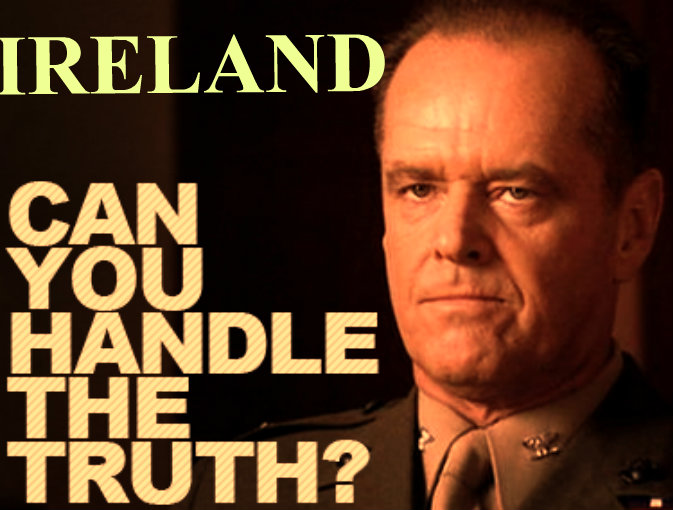
The People of Iceland have shown the way forward ! There is a very simple, peaceful way to beat the current rotten system in all of Ireland and Iceland has given a lesson in genuine democracy and solution to Ireland's problems. Its simple but unfortunately the Irish people cannot handle the simple truth !

The truth about Enda Kenny, the Irish Household Tax & the Eu Fiscal Referendum
Subscribe to:
Posts (Atom)