Tuesday, 25 December 2012

Nollaig Shona Duit


Divide and Conquer as Imperial Rules

Investigative journalist Seymour Hersh’s recent revelations that the Israeli government is encouraging Kurdish separatism in Iraq, Iran, and Syria should ring a bell for anyone who has followed the long history of English imperial ambitions.
It is no surprise that the Israelis should be using the tactic of “divide and conquer,” the cornerstone policy of an empire that dominated virtually every continent on the globe save South America. The Jewish population of British-controlled Palestine was, after all, victim to exactly the same kind of ethnic manipulation that the Sharon government is presently attempting in Northern Iraq.
Following the absorption of the Ottoman Empire after World War I, the British set about shoring up their rule by the tried and true strategy of pitting ethnic group against ethnic group, tribe against tribe, and religion against religion. When British Foreign Secretary Arthur James Balfour issued his famous 1917 Declaration guaranteeing a “homeland” for the Jewish people in Palestine, he was less concerned with righting a two thousand year old wrong than creating divisions that would serve growing British interests in the Middle East.
Sir Ronald Storrs, the first Governor of Jerusalem, certainly had no illusions about what a “Jewish homeland” in Palestine meant for the British Empire: “It will form for England,” he said, “a little loyal Jewish Ulster in a sea of potentially hostile Arabism.”
Storrs’ analogy was no accident. Ireland was where the English invented the tactic of divide and conquer, and where the devastating effectiveness of using foreign settlers to drive a wedge between the colonial rulers and the colonized made it a template for worldwide imperial rule.

Divide and Conquer Revisited

Ariel Sharon and former Prime Minister Menachem Begin normally take credit for creating the “facts on the ground” policies that have poured more than 420,000 settlers into the Occupied Territories. But they were simply copying Charles I, the English King, who in 1609 forcibly removed the O’Neill and O’Donnell clans from the north of Ireland, moved in 20,000 English and Scottish Protestants, and founded the Plantation of Ulster.
The “removal” was never really meant to cleanse Ulster of the Irish. Native labor was essential to the Plantation’s success and within 15 years more than 4,000 native Irish tenants and their families were back in Ulster. But they lived in a land divided into religious castes, with the Protestant invaders on top and the Catholic natives on the bottom.
Protestants were awarded the “Ulster privilege” which gave them special access to land and lower rents, and also served to divide them from the native Catholics. The “Ulster Privilege” is not dissimilar to the kind of “privilege” Israeli settlers enjoy in the Territories today, where their mortgages are cheap, their taxes lower and their education subsidized.
The Protestant privileges were a constant sore point with the native Irish; although in fact, most Protestants were little better off than their Catholic neighbors. Rents were uniformly onerous, regardless of religion.
Indeed, there were numerous cases where Protestants and Catholics united to protest exorbitant rents, but in virtually every case, the authorities successfully used religion and privilege to split such alliances. The Orange Order, the organization most responsible for sectarian politics in the North today, was originally formed in 1795 to break a Catholic-Protestant rent strike.

Ireland as Imperial Laboratory

The parallels between Israel and Ireland are almost eerie, unless one remembers that the latter was the laboratory for British colonialism. As in Ulster, Israeli settlers in the Occupied Territories have special privileges that divide them from Palestinians (and other Israelis as well). As in Ireland, Israeli settlers rely on the military to protect them from the “natives.” And as in Northern Ireland, there are political organizations, like the National Religious Party and the Moledet Party, which whip up sectarian hatred, and keep the population divided. The latter two parties both advocate the forcible transfer of all Arabs—Palestinians and Israelis alike—to Jordan and Egypt.
Prior to the Ulster experiment, the English had tried any number of schemes to tame the restive Irish and build a wall between conqueror and conquered. One set of laws, the 1367 Statutes of Kilkenny, forbade “gossiping” with the natives. All of them failed. Then the English hit on the idea of using ethnicity, religion, and privilege to construct a society with built-in divisions.
It worked like a charm.
The divisions were finally codified in the Penal Laws of 1692, divisions that still play themselves out in the mean streets of Belfast and Londonderry. Besides denying Catholics any civil rights (and removing those rights from Protestants who intermarried with them), the Laws blocked Catholics from signing contracts, becoming lawyers, or hiring more than two apprentices. In essence, they insured that Catholics would remain poor, powerless, and locked out of the modern world.
The laws were, in the words of the great English jurist Edmund Burke, “A machine of wide and elaborate contrivance and as well fitted for the oppression, impoverishment and degradation of a people as ever proceeded from the perverted ingenuity of man.”
Once the English hit on the tactic of using ethnic and religious differences to divide a population, the conquest of Ireland became a reality. Within 250 years, that formula would be transported to India, Africa, and the Middle East.
Sometimes populations were splintered by religions, as with Hindus, Sikhs and Muslims in India. Sometimes societies were divided by tribes, as with the Ibos and Hausa in Nigeria. Sometimes, as in Ireland, foreign ethnic groups were imported and used as a buffer between the colonial authorities and the colonized. That is how large numbers of East Indians ended up in Kenya, South Africa, British Guyana, and Uganda.
It was “divide and conquer” that made it possible for an insignificant island in the north of Europe to rule the world. Division and chaos, tribal, religious and ethnic hatred, were the secret to empire. Guns and artillery were always in the background in case things went awry, but in fact, it rarely came to that.
It would appear the Israelis have paid close attention to English colonial policy because their policies in the Occupied Territories bear a distressing resemblance to Ireland under the Penal Laws
The Israeli Knesset recently prevented Palestinians married to Arab Israelis from acquiring citizenship, a page lifted almost directly from the 1692 laws. Israeli human rights activist Yael Stein called the action “racist,” and Knesset member Zeeva Galon said it denied “the fundamental right of Arab Israelis to start families.” Even the U.S. is uncomfortable with the legislation. “The new law,” said U.S. State Department spokesman Phillip Reeker, “singles out one group for different treatment than others.”
Which, of course, was the whole point.

Imperial Blowback

As the penal laws impoverished the Irish, so do Israeli policies impoverish the Palestinians and keep them an underdeveloped pool of cheap labor. According to the United Nations, unemployment in the West Bank and Gaza is over 50 percent, and Palestinians are among the poorest people on the planet.
Any efforts by the Palestinians to build their own independent economic base are smothered by a network of walls, settler-exclusive roads and checkpoints. It is little different than British imperial policy in India, which systematically dismantled the Indian textile industry so that English cloth could clothe the sub-continent without competition.
Divide and conquer was 19th and early 20th century colonialism’s single most successful tactic of domination. It was also a disaster, one which still echoes in civil wars and regional tensions across the globe. This latter lesson does not appear to be one the Israelis have paid much attention to. As a system of rule, division and privilege may work in the short run, but over time it engenders nothing but hatred. These polices, according to Lt. Gen. Moshe Yaalon, foment “terror,” adding, “In tactical decisions, we are operating contrary to our strategic interests.”
The policy also creates divisions among Israelis. Empires benefit only a few, and always at the expense of the majority. While the Sharon government spends $1.4 billion a year holding on to the territories, 27 percent of Israeli children are officially designated “poor,” social services have been cut, and the economy is in shambles.
By playing the Kurds against Syria and Iran, the Israelis may end up triggering a Turkish invasion of Kurdish Iraq, touching off a war that could engulf the entire region. That Israel would emerge from such a conflict unscathed is illusion.
Divide and conquer fails in the long run, but only after it inflicts stupendous damage, engendering hatreds that still convulse countries like Nigeria, India and Ireland. In the end it will fail to serve even the interests of the power that uses it. England kept Ireland divided for 800 years, but in the end, it lost.
The Israelis would do well to remember the Irish poet Patrick Pearse’s eulogy over the grave of the old Fenian revolutionary, Jeremian “Rossa” O’Donovan: “I say to my people’s masters, beware. Beware of the thing that is coming. Beware of the risen people who shall take what yea would not give.”


 Political World ~ Irish Politics & International Politics

Jokes!!!Link


Monday, 24 December 2012

Marian Price Hits a Quarter Million Views for Xmas, #freemarianprice, MarianPrice, http://twitpic.com/aehj4t


Marian Price Hits a Quarter Million Views for Xmas, #freemarianprice, MarianPrice, http://twitpic.com/aehj4t: Marian Price Hits a Quarter Million Views for Xmas, #freemarianprice, MarianPrice, http://twitpic.com/aehj4t

The DNA of Diaspora Irish Times


Ireland is embedded deep in the DNA of its diaspora

DETTA O'CATHAIN
OPINION: By supporting the creation of a diaspora centre in Dún Laoghaire we will be paying tribute to our ancestors
I first associated the word “diaspora” with the Bible. Subsequently it cropped up when I read stories of persecuted people in central Europe. I didn’t necessarily associate the term with Irish emigration. However, through the decades, my understanding has broadened.
I now believe the Irish diaspora has such a good story to tell. Too frequently we have tended to adopt a “victim” status. In my view this does not sit easily with the facts.
My generation knew all about being educated “for the emigrant ship”. It seemed to be a given that most of us would find work elsewhere, taking the benefits of an excellent education around the world and enriching other countries as a result.
We should be so proud of that, and I am.
We have always taken the benefits of excellent education to other countries. Our monks enriched people in Europe – educating, caring for the poor and sick, and preaching justice and peace.
More recently the young soldiers of our tiny island bravely undertook peace missions in the Middle East and Africa as members of United Nations peacekeeping forces.
Now, when there are broadcasts from disaster areas and the tones of Irish relief workers come over the airwaves, I find myself possessively proud.
Of course there have been troubled times. I recall the public sense of horror – and my sense of shame – when my country people bombed and killed in places such as London. However, despite this, the overriding impression of the Irish diaspora is incredibly positive. Even through these dark economic times, when people are being ground down by the impact of austerity, Ireland is being applauded. It’s digging its way out of crisis and this is being noticed worldwide.
Diaspora centre plans 
In recent days I hosted a gathering of our diaspora in the House of Lords. I am a member of the leadership council of the Irish International Diaspora Trust, and the aim of the gathering was to provide a briefing on our plans to develop a diaspora centre in Dún Laoghaire in Co Dublin.
In attendance were women and men who dedicate themselves to supporting people in their local communities. There were also dynamic young people who are leaders in the professions: lawyers, medics, designers and innovators.
We are a diaspora who can hold our heads high. We contribute to the best of our ability wherever we go.
We must make every Irish person feel the same. It is appropriate and fundamentally important to celebrate the global imprint our diaspora has made and continues to make.
We live in an age of global mobility with 24-hour communication. We move around the world in a way that would be alien to our grandparents, many of whom would have been daunted by the prospect of a trip from Dublin to Cork.
After my 21st birthday my grandmother became ill. I went to see her and, at the end of the visit, I told her I could not return the following week as I was going to New York. To my horror she burst into tears (I had never seen her cry before – she was my indomitable seanmháthair). She said: “No one ever comes back from New York.” And, of course, she had seen those near and dear to her go to places such as New York and South Africa and never return. She was born in 1877.
Families were fractured but still showed resilience and created new families in so many lands.
The children of these waves of emigrants have made contributions of great importance and, although they are successful and settled in their new lands, the pull of Ireland and its culture and customs remains very strong.
As a member of the diaspora I can relate intimately to this. We have strong ties to the countries we have made home. Yet deep down a couple of lines of Yeats, a snatch of a John McCormack song (we listened on the lovely wind-up gramophone) or a news article about beautiful west Cork sets us thinking. And sometimes leaves us wishing and hoping we could be catapulted back.
There is something in our souls that is stirred. We know about the DNA of our bodies. But what about the DNA in our souls? It is strong and powerful.
We should take time to acknowledge it and draw comfort from belonging to a precious and internationally admired country. The recent approach to the Government by US Secretary of State Hillary Clinton to facilitate a strand of the third Global Diaspora Forum in Dún Laoghaire says a lot. It is recognition by her that Ireland’s diaspora has thrived, yet has remained very connected to its motherland.
Hosting the Global Diaspora Forum gives us an opportunity to consider how we can link better with our diaspora to exploit new markets, drive innovation and help in problem-solving, including in conflicts and disasters. However, it is also an opportunity to connect with and celebrate our diaspora.
Sense of belonging 
Some years ago I visited Ellis Island, which is a symbol and celebration of American immigration. It was a hugely impactful experience. Learning more about the stories of those who came to make the United States their home illuminated my connection to Ireland. I felt a sense of belonging that the 70 million other members of the Irish diaspora – from throughout the ages – shared with me. That experience has resided with me ever since.
I am pleased that the programme for government seeks to support the creation of a diaspora centre.
We must pass on to this generation and to future generations the importance of the Irish DNA of the soul. The sense of belonging to a very precious country brightens our lives. This is what, in strong terms, the diaspora centre will do.
By supporting this, we shall be paying tribute to our ancestors who worked so hard. It will offer a place for people to feel that important sense of belonging. It will give our grandchildren, and generations far into the future, a place to come when they want to seek out their roots.

Baroness Detta O’Cathain is a member of the House of Lords and of the leadership council of the Irish International Diaspora Trust, which is working to create a diaspora centre at Dún Laoghaire Harbour.
Comments (1)
We reserve the right to remove any content at any time from this Community, including without limitation if it violates the Community Standards. We ask that you report content that you in good faith believe violates the above rules by clicking the Flag link next to the offending comment or by filling outthis form. New comments are only accepted for 10 days from the date of publication.
BrianClarkeNUJ
Logout
Sort By: 
BrianClarkeNUJ
Good article but your London remarks are out of context and subjective, "British Secret State Terrorism is an Abomination" - http://www.indymedia.ie/article/102937

Sunday, 23 December 2012

Celtic Green Brigade


Is Celtic finally talking the language of global football?

by McAllister of Ongar in Exile

Football is one of the few universal languages in our world: it has the power to unite people in a passionate and unparalleled way. It can supplant life in some sections of our society and it can reward us emotionally in greater ways than we care to admit.
Looking back over the decades of my life following Celtic I can honestly say there have more good times than the bad.
Now this will definitely age me, I can recall the first time I saw Celtic. It was at Cathkin Park [1960-61 season] against Third Lanark though I can’t remember the score [I think we lost...they finished third that year] just the noise and the stench of cigarette smoke and urine. My Dad took me…he reasoned with my Mum that it would be a ‘safe game’ to go to and as my Dad didn’t have a car, we could walk from Govanhill. On the way back I was cautioned not to mention the toilet habits of our fellow supporters or my Mum would ban me from ever going again.
My excitement that day still lives with me and even now I get that same sense of anticipation and glow when I journey to any of the games.
Another seminal moment in my football supporting life was the 1963 Real Madrid - Eintracht Frankfurt European Cup Final. I was in awe of the football that night. That was my first really big football night. What a stadium Hampden was with its steep terraces and giant floodlight pylons. A magical place and it was owned by Queens Park! How could they afford it I used to wonder?
In my lifetime I have seen Celtic grow from being not even the second best team in Scotland to become the best and then the best in Britain and Europe. Yes my Dad took me to Lisbon too. I have watched them achieve international fame and infamy and back again as our beautiful club slipped back down the global rankings. But we never lost the faith.
Today it’s all about money and brands if we are to survive on 'Planet Football' and the number of football brands seems to be consolidating as the TV contracts become bigger. The big boys get richer and the wee guys get marginalised in this world of sport. According to Brandirectory, a US based sports marketing agency, Man U are the biggest global sports brand, bigger than any of their NFL, NBA or NHL franchises. Football is truly a global game.
Sitting in New York, where I travel to frequently on business, I am spell bound by Fox Soccer and its spin on ‘football’. The format is basically the same the obligatory anchorman and the couple of football pundits. Today it was Warren Barton. They talk about “three to two’ victories in “game 17” but by and large the language is pretty much the same. Their ‘uber’ enthusiasm is certainly addictive. They even managed to make the Man City - Reading post match analysis exciting.
Imagine my pride this week as I watched a re-run of Celtic versus Barca right there on Fox Soccer and following that up announcing: “Soccer’s Next Young Star” a new series launching in January filmed at Celtic AND you can watch the Celtic games by signing up to Fox Soccer Plus. North America the home of the brave, the NFL, NBA, NHL and MLS featuring our wee club, this ‘pub team’ as the English media like to call us.
It blows my mind. We might just be on the way back to the top table after all. Why? Well because the great global game is coming to terms with its need to grow its own talent if we wish to compete with the big boys. We need to be spotting “soccer’s next young star” and be like Barcelona and grow our own.
At Celtic we have always had that culture the only problem was we lost our way chasing the Ibrox dragon as it burned its way through cash and Scotland’s football heritage.
We know that our leaders made some shocking errors of judgement and didnt have courage to stick to the principles of the club and respect its heritage. However we have the best home fan base in Scotland, recognised and respected around the world. Welcomed by all for our colour, our joy, our enthusiasm and good sportsmanship and a passionate belief in our destiny. Yes frequently we’ve been kicked in the head by lady luck and fate has scorned us but we are still here, still fighting and still singing.
Along the way our club administrators might have lost the faith at times BUT WE NEVER DID!
Happy Holidays and Hail Hail
The Green Brigade is an ultras group consisting of supporters of the Scottish football club Celtic.

The group were formed in 2006 and describe themselves as a "a broad front of anti-fascist, anti-racist and anti-sectarian Celtic supporters".[1] They are normally situated in section 111 of Celtic Park; Celtic football club were closely involved in creating the Green Brigade section within the stadium. The Green Brigade have organised various displays at Celtic matches involving banners, flags and demonstrations which have been credited with improving the atmosphere at Celtic Park.

Green Brigade display on 13 August 2011
The group participate in, and often start, pro-Irish Republican Army, anti-British and Irish Republican chants.
At a match against Dundee United in November 2010, there was serious disorder in the section occupied by the Green Brigade when a supporter was being ejected by stewards.[5]Supporters charged at the security guards and one was left with a bloody lip after a coin was reportedly thrown.
In April 2011 at the Scottish Cup semi-final against Aberdeen police officers attempted to remove a supporter who had set off a flare inside the stadium. Police were unable to remove the supporter because other fans held onto him. Four supporters were later held by police in connection with the incident.More than 100 Green Brigade members walked out of the stadium in protest of the arrests.
In April 2011 some members of the Green Brigade were not sent season ticket renewal forms after the club threatened to disperse the group around other sections of the stadium.
After the last match of the 2011-12 season Celtic manager Neil Lennon presented the SPL trophy to the Green Brigade by placing it in front of the section where they sit. He later said, "I just wanted to say thank you to them because they have, week in, week out, created a great atmosphere. They sing non-stop. They add colour. Sometimes they are a little bit controversial but in the main they have behaved themselves impeccably and they have changed the culture of the stadium. It’s a fun place to come for the supporters and the atmosphere in the big games has been fantastic. They are the catalyst for all of that."[8]
In November 2012, the Green Brigade organised a pre-match card display against Barcelona to celebrate Celtic's 125th anniversary.The display featured a Celtic cross, green and white hoops and 125 Celtic in written form, with supporters earning the praise of club chairman Peter Lawwell


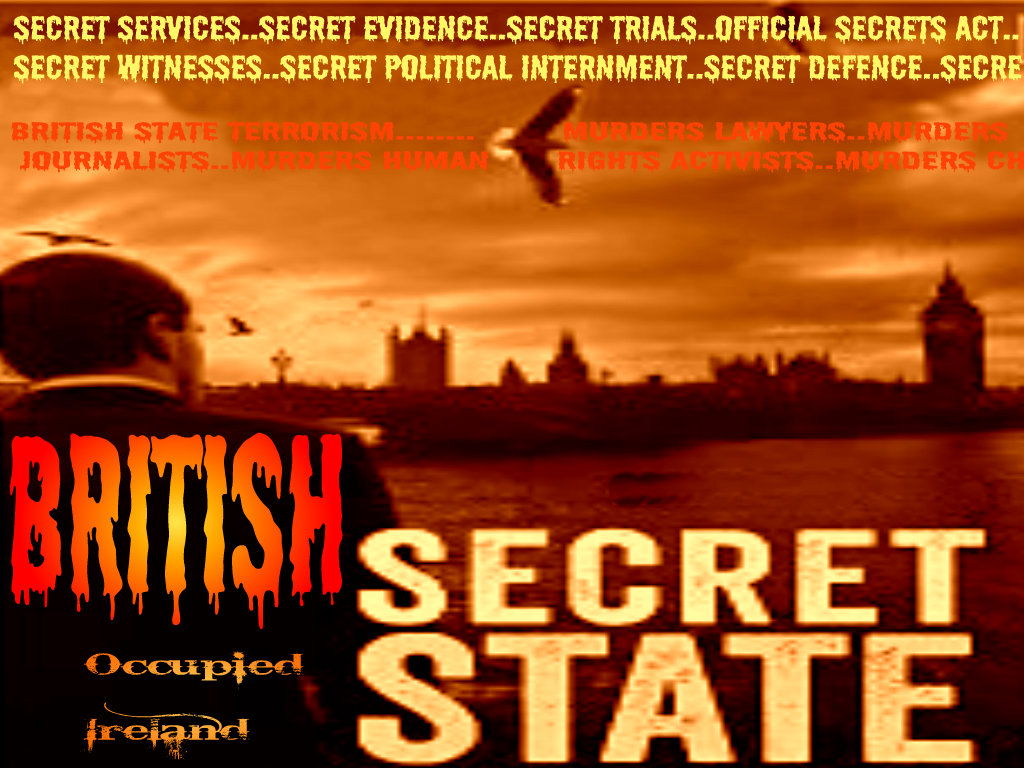
British Secret State Terrorism is an Abomination


British Secret State Terrorism is an Abomination

category international | rights and freedoms | opinion/analysis author Sunday December 23, 2012 05:06author by BrianClarke - AllVoices Report this post to the editors
War Crimes of Occupation in ireland
The Ministry of Defence in London has just paid out £14 million in compensation to hundreds of Iraqis who were illegally detained and tortured by British forces during the five-year occupation of the south-east of the country, demonstrating the British have broken their promises and undertakings to the international community once again.

On the 18th January 1978, the Government of the Republic of Ireland brought an application against Britain, before the Commission of International Human Rights in Strasbourg (ii) that various interrogation practices--in particular the so-called 'five techniques', which included wall- standing, hooding and deprivation of sleep and food--and other practices to which suspects were subjected amounted to torture and inhuman or degrading treatment contrary to Article 3...The Commission unanimously found that the five techniques did constitute a practice of torture and that other practices amounted to inhuman and degrading treatment
British Secret  State Terrorism
British Secret State Terrorism
British Secret State Terrorism is an Abomination

Lawyers and international human rights groups say there is systemic abuse in British Occupied Ireland. Indeed we learned last week the British murder lawyers and human rights activists there, Now their ability to hold Irish citizens or what they term British commoners without trial ,is so fundamentally wrong, it goes against everything a civilized society stands for.

When you're accused of a crime in a civilized society, you get a trial, you get a trial by a jury of your peers, no matter how heinous your crime is, no matter how awful you are, you are given a transparent trial. The miscarriages of justice in the instances of the Guilford Four and Birmingham Six demonstrate the injustices of the British system in open court, what then, are your chance being Irish in secret courts?

The Ministry of Defence in London has just paid out £14 million in compensation to hundreds of Iraqis who were illegally detained and tortured by British forces during the five-year occupation of the south-east of the country, demonstrating the British have broken their promises and undertakings to the international community once again.

On the 18th January 1978, the Government of the Republic of Ireland brought an application against Britain, before the Commission of International Human Rights in Strasbourg (ii) that various interrogation practices--in particular the so-called 'five techniques', which included wall- standing, hooding and deprivation of sleep and food--and other practices to which suspects were subjected amounted to torture and inhuman or degrading treatment contrary to Article 3...The Commission unanimously found that the five techniques did constitute a practice of torture and that other practices amounted to inhuman and degrading treatment

On the same day the Parker report was published on 2 March 1972, the United Kingdom Prime Minister stated in Parliament, that its torture techniques in British Occupied Ireland would not be used ever again in future. The Prime Minister's statement, directives expressly prohibiting the use of the techniques, whether singly or in combination, which were then issued to their forces by the Government.

At a hearing before British Courts on 8 February 1977, the British Attorney-General declared that the 'five techniques' would not in any circumstances be reintroduced either collectively or individually. Yetstill the torture goes on with the Marian Price and others secretly interned without trial in British Occupied Ireland, while hundreds more claims are in the pipeline as Iraqis become aware that they are able to bring proceedings against the UK in the London courts.

Human rights groups and lawyers representing former prisoners say, that the abuse was systemic, with military interrogators and guards responsible for the mistreatment, acting in accordance with both their training in the UK. Campaigners are calling for a public inquiry into the UK's detention and interrogation practices.

Those compensated were male civilians who said they had been beaten, deprived of sleep and threatened before being interrogated by the British, who detained them on suspicion of involvement in the violent insurgency against the Occupation. Others were forced into stress positions for prolonged periods.

Most of the complaints come from the actions of shadowy military intelligence units. Officials of the International Committee of the Red Cross complained incessantly. Despite this, the interrogators shot hundreds of videos of themselves threatening and abusing men, bruised, disoriented, starved and sleep deprived in many cases, too exhausted to stand.

A soldier who served as a guard, said that he was ordered to grab blindfolded prisoners by their thumbs, then drag them around assault courses.He said that the prisoners were often beaten during these runs and that they would then be returned for interrogation in camera.These interrogation centres are regarded as "Britain's Abu Ghraib". These are the same people who run secret trials, with secret witnesses, secret evidence based on secret torture, to secretly intern indefinitely, prisoners of political conscience who object to British Occupation in Ireland.

The number of claimants both from torture in Ireland and Iraq, clearly demonstrates a systemic problem and combined with other ongoing British war crimes in Occupied Ireland such as the state murder of human rights lawyers and journalists, it is high time this be made fully accounted for with victims but also the British taxpayers, with an obvious interest to know the truth but also of the millions subsequently spent in compensation in both Iraq and Ireland to British torture victims.

Human rights groups and lawyers say the UK government is obliged to hold an inquiry to meet its obligations under the European convention on human rights, particularly under article three of the convention, which protects individuals from torture like Marian price received while in solitary confinement for over a year, who is spending her second Xmas interned without trial. After a hearing, in the British high court highlighting matters supporting the allegations of systemic abuse. These include:

• The same techniques being used at the same places for the same purpose: to assist interrogation.

• The facilities being under the command of an officer.

• Military doctors examining each prisoner at various stages in their detention.

• Investigations by the Royal Military police that were concluded without anyone being held to account.

The MoD claims no public inquiry is necessary, as it has instituted an investigation body of its own. After Ihat investigators examined the videos shot at Jfit, three interrogators were referred to the Service Prosecuting Authority, with a recommendation that war crimes charges be considered. However lawyers for the prisoners believe Ihat is insufficiently independent, with one investigator already quitting Ihat, alleging that the organisation's inquiry is not genuine but a typical British face-saving exercise of more secrecy.
Related Link: http://irishblog-irelandblog.blogspot.com/
Assange