Thursday, 12 February 2015

SPIRIT LIBERATES


PRESS RELEASE

THE HOODED MEN
We, The Hooded Men, and KRW LAW LLP successfully challenged the Irish government in its initial failure to refer the case of The Hooded Men back to the European Court of Human Rights to be examined again and for this time for the Court to declare that the treatment of The Hooded Men amounted to torture.
The Irish government decided not to fight the challenge and has duly made an Application to the ECtHR so that The Hooded Men case of Ireland v UK can be re-opened. This is significant in both legal and political terms as it send a clear message to the UK government from the Irish government that human rights violations in the past have to be accounted for in the present.
It also sends a message to the USA – specifically at Langley and the Pentagon – that the techniques they considered only inhuman and degrading now constitute torture.
In addition to this ECtHR Application, we are also issuing proceedings against the UK government to establish an independent investigation into the torture of The Hooded Men there having been no investigation to date. This action is being taken against the Secretary of State for Northern Ireland and the PSNI: the demand is for a statutory investigation into the use of torture by British security forces, including the RUC, during the period of internment and that this investigation must comply with Article 3 of the ECHR in that it must satisfy the jurisprudence of human rights compliant investigation. We argue that the PSNI is not able to conduct such an investigation and that the UK government has an on-going due to discharge its obligations toward The Hooded Men separate to the proceedings before the ECtHR. The fight to expose the wrongs committed against us, continues until truth and justice will out.
Jim McIlmurray, Case Coordinator for The Hooded Men, said: "There is a ‘pressing need’ for those in public office to be held accountable for what these men went through. The evidence that the British government deliberately withheld vital information from the courts is compelling. We have full confidence in our legal team and look forward to our day in court. Justice is not something to be awarded to those who are thought deserving and denied to those who are thought undeserving.”
“A significant amount of time has been spent in consultation with our solicitor, and we are now confident that we have secured a formidable legal team which will represent our interests, and succeed, in overturning the original decision, and finally revealing the truth.”
“In this we are fortunate enough to have instructed leading lawyers from Belfast, Dublin and London. As the consultation with our solicitor is ongoing, we do not seek to make any further comment at this stage”.
Darragh Mackin, of KRW LAW LLP said: “At this stage, the European Court has yet to make its determination on Ireland’s Application. Until such times as the case is communicated to the Respondent Government, the UK, we do not feel it appropriate to make any further comment.”
Jim McIlmurray

IRPWA Activists Assaulted By The PSNI

IRPWA Activists Assaulted By The PSNI
On Tuesday 10th February two IRPWA members, Alan Lundy from Belfast and Kevin Murphy from Tyrone, were travelling in a car in St James’s off the Falls Road.
Without warning, four unmarked cars surrounded the two activists and a number of men in balaclavas pounced from the vehicles with weapons (including automatic rifles) drawn. They proceeded to smash a number of windows in the car with rifle butts and batons, without indicating who they were. At no time during this ordeal did they state why Alan and Kevin were stopped or indicate which draconian legislation was in use, as they proceeded to assault them and trail them from the car. They continued their assault on the ground, cable tying their wrists together with a number of guns in their faces. Threats to kill were also made.
Both IRPWA activists were left on the ground for over an hour after being assaulted and searched, during which time they were verbally abused by the PSNI officers present. The car, which had already had windows smashed, was also further damaged during the prolonged invasion of privacy. As is the norm with Stop and Searches under the repressive legislation employed by the State, nothing was found and both were released without an arrest being made. Despite no evidence of any “wrongdoing” being found, the PSNI seized both men’s phones and other property.
This episode adds credence to the Republican position that the PSNI remains a vital part of the repressive state apparatus that Britain employs in Ireland. They are unreformed and irreformable, rejected by Republican Communities across the Six Counties.
At the same time, it is a reflection of the positive work that the IRPWA is engaged in – ensuring the welfare of Republican Political Prisoners and offering a positive outlet for those willing to campaign on their behalf. Recent weeks have seen an upsurge in public support for Republican Prisoners, due to the brutalisation in Maghaberry. This has been ably demonstrated by continuing IRPWA protest activity across Ireland.
These assaults on two Republican activists are the State’s response. They think that through violence and intimidation they will silence the IRPWA. They will fail. We remain committed to the cause of our Republican Political Prisoners, and take inspiration from them. Like the Prisoners, their comrades on the outside will not be bullied into submission by the State and remain committed to a campaign of Resistance.

A Moral Imperative: Release Aging and Long-

Term Prisoners

Tuesday, 10 February 2015 09:38By Jean Trounstine, Truthout | News Analysis

It was only for a moment, but on January 20, 2015, this country's criminal punishment system got a general call for reform in President Obama's state of the union address. With 5 percent of the world's population and 25 percent of the world's incarcerated people, it's about time we heard this from our president. But what we didn't hear was an analysis of exactly what we can do to shrink this massive system.
While Attorney General Eric Holder and many others have urged an end to needless mandatory minimums - a good step toward decarceration - this is not going far enough. Research from a variety of nonprofits like the Sentencing Project and Human Rights Watch have shown that the majority of long-term prisoners, including many who have committed the most violent acts, are actually the best bet to exit prisons and not return to crime.

Who Are Our Long-Term Prisoners?

A 2014 study by the National Academy of Sciences reported that during the 1990s, the federal government and more than half the states enacted truth-in-sentencing and three strikes laws - all aimed at harsh punishment - both increasing the prison population and the length of sentences these prisoners are serving.

Age 55 is considered borderline geriatric in prison, because life expectancy is reduced for jailed men and women. The ACLU estimates that by 2030, "over one-third of all prisoners in the United States will be over 55.

Nationwide, as of 2012, the Sentencing Project reported that there were 159,520 people serving life sentences; that comes down to one of every nine individuals who were incarcerated in prisons. Nearly half of these men and women (more than 5,000 were female) were African American, and one-sixth were Latino. Ten thousand were sentenced before they turned eighteen, and in 2009, the Sentencing Project estimated that 77 percent of juveniles sentenced to life were youth of color. One in four were sentenced to life with no chance of parole. Therefore, clemency - the granting of relief from all or part of a sentence by a governor, in the case of state sentences, or by the president, for federal time - would be their only avenue to not dying behind bars, aside from an appeal or a new trial.
In 2009, the Sentencing Project estimated that nationally, the average length of time served by this population prior to parole eligibility was 25 years.
Add to this information a 2010 Human Rights Watch report that determined 124,400 prisoners were age 55 or older. Age 55 is considered borderline geriatric in prison, because life expectancy is reduced for jailed men and women, according to the National Commission on Correctional Health Care. The ACLU estimates that by 2030, "over one-third of all prisoners in the United States will be over 55."
As prison reform becomes a clearer goal on the national horizon, advocates are urging that we acknowledge the plight of aging and long-term prisoners and take into consideration the level of "risk" in releasing them.
Why Release?
Glenn Martin, who served six years in prison for armed robbery, became a paralegal, a policy analyst and a fundraiser when he got out, and now headsJustLeadershipUSA, founded on the principle that "the most compelling advocates of change are those who have been directly affected by incarceration." JustLeadership is dedicated to reducing crime and cutting the prison population in half by 2030.
In an interview with Truthout, Martin said that reducing the incarceration numbers is "all about identifying the person who doesn't belong behind bars" and that means those who are the least risk to reoffend. Some researchers believe that proper risk assessment tools can help us determine those few long-termers who are likely to recommit a violent crime. However, journalist Leon Neyfakh, in The Boston Globe, also labeled the value of these tools as a way to assess workable treatment and rehabilitative programs for those who have lived behind bars for years before exiting prison. There is no national agreement on how exactly to use risk assessment.
Glenn Martin said that even the discussion of risk assessment has a downside. "Instead of merely talking about people who do not belong in prison, we should be indicting the system itself," as it provides no clear access to jobs, housing or community support upon release. The discussion also means understanding that violent crime is most often situational. In other words, those convicted of a violent offense against another person were driven by what, Jonathan Simon, professor of law at UC Berkeley, calls "complex combinations of conflicts, propensities and accelerants like drugs and alcohol."
The best argument for release is a "moral argument," said Martin. If they are no longer a risk, why not give these men and women a second chance?

Of 860 people convicted of homicide and sentenced to life, the study found only five individuals (fewer than 1 percent) returned to prison or jail because of new felonies - and none for a crime that involved taking a life.

By 2012, per the Sentencing Project, 48 states had parole as a mechanism for lifers to get second chances - a way to release those no longer considered a danger to the community. Martin believes this form of releasing prisoners back into the free world can "give you someone in your corner," but that means a parole officer must be trained in treatment and support for his clients, not just in supervision. While parole is not without problems - parole officers can send people back to prison for noncriminal violations such as missing appointments or a failed drug test, and parole is not always used effectively in our states, and is banned in others - it can give people a second chance if there is real reentry support and not just a list of rules to follow.
According to a 2011 Stanford Law School study, California lifers who were eventually released on parole went back to committing serious crimes a "miniscule" amount. Of 860 people convicted of homicide and sentenced to life, the study found only five individuals (fewer than 1 percent) returned to prison or jail because of new felonies - and none for a crime that involved taking a life.
According to a 2009 study by the Michigan-based Citizens Alliance on Prisons and Public Spending (CAPPS), parolees originally convicted of homicide reoffended the least of all groups of ex-prisoners. Of 2,558 homicide parolees in that state, only 2.7 percent were returned to prison for any new crime, and larceny was the most common.

"We are never going to get to the root of the problem unless we get to the heart of the 'punishment paradigm,' and the way we can do that is ask when is punishment enough."

While the results may seem counterintuitive to the public, these studies are not surprising to men and women who have served time. Mujahid Farid, incarcerated for 33 years in New York, saw the parole board nine times before his release. "If the risk is low, let them go," he said in an interview with Truthout. This is the motto of the Release Aging Prisoners Project (RAPP), an organization Farid founded with colleagues in 2013 and currently directs. Many long-term prisoners are also elderly and sick or dying. RAPP has worked with heartbreaking cases - people who've served many years beyond what was a deterrent to crime and beyond any ostensible retributive value of incarceration.

One such person is Mohaman Koti, who at 86 is in a wheelchair, and far from the healthy 40ish-year-old convicted for attempted murder of a police officer. The New York Times stated that the case was so old that the parole board could not find a copy of the transcript from his sentencing. At his sixth parole hearing in 2013, suffering from a slew of medical problems, he heard a loud "No" to parole. As the Village Voice reported, "The board said he had a history of violence, was at risk to commit another crime, and letting him go would create disrespect for the law."

Laura Whitehorn, another RAPP founder who served more than 14 years behind bars and now advocates for aging prisoners, told Truthout that Koti finally earned parole in 2014 after he appealed the state decision. He was released by the state. However, the US government decided to intervene because of a federal parole violation based on old charges: "He was picked up by the Feds and pointlessly re-incarcerated in a federal facility," Whitehorn said. In no way does he present a threat to public safety, so activists like Whitehorn wonder why we are spending resources on keeping the elderly behind bars.
"We are never going to get to the root of the problem unless we get to the heart of the 'punishment paradigm,' and the way we can do that is ask when is punishment enough," said Farid. That means realizing that people age out of crime. As theStanford Law School report clarifies: most acts of violence are committed by people under age 30; the number declines drastically after age 40, and even more so after age 50.
Why Are There Public Misperceptions About Lifers?
The so-called tough-on-crime era brought us public officials who politicized crime, often to their advantage. The Sentencing Project's research indicates that states' reluctance to use parole or clemency mechanisms for lifers coincides with elected officials who fear looking "soft" on crime. The media too, has played into misunderstandings. First, there has been little explanation to the public about parole and how it can aid in reducing prison populations. Secondly, the media publicizes false statements from policy makers such as "life means life." As reported by the Sentencing Project, if the public believes that "life sentences require whole-life imprisonment," then "when a lifer is paroled, they often believe that somehow the system has failed."
An example is former California Gov. Gray Davis, who honed his tough-guy reputation with the pronouncement that those convicted of homicide would only leave prison "in a pine box" and that, "[i]f you take someone else's life, forget it. I see no reason to parole people who have committed an act of murder." He made good on his word: only eight lifers in California were released during his 1999-2003 term - in a state where, in 2003, some 20,000 prisoners were serving life sentences, eligible for parole at some point during their sentence.
Laura Whitehorn pointed out how people rarely consider that there are women serving long sentences. "I was locked up with many women serving enormously inflated sentences on 'girlfriend crimes.' They had been connected to a man who was a drug dealer, and due to the bizarre federal conspiracy laws, some of the women ended up with longer sentences than the men."
The public also has little idea of the cost of keeping people locked up, which varies from state to state. In Massachusetts, for example, according to the Massachusetts Executive Office of Public Safety and Security, it costs an average of $45,500 to house a prisoner in a state facility; contrast this with $5,000 to supervise her on parole. But if the person is sick or dying, the ACLU says, nationally, it costs more than $68,000 to keep that person behind bars - and that's a conservative figure for Massachusetts, where costs far exceed the national average of $34,000 per prisoner.
What Are We Really Afraid of?
Some policy makers and prisoner advocates worry that the discussion of how to release people from prison is fraught with race and class biases. Attorney General Eric Holder touched on this in a recent speech to a gathering of the National Association of Criminal Defense Lawyers: "By basing sentencing decisions on static factors and immutable characteristics - like the defendant's education level, socioeconomic background, or neighborhood - they may exacerbate unwarranted and unjust disparities that are already far too common in our criminal justice system and in our society.''

Risk assessment is yet another part of a punishment system which many have described as biased - from arrest to filing of charges, conviction, incarceration and to who gets parole. Activists and scholars like Professor Angela Y. Davis have writtenthat we must acknowledge that "criminality and deviance are racialized."
While policy makers claim our parole policies are harsh because they are afraid to release so-called dangerous people onto our streets, Glenn Martin is one who takes exception to the underbelly of the word "dangerous." He said, "What we are really afraid of is men of color - not crime." He added, "People lean on the criminal justice system as a way of keeping those scary people away from them."

RAPP's Mujahid Farid put it this way: "If we see people as 'the other,' we are less likely to have empathy towards them and respond to their needs, which touches on what we have experienced with the police." Speaking of what happened when Eric Garner recently was killed by a police officer in New York, he said, "How can we choke a man to death 11 times unless we feel that he is 'the other?' "
Radical Solutions Needed
Understanding the reality of those who live behind bars is one of the first steps toward solving the problem of mass incarceration. Increasing the use of executive clemency, which Families Against Mandatory Minimums reported in 2010 has been almost nonexistent for three decades, is crucial; restoring the role of parole for lifers is another important step. But Professor Jonathan Simon, author of several books and many articles on the justice system, offers new ideas that could actually help right the inequities plaguing our punishment system most quickly.
Simon told Truthout that we need a radical new approach to sentencing, "a dramatic reduction in length," because "there is no empirical foundation that lengthy sentences prevent recidivism. They are always justified as 'retributive,' " he said. "When we look around the world, 10 to 15 years is a standard used for homicide. Beyond 10 years, there is no deterrent value." Ten years would still be respectful to the victims of violent crimes, Simon added.
To deal with prisoners already serving long sentences, Simon suggests "an amnesty policy." This policy would apply across the board to prisoners who've served a determined amount of time. Simon advocates that, once that period of time is served, prisoners should be released wholesale. (Upon release, they would be provided with all the best possible help for reentry.)
This approach - "retroactively resentencing without individually considering cases" - is quite different than parole, in that it doesn't depend on risk assessment or on individual records. Simon said this amnesty policy could provide a "legal demarcation that our mass incarceration policies were wrong," and it would "underscore the fact that our justice system is really broken." He realizes that amnesty would take careful planning, but it could work quickly to release substantial numbers of people and shrink the size of the prison system as a whole.

As Simon wrote on October 21, 2014, about his home state of California's prison crisis, "We will need an initiative to roll back sentences on violent crime.  . . . The vast majority of people convicted of an offense against the person . . . are no more likely to commit such an act in the future than those who have not been convicted, but come from the same social circumstances and situation. There are far better ways to spend money on reducing violence than incarcerating aging prisoners who once did something violent. But for now, few even in the anti-mass incarceration community are ready to take on that fight."
It is a moral imperative to do so.

Tuesday, 10 February 2015

CHINESE YEAR OF THE GOAT IRELAND


As an Irishman, originally from the south of Ireland but with immediate family in the north of Ireland, I welcome the Willie Frazer, 'Love Ulster' march in Dublin and I hope his visit can be peaceful, with celebration. On the 19th of February, the Chinese New Year begins, with wild celebrations and this will be the 'Year of the Goat'. This tradition is strong where I currently live and is a very colourful event annually. I have spent many happy years in the north of Ireland, albeit with its troubles and I care very much about its future, my heart is there. When I lived there, I was invited to Twelfth celebrations in Scarva, which I politely turned down, for security reasons, because it was in a time of some of the worst of the troubles. I would have liked, to have witnessed the event, perhaps some day. Everyone is entitled to celebrate and be a little silly, sometimes.


More than 20 years ago, after I was liberated from alcohol, I got on an airplane for the first time and went to Munich. It was shortly after the Berlin wall came down and the process of uniting East and West Germany started. Munich was inundated by people from the East, with all sorts of social contradictions, coupled by a certain caution in Munich, which I found to be introverted, couple with ghosts from its history, still there, particularly the the Second World War. I later had a relationship with a woman from Bavaria, in a town called Aschau, resulting in the birth of a beautiful baby daughter. However Munich at that time, felt cold for me, in more senses than one. So I caught the night train to Amsterdam, which passes through the beautiful City of Cologne, which I later found, to be a very friendly place. However, I recall clearly to this very day, the change in the atmosphere, the liberating moment, we crossed into the Netherland's, formerly known as Holland, where the train finally stopped in Amsterdam. Right from the off, it was a magical place for me, at that time. The West was putting its best foot forward in Europe, at that particular time, to entice the East over to its side. I met a soulmate, called Tinka in Amsterdam, who really demonstrated, all of the inner beauty and unique, eccentric qualities of A'dam.

She started with Vondel Park, where John Lennon and Yoko, had their famous mass Love-In, as part of their global, 'Give Peace a Chance' crusade. She took me first, to the to the  Sculpture of Tolerance, in the heart of Vondel Park and explained its significance. Bearing in mind, that this place was the home of William of Orange, which affected so many Irish lives considerably, I found the contradictions of Amsterdam tolerance, at that time, with my life experience, in the six counties of the north, an overwhelming paradox. Amsterdam's unique, relaxed, carefree, atmosphere, was also unique within the Netherlands, because the rest of the country, had a quite, reserved, Calvinist tradition, but A'dam was also a melting pot of many international cultures. Foe me it was simply magical and I had wonderful times there. I tentatively, checked out the Coffee houses there and partook sparingly, on a few occasions, which was a different story in redlight District, because of my own personality. I eventually had a relationship, with a very traditional Dutch woman, who came with me, when I returned to Ireland after more than five years there. 

Eventually we split, because she wanted to have a baby, and I felt I already had more than my fair share, while, at the same time, she deserved someone younger and more responsible. So I have very fond memories of Amsterdam, and I feel a little sad, that it has moved politically to the right, with the general shift in European politics. There is much I learned in Amsterdam, and I feel, there is much Ireland can learn, from the enlightened Dutch way with minorities and for those incarcerated, currently in both parts of Ireland, particularly political prisoners. David Forde and your counterpart, please take note and consider a trip. The International Criminal Court is also based there in the Hague.

So with that experience, in the modern, former home of William of Orange, I welcome William and his tradition of 'Riding the Goat', to the City of Dublin, with all its contradictions of history. Other than letting loose a couple of hundred goats, to welcome William and keep him company, I hope Dublin is as tolerantly civilized and colourfully warm to 'Love Ulster', as Amsterdam was to me. Fáilte go mBaile Átha Cliath! – Welcome to Dublin! Céad míle fáilte romhat, Liam.

brionOcleirigh, Irish Blog.


Belfast Telegraph


Love Ulster rally in Dublin will go ahead, says Willie Frazer


Meeting: Willie Frazer
 

10 FEBRUARY 2015
Loyalist Willie Frazer has said that a Love Ulster march will go ahead in Dublin "in the next couple of weeks" after he met with senior members of the Irish police.


The high-level meeting took place at Balbriggan Garda station yesterday morning, with Chief Superintendent Pat Leahy of Store Street Garda station and Detective Chief Superintendent John Gilligan of the force's Liaison and Protection section in attendance.

Mr Frazer said after the talks that Garda chiefs were "more than happy" to facilitate the march.

The last Love Ulster march in Dublin in 2006 was marred by major rioting in the heart of the city.


Year of the Goat


The Goat comes 8th in the Chinese zodiac. The 12 zodiac animals are: Rat, Ox, Tiger, Rabbit, Dragon, Snake, Horse, Goat, Monkey, Rooster, Dog, and Pig.

According to Chinese astrology, each year (starting from Chinese New Year) is associated with an animal sign, occurring in a 12-year cycle. For example 2015 is a year of the Goat.
Lucky Colors: brown, red, purple
Lucky Numbers: 2, 7
Lucky Flowers: carnation, primrose
Year of Birth: 1919, 1931, 1943, 1955, 1967, 1979, 1991, 2003, 2015, 2027


2015 — A Year of the Goat

Chinese New Year 2015 will begin the latest Year of the Goat. Decorations will reflect this and Goat sign people will take special care about what they do

Goats, 2015 is an important year for you according to zodiac theory. It is your Ben Ming Nian. See How to Bring Yourself Good Luck in Your Ben Ming Nian.


Choose your date of birth and find out about your Chinese zodiac sign.

The Goat's Personality: Calm, Gentle...

People born in a year of the Goat are generally believed to be gentle mild-mannered, shy, stable, sympathetic, amicable, and brimming with a strong sense of kindheartedness and justice.

They have very delicate thoughts, strong creativity, and perseverance, and acquire professional skills well. Although they look gentle on the surface, they are tough on the inside, always insisting on their own opinions in their minds. They have strong inner resilience and excellent defensive instincts.

Though they prefer to be in groups, they do not want to be the center of attention. They are reserved and quiet, most likely because they like spending much time in their thoughts. Goats like to spend money on fashionable things that give them a first class appearance. Although goats enjoy spending money on the finer things in life, they are not snobbish.
Good Health for "Goats"

People born in a year of the Goat are very serene and calm. Therefore they tend to havefewer health problems.

If goat people are in mental and emotional good spirits, this should have a positive effect on their physical health. Eating fresh and organic produce, and eliminating red meat from their diet when possible, is an effective way to keep healthy. They should get out among nature and commune with the great outdoors. Fresh air, trees, and sunshine will all do wonders for their health. Goat people should have a regular schedule for meals and keep their sleep and waking times consistent.
The Best Jobs or Career for Goats

People born in the year of the goat prefer to work in a team. Their best work partners are Horses. They are not crazy about status and power. Unless asked, they won't ever volunteer for anything and act as leaders. Good career choices for goats are pediatrician, actor, daycare teacher, interior designer, florist, hair stylist, musician, editor, illustrator, and art history teacher.

Read more on What Zodiac Sign Is Your Best Work Partner.
How to Build Relationships with "Goat People"

Generally speaking, Goats are private. Therefore it may take time and effort to get to know those who are born in a year of the Goat. Goats seldom share their personal lives. This is the reason why most Goats have few intimate friends. Once they become friends, their friendship is peaceful and fulfilling. They work hard for those they love.
The Luckiest Things for "Goats"

According to Chinese astrology, each animal zodiac has its own lucky numbers, lucky days, lucky colors, lucky flowers, and a best direction. Here are the Goat's:
Lucky numbers: 2, 7, or numbers containing 2 and 7 (like 27 and 72)
Lucky days: the 7th and 30th of any month according to the Chinese lunar calendar
Lucky colors: brown, red, and purple
Lucky flowers: carnations and primroses
Lucky direction: north
Things that Should be Avoided by Goats

These things are believed to be unlucky for Goat people.
Unlucky colors: green, blue, and black. Goat people should avoid wearing these colors.
Unlucky numbers: 6 and 8
Unlucky direction: southwest
Worst lunar months: third, sixth, and tenth. Avoid these months if you have some important business to do or want to plan an event.
Is Goat Year 2015 a Lucky Year for "Goats"?


2015 is a benmingnian (本命年 /bnn-ming-nyen/ 'origin life year' or zodiac year corresponding to one's birth year) for people born in a year of the Goat. In Chinese culture, a year of one's birth sign is unlucky.

Love and relationships: Married Goats will get along well with their spouses and will enhance their relationships through daily quarrels.

Single Goats will find their lifelong love under the guidance of elders, however they should show more care for their partners in order to avoid family disputes.

Beware of Financial Loss

The propensity for good fortune will not be very good for those born in a year of the Goat, and they will easily become involved in financial difficulties. Therefore, they should adopt conservative strategies when dealing with investments. They should try their best to increase their income, decrease their expenditure, and live within their means. Lottery fans should restrain themselves from gambling too much in order to avoid big losses.
How to Make Your Career Path Smoother in 2015?

People born in a year of the Goat generally have a smooth career, and will readily get help from wealthy beneficiaries. They usually be able to avoid adverse situations. Many opportunities for promotion, cooperation, and investment await them. However, they should deal with problems concerning their partners properly to avoid acrimony.
How Can Goats Have Good Health in 2015?

In 2015 Goats will tend to have good health, although they will suffer from slight illnesses occasionally, such as headaches. They should prepare some medicine before traveling very far, especially at a turn of the seasons. They should watch their diets, get sufficient rest, and do more exercise in order to boost their body's resistance against diseases.

Love Compatibility: Is She/He Compatible with You?

Best with: Rabbit, Horse or Pig

Worst with: Ox, Dragon, Snake or Dog


Take our online love Compatibility test
Is it a Good Year to Give Birth to a Baby?

There is a popular Chinese folk saying 'Only one out of ten people born in a year of the Goat finds happiness' (十羊九不全), which means most babies born in a year of the Goat are destined for failed marriages, unhappy families, and bad luck. Most Chinese people also believe that babies born in a Goat year will grow up to be followers rather than leaders.

Therefore many Chinese couples take steps to avoid having children in a year of the Goat. Many young Chinese couples have been trying desperately to conceive, racing against time to have a baby in the 2014 year of the Horse, which is considered far luckier than a Goat year.

Although this is an outdated superstition which seems silly, it has a real effect on Chinese society.
What Type of "Goat" Are You: Wood, Fire, Earth, Gold, or Water?

In Chinese element theory, each zodiac sign is associated with one of five elements: gold (metal), wood, water, fire, or earth, which means that e.g. a Wood Goat comes in a 60-year cycle.

It is theorized that a person's characteristics are decided by their birth year's zodiac animal sign and element. So there are five types of Goats, each with different characteristics:
Type of GoatYear of BirthCharacteristics
Wood Goat 1955, 2015 Amicable, gentle, and compassionate.
Fire Goat 1907, 1967 Amicable, frank, and honest, always making everything clean and tidy.
Earth Goat 1919, 1979 Righteous, honest, straightforward, and will never harm their friends.
Gold Goat 1931, 1991 Ambitious and kind-hearted with a strong sense of responsibility in work; sometimes too stubborn.
Water Goat 1943, 2003 Always ready to help others, and they can sacrifice their own interests for others


IRISH PLAN FIRST SPACE CADET


Republicans planned to use a rocket launcher, to launch Occupied Ireland’s deputy first minister, Martin McGuinness into space, it has been revealed. McGuinness says he has been warned, of the Continuity IRA (CIRA) plan, by the PSNI(RUC).


In a statement, McGuinness said: “I have been made aware, the PSNI has discovered a plan to launch a rocket. The PSNI has said, that a group calling itself CIRA, considered using a rocket launcher.” recently after 12 suspected CIRA members were arrested, in a raid at a house, which was under surveillance for some time by MI5. A number of men have appeared in court charged with terror offences linked to an operation in Ardcarn Park, Newry in County Down.


McGuinness visits the Queen often, which causes outrage among hardline republicans. He has been with the monarch often, including at Windsor Castle“I will not be silenced or deterred,” said the Sinn Féin Leader.“They need to abandon these futile actions. This will not stop me or anyone in Sinn Féin” CIRA split from the Provisional IRA when it declared a ceasefire in 1994. 


While the IRA moved to decommission arms, CIRA aims to kill members of British Occupation Forces, in pursuit of a united Ireland. However the Continuity IRA, have denied any link with these matters and have declared, that those arrested are not Continuity IRA prisoners, according to a statement made earlier, which casts considerable credibility issues, with regard to PSNI and McGuiness, assertions.

Payback time? Greek PM seeks reparations over Nazi occupation & war-time loan


Prime Minister Alexis Tsipras, referring to Nazi Germany’s four-year occupation of Greece and a forced war-time loan during World War II that saddled the Greek economy in huge debt, wants Berlin to pay reparations.

Tsipras, leader of the anti-austerity Syriza party, said Athens had a “historical obligation” to claim from Germany billions of euros in reparations for the physical and financial destruction committed during Nazi Germany’s occupation of Greece.

Beyond the historical obligation, he said Greece had "a moral obligation to our people, to history, to all European peoples who fought and gave their blood against Nazism,"he said in a keynote address to parliament on Sunday.

The Greek leader’s comments have resonated far beyond Athens as they place the issue of his country’s recent massive bailout at the behest of international creditors in a whole new light.

After Nazi forces took control of Greece in 1941, the stage was set for one of the bloodiest confrontations of World War II as Greek resistance fighters put up a fierce struggle to end the occupation.They were powerless, however, to prevent the Third Reich from extracting an interest-free 476 million Reichsmarks loan from the Greek central bank, which devastated the Greek economy.

A 2012 report by the Bundestag, Germany’s lower house of parliament, estimated the value of the loan at US$8.25 billion. Greece, however, puts the value of the loan at €11 billion, the To Vima newspaper reported in January, citing confidential financial documents.

Tsipras claims Germany owes Greece around €162 billion ($183 billion) - about half the country's debt load, which is estimated at over €315 billion.

The figure is said to cover €108 billion for infrastructure damage wrought by the occupying Nazi forces between 1941 and the end of the war, and €54 billion as compensation for the unpaid loan.

Berlin has vehemently refused to consider the payment of any reparations. "Nearly 70 years after the end of World War II, the question of reparations has lost legitimacy," a German finance ministry spokesman declared recently.

German Vice Chancellor and Economy Minister Sigmar Gabriel also denies any opportunity of making payments to Greece, as the treaty signed in 1990 did not outline any additional payments in the future.

"The probability is zero,” he said.

However, Greece does not agree and says the payments must be discussed with united Germany – not with the nation as it was in 1990.

On 25 January 2015, Tsipras led Syriza to a stunning victory, attracting 36 percent of the vote and 149 out of the 300 seats in the parliament. Now, the energetic 40-year-old prime minister aims to make good on his pledge to eliminate unpopular austerity measures demanded by the global financial lenders in return for massive loan bailouts.

At the same time, the new Greek government said it would not accept the latest tranche of the IMF bailout valued at €7 billion.

On May 1, 2010, former Prime Minister George Papandreou announced a fourth round of austerity measures, which included steeper public sector pay cuts, pension reductions and new taxes on corporate profits. These measures prompted a nationwide strike on 5 May, which led to the death of three activists as the demonstrations turned violent.

Understanding that austerity measures cannot resolve Greece’s problems, Syriza hopes to refill government coffers by issuing treasury bills.

"We only have one commitment: to serve the interests of our people, the good of society," Tsipras said, while emphasizing the "irreversible decision" of his government to carry out its campaign promises.

Monday, 9 February 2015

SCHIZO SINN FEIN KITSCH


Britain's Dirty War in Ireland started in 1970, with the arrival of former Aide-De-Campe to the Queen, Frank Kitson, who formed British death squads, that run amok in all parts of Ireland. That war continues to the present day, with varying degrees of intensity. Kitson wrote the modern day manual for such dirty wars, all over the world, which includes, employing the use of politicians, police, media, courts, prison service and any Government agency, fit for purpose. One of the first facts of life, any child learns in this conflict zone, is that the price of being a 'Tout,'(informer   singular A person whom the government pay to snitch on people) is death. I have explained in previous posts, my own personal experience, with regard of this matter. To look your own Irish people and community in the eye, and betray them to British Occupation forces, is something I personally could not do, and I was prepared to take a bullet, rather than engage in this activity. I call it crossing the rubicon and it is an extremely fine line in reality, which must be explained with absolute clarity, by any Irish Republican, who claims any leadership status. It is not for me to judge Gerry Kelly, one of provisional Sinn Fein's most senior leaders but bearing in mind, its critical role in the history of his party, I do believe he has crossed the rubicon, calling on all Irish people to become informers to British Occupation forces, which certainly includes the PSNI<RUC, despite his qualities of courage. 

Young children in Occupied Ireland, after 45 years of Britain's Dirty War, deserve better leadership than this. The photograph and excellent video above, not for the first time, portray an irresponsible leadership of schizophrenia, as far as I am concerned and does not have credibility, as presented thus far. It is the result of a populist, reformist, party politic, that not alone betrays young teenagers, like the young lad, featured in the article below, but also all of the volunteers, who sacrificed so much, for the Cause of Ireland over the last 45 years and beyond. Irish politicians at the highest levels in all parties, continue to exhibit a considerable lack of compassion and responsibility to both the young and the vulnerable, to a neo-fascist extent, with consistency. Schizo Sinn Fein under the microscope, exhibit all the same, sell out bacteria of Me Fein, that seems to be the consistent factor of bearers of this tag, generation after generation. I would be overjoyed, to be proven wrong, but for people, with a couple of brain cells, who have evolved over 45 years, observing the schizo, neanderthal, butcher of Derry, its a no brainer.

Below is an article from Ciarán MacAirt, that I borrowed from somewhere or other,to explain the Dirty War a little more.

Digging for documents in the Britains' Dirty war National Arin Kew, London, at the start of the year, a “personal and confidential” letter dated 30th December 1971 caught my eye.

It was from Howard Smith, Whitehall’s UK Representative in Northern Ireland, to leading civil servant, Philip Woodfield CBE, head of the Northern Ireland department at the Home Office. It began:


“I think you will you will be interested to see the enclosed copy of a paper written by Frank Kitson”

I was very interested as Brigadier Frank Kitson is a renowned author and counter-insurgency expert who was commander of the British Army in Belfast at that time. The impact of his short tenure here is still debated by historians as I discussed in my book, The McGurk’s Bar Bombing: Collusion, Cover-Up and a Campaign for Truth.

I argued though that he laid the foundations for the British military strategy in the north of Ireland for years thereafter, especially with regards to armed contact with Britain’s enemy and the management of information. On our streets, this meant he oversaw Britain’s deployment of in-depth interrogation techniques, psychological operations, pseudo-gangs and covert Special Force units who murdered civilians with impunity.

The Military Reaction Force (MRF) (1) was one of Kitson’s creations and he actually records the importance of this covert death squad in the paper which is dated the 4th December 1971, the day of the McGurk’s Bar massacre. The paper is entitled Future Developments in Belfast:


“The main interest of the paper”, Howard Smith writes, “is that it shows how the man on the ground is feeling the lack of policy guidance on matters going wider than the redevelopment of Belfast… You will also see that the first paragraph expresses a cautious view about the prospects of success in dealing with the IRA”.

The main body of the paper draws on Kitson’s experience of counter-insurgency and community relations in the likes of Cyprus. Whilst he warns that his analysis is a “gross over simplification”, he can be insightful – if not at times prescient – as the problems he highlighted continue to blight us today: sectarian housing, segregation, the acceptability of policing and the lack of political direction. Nevertheless, it is this first paragraph of Kitson’s paper that I find most resonant. The very first sentence gives his – and by inference, the British Army’s – mission with regards to Internment:


“Operations in Belfast since 9th August have been carried out on the basis of so weakening the IRA that a future political initiative can be launched under favourable circumstances”

What a mess that turned out to be. Kitson recognised the “clumsiness of the Security Force machine” and that any success it had enjoyed in the months after Internment was “largely because both wings of the IRA were also clumsy, and indeed much too big for the purpose for which they were designed to fulfil”. The counter-insurgency theorist was mindful though that a slicker, leaner IRA would prove problematic for a lumbering British Army but he had prepared to develop just like his enemy:


“It is likely that having fined down the enemy organizations to the extent we have done, future successes will be increasingly hard to achieve from an operational point of view, unless we are able to make our own organization very much more efficient.”

Sun Tzu, the ancient Chinese military strategist, wrote hundreds of years before the birth of Christ “To know your Enemy, you must become your Enemy”. Kitson may have had this in mind when he wrote:


“As you know we are taking steps to do this in terms of building up and developing the MRF and we are also steadily improving the capability of Special Branch… by building up Special Branch’s records with Int Corps Sections.”

Armed contact and information gathering are the foundations of Kitson’s low intensity counter-insurgency theory, and this is evident in this very sentence. So too is the importance of the MRF in his future plans. This is the earliest record of the MRF which I have found and here written by Frank Kitson on the day of my grandmother’s murder.

It may have been a ghost force for generations but the MRF was evidently the spearhead of Kitson’s campaign to eliminate the IRA. Indeed military reaction and military reconnaissance represented the two masked faces of the MRF – contact and information. We now know from this letter and paper too that the top brass of the British Army and the cream of Britain’s political class in the north of Ireland at the time also knew of its development and importance. Therefore, they cannot shirk the responsibility for the crimes the MRF carried out with impunity and in Britain’s name.

Lawyers representing the families of civilians murdered by the MRF, such as Daniel Rooney and Patrick McVeigh, should demand that the PSNI question 88 year old Brigadier Frank Kitson as the police have done elderly suspects of Loyalist and Republican killings carried out at the same time. Frank Kitson is allegedly as much a director of terrorism as any paramilitary leader as he records here the development of a clandestine unit at the cutting edge of British military plans which killed ordinary civilians.

As one former member of the MRF admitted to journalist John Ware in a recent Panorama programme:


“We were not there to act like an army unit. We were there to act like a terror group.” (2)

If the Police Service of Northern Ireland is truly impartial, Frank Kitson would be arrested and interrogated about these taped allegations. The PSNI may even take this paper as proof that he was instrumental in the initial development and direction of this death squad.

Unfortunately, though, we know that the PSNI does not deal with our past impartially. The police refusal to investigate filmed allegations of MRF criminality proved that.

Then again, none of these old soldiers – Frank Kitson included – have ever needed to go on the run or worry about amnesty, so why should police inaction surprise any of us.

Further Information:

Read the archive Future Developments in Belfast by Commander 39 Airportable Brigade (PDF 3MB)

Read more about the book The McGurk’s Bar Bombing

Download for free: From Belfast to Palestine: Post-War Counterinsurgency… A Very British Family Affair

Footnotes: (1) The MRF is also recorded as Military Reconnaissance Force but both may be correct as reconnaissance and reaction are two sides of the Kitson coin: information and contact; one section for each.

(2) Reported in the online Irish Times, 21 Nov 2013 (subscription link)


Ciarán MacAirt is an Irish writer and author of The McGurk’s Bar Bombing: Collusion, Cover-Up and a Campaign for Truth.
He also manages Paper Trail, an innovative social enterprise which offers legacy archive research services and helps families unearth the truth hidden in public records.


[Irish Republican News]

Boy agent reveals frame-up plot
thomasboyle.jpg


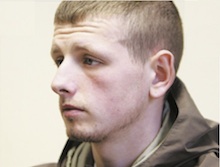
A vulnerable teenager in west Belfast was recruited by the PSNI as an informer and then put under pressure to plant explosives and weapons on his neighbours, it has emerged.


The terrified nineteen-year-old Thomas Boyle, who has a history of self-harm, came forward to the media with a shocking account of PSNI abuse and illegality.

He said he was recruited last year after being arrested for shoplifting. He was then forced to plant tracking devices under the cars of prominent ‘dissident’ republicans at the behest of PSNI Special Branch and was even asked to plant a gun in a neighbour’s car and Semtex explosive in another neighbour’s shed.

Boyle confessed to his activities alter becoming afraid that he was “in over his head”.

Security sources are reported to have confirmed that Boyle had been working for the PSNI since last year.

The west Belfast teenager said he was prompted to confess after becoming afraid he was being coerced into carrying out ever more dangerous activities by his police handlers.

“They told me they wanted me to break into a car of a man who lived near me and plant a gun under the driver seat,” he said

“They said smash the side window and make it look like I was trying to steal [the car] and then leave the gun so they would find it when investigating the break-in.

“I met one man a few times at the top of the Whiterock [Road]. He gave me money and mobile phone SIM cards.

“He told me they were going to give me Semtex and wanted me to put it the garden shed of a man.

“If I didn’t they said I was going to be done with making hoax bomb calls and would get seven years [in prison]. They said they could pin other charges on me any time they wanted.

“It just all got too much and I told my ma about what had been happening.”

He was also ordered to try and join the dissident group Oglaigh na hEireann so he could report back on their activities. In return, the PSNI promised him thousands of pounds -- although he was only ever paid fifty pounds.

Oglaigh na hEireann said it had interrogated Boyle and released him over the weekend. PSNI and British army helicopters had been visible over west and north Belfast as they undertook a massive search for their teenage informant.

In a statement the group said the teenager had contacted them willingly.

“He is alive to tell his tale for a number of specific reasons, including the fact that he is quite plainly vulnerable and has fully admitted his covert activities,” it said.

The breakaway IRA group warned other informers to come forward.

“If we discover other agents in the future then the penalty will be death,” its statement read.

Sinn Fein Policing Board member Alex Maskey said that any use of informers against republicans should be ‘open to thorough scrutiny’.

“Using informers would be standard practice for police services the world over,” he said.

“However, we obviously have a polluted history of politicised activity which has often seen the use of agents provocateurs.

“I have no knowledge of this particular case but there has to be proper protocol and any allegations such as this need to be scrutinised,”he said.

Suicide prevention campaigner Phil McTaggart said the use of vulnerable young people as informants by the PSNI was a “disgrace”.

“When you have a young person who is already vulnerable and at a low ebb and put them under this type of enormous pressure then you leave them with very limited options.”

He advised any young person who is in a similar predicament as Boyle to seek help.

Carl Reilly of the Republican Network for Unity warned that people may have been charged by the PSNI on the back of evidence planted by an informer.

“Once again the re-branded RUC has destroyed its carefully contrived facade of normal civil policing by manipulating a young person to become an Informer and spearhead a British dirty tricks campaign in an attempt to whip up anti-republican hysteria in Belfast,” he said.

Throughout the recent conflict, the RUC and MI5 had blackmailed “scores” of agents to undermine working-class communities and the republican struggle, he said,

“This disturbing affair highlights the nefarious tactics used by Crown Forces to set up Irish Republicans for arrest, imprisonment or worse.”

He called for an independent investigation.

“Given the above revelations, the Republican Network for Unity ask nationalists and republicans to re-examine their support for the re-branded RUC, as it is clear they are not capable of the changes many believed were possible.”

Sunday, 8 February 2015

END OF EMPIRE Moneyweek


My own personal rock bottom was in high rise, Ballymun, Dublin, in a totally unfurnished flat. I was totally isolated from the reality around me and desperate. I was constantly alternating in my sleep, with dreams of my absent children and nightmares of nihilism and the abyss. I was sleeping on the bare frame of a steel bed, without a mattress, covered by wallpaper, torn from the walls, to keep myself warm in an Irish winter. I had walked among the high rise flats, an Irish country boy, totally isolated and alone, with the lights of each apartment, like beacons from alien worlds, from which I was absolutely isolated.The aeroplanes were coming in low into Dublin Airport, like spacecraft from other planets, as I had never been on one in my life of 35 years. The Provos were no longer part of the solution, neither was family or community. The alcohol was no longer doing the trick of escape. I was in no man's land, a very vulnerable, lonely place to be, as anyone who has been there, can testify. Well, desperate people, do desperate things, and I made the decision to do a hold-up the following day, either way, it couldn't get worse, company in gaol or a good piss-up. Now I wouldn't recommend jail to my worst enemy, freedom is everything to me but I met some of the nicest people, I have ever known, in there. Anyway, this rock bottom was to lead me eventually, to a community of people, just like myself, where the brutal truth about our way of life, our selfishness, self-centredness and self-will, had led us. It was reflected by people around me, who were mirrors of myself, sharing their own experience, from which I could not avoid identifying myself. With the help of the stardust, both without and within, I found personal freedom and learned how to fly, which is conditional on sharing it. Somehow, I feel Ireland is on the threshold of freedom too, if we remember the lessons of our experience and our history, some of which is in the second article below. As a country boy, my first lesson as a child, was that people need land, to be self-supporting, and whether we like it or not, we are interdependent on a community around us, where we can barter a pinch of salt, or a cup of sugar, or tea, or whatever, not forgetting the goats, of course.


February 07, 2015 "ICH" - I have to say that I personally don't recall anything quite like what happened today in Munich. For one thing, I detected a tone in Lavrov's words which I had not felt so strongly before. Of course, Lavrov was calm, composed and polite. But this time I also felt an immense sense of disgust on his part for the audience he was addressing and for what these so-called 'leaders' had done over the past decade. In essence Lavrov told them "Putin already explained everything to you in 2007 but you have not listened to a word he had to say - and now are you really happy with the result?". Then came the Q&A and things only got worse.

Frankly, I am wondering whether what happened today was some kind of setup to try to provoke Lavrov or whether the folks who asked questions are just simply terminally stupid. Listening to them, I though that was was witnessing an "intellectual Conchita Wurst" moment: terminally pretentious and degenerate Europeans who are completely devoid of any sense of reality, truth or even basic decency. Even the very thin veneer of European manners melted away when the German reporter began laughing at Lavrov's mention of the UN Charter. I can only marvel at Lavrov's mental control and thank God that he did not make me a diplomat as I felt like punching my computer screen listening to these clowns.

If you look at the Saint George Ribbon on the left side of the page you will see that above I wrote "Russia stands for freedom". I am beginning to realize that this is a rather superficial formulation. On a much deeper level, Russia stands for truth both as a logical category and a moral principle. The western 'elites' stand for the exact opposite of that, they are the embodiment of un-truth in the logical and moral sense. And that chasm was evident in today's face à face between Lavrov has his "western colleagues".

Dishonesty, intellectual and moral, has been elevated to an ontological principle and foundation of the modern western political thought and culture, it is what these societies do best and all they can do. Not only are "right and wrong" gone in a moral sense, they are now also gone in a logical sense. Something both deeply immoral and completely absurd can now be elevated to an axiomatic status and then be used as "the measure of all things".

Yet again and again, I come to the conclusion that what we are seeing here is truly a deep civilizational clash between two civilizational realm who have grown so far apart as to make them virtual extraterrestrial aliens to each other. Lavrov would have had a much better experience speaking to some little green men on another Galaxy, these the people he addressed today in Munich.

I am going to say something which will trigger the usual spike in hate mail and outraged comments, but what I see today is struggle very similar to the one which opposed the Pharisees and Christ 2000 years ago. You could also refer to it as a struggle between "Conchita Wurst vs Saint George". Or "Hizb Shaitan vs Hizb Allah". These are all metaphors for the same reality. And since what is at stake today is really the future of the entire international order you can say that we are living one of the most dangerous and crucial moment in history.

I don't see how this conflict could be resolved by negotiations. On a short-term, tactical level, yes, sure. But fundamentally this is an existential struggle for both sides and only one will be left standing. We might well have reached the kind of historical nexus which will determine the future (or lack thereof) of the entire human race. This is the conclusion I have personally come to.

Now feel free to ridicule me for being over the top - I call it as I see it.

Cheers and kind regards,

The Saker


Ireland:When the bishop's blessed the blueshirts


Irish Conservatism too has its Fascist skeletons in the cupboard, even more so than the Conservative Party. Ireland also has it's own peculiar version of Holocaust denial where it is claimed that the Blueshirt movement was not Fascist usually on the basis of criteria so strict one could conclude that no Fascist ever existed anywhere. The Blueshirts were a continuation of Civil War politics but they were also part of European Fascism, the Irish strain of a European disease. The development of the Blueshirt movement came as Cumann Na nGaedheal, victors in the '22 to '23 Civil War handed power over to the vanquished Fianna Fail in 1932. They emerged out of the Army Comrades Association, a Blueshirted veterans group which claimed in 1931 a membership of 100,000. In 1933 the recently fired ex-police commissioner Eoin O'Duffy became leader of the A.C.A. (now named the National Guard) and began to move it in a Fascist direction. O'Duffy had been a close college of Michael Collins during the War of Independence and Civil War and had become notorious among Unionists for making a speech in South Armagh in which he promised to "Give 'em the lead", and he was also hated by Republicans for carrying out several atrocities against them during the Civil War as well as much repression against them afterward. One of the mainsprings of the Blueshirt movement was an anti-Communist paranoia, they believed that DeValera, the Fianna Fail leader was Ireland's answer to Kerensky and that waiting in the shadows for him to fall was a Bolshevised I.R.A. . This line of thinking was justified to a degree, Fianna Fail were spewing a sort of pseudo-radical populism at the time and they were being supported by an increasingly left-wing I.R.A.. In 1931 a new political wing of the Republican Movement was established entitled Saor Eire, as an example of the leftward drift within Republicanism here follows excerpts of it's draft constitution:

"To abolish, without compensation, landlordism in lands, fisheries and minerals"
"To make the national wealth and credit available for the creation and fullest development of essential industries and mineral resources, through Industrial Workers Co-operatives, under State direction and management, workers to regulate internal working conditions" (1)
As Blueshirt James Hogan put it:
"It was the growing menace of the Communist I.R.A. that called forth the Blueshirts as Communist Anarchy called forth the Blackshirts in Italy" (2)
However mostly when they thought of the Red Menace they were simply believing their own exaggerated propaganda. Now who was responsible for this Red tide? Why the international Jewish/Communist/Banking conspiracy of course. As a writer in the Blueshirt journal put it: "The founders of Communism were practically all Jews. This can scarcely be a mere coincidence. It may appear singular that Marx, Engels, Lasalle and Ricardo were all Jews" (3)
The Blueshirts saw themselves as part of the European Fascist movement, as a leading Cumann na nGaedheal member John A. Costello, who was later leader of Fine Gael and Prime Minister of the Irish Republic said in the Dail:
"The Blackshirts have been victorious in Italy and Hitler's Brownshirts have been victorious in Germany, as assuredly the Blueshirts will be victorious in Ireland." (4)
This was not so and much of the credit must go to the people who fought them tooth and nail. O'Duffy planed a Mussolini style March on Rome for Dublin in August 1933 ostensibly to commemorate Michael Collins, Arthur Griffith and Kevin O'Higgins. The Government banned the march and units of the I.R.A. lay in wait to ambush it as it passed over O'Connell bridge. O'Duffy backed down and cancelled the march. The Blueshirt movement was now marginalised, O'Duffy had failed to live up to his hard man rhetoric. Later that year the Blueshirts merged with Cumann Na nGaedheal, the Farmers Party and the National Centre Party to form Fine Gael with O'Duffy as it's leader. O'Duffy was ousted from the leadership after making a speech in which he proposed to invade Northern Ireland.

The Spanish Civil War

O'Duffy re-emerged onto the national stage in 1936 to form a seven hundred strong Irish Brigade to fight for Franco in Spain's Civil War, this effort was vigorously supported by the Catholic Church. The Dean of Cashel endorsed it stating that:
"The Irish Brigade have gone to fight the battle of Christianity against Communism. There are tremendous difficulties facing the men under O'Duffy and only heroes can fight such a battle" (5)
The aforementioned Saor Eire had by contrast been condemned by the Bishops as:
"a sinful and irreligious organisation" (6)
They pressurised the Government into outlawing it.
Cardinal Macrory Archbishop of Armagh and primate of all-Ireland, while addressing seven thousand pilgrims in Drogheda at the shrine of blessed Oliver Plunket - a preserved, severed head with reputed magical powers, nailed his colours to the mast and expressed his support for Franco:
"There is no room any longer for any doubt as to the issues at stake in the Spanish conflict. It is not a question of the Army against the people, nor the Army plus the aristocracy and the Church against Labour. Not at all. It is a question of whether Spain will remain as she has been for so long, a Christian and Catholic land or a Bolshevist and anti-God one" (7)
Newspapers and in particular the Irish Independent took a pro-Franco line:
"It is well that the line of demarcation in Spain should be made clear. On the one side is a so-called Government which has abandoned all the functions of government to a Communist Junta bent upon the destruction of personal liberty, the eradication of religion, the burning of churches, and the wholesale slaughter of clergy. On the other side are the Patriot Army gladly risking liberty, property, and life, in defense of their faith-Fighting the same fight that our Irish ancestors fought for centuries for the same cause" (8)
Unsurprisingly the multitude of widely read Church based publications were even more vociferous in their praise for Fascism.
The main body organising support for Franco was the Irish Christian Front ( I.C.F.) a broad based pressure group which , in the early months of the civil war , organised massive demonstrations and had , initially at least , more widespread support than the Blueshirts . The Front's founders were Patrick Belton , who was formerly a T.D. for both Fianna Fail and Fine Gael as well as being an ex-Blueshirt , and Alexander McCabe , formerly elected for both Sinn Fein (pre-1922) and Cumann Na nGaedheal and later to be a member of Eoin O'Duffy's pro-nazi People's National Party. At one I.C.F. rally in Cork in September 1936 40,000 people assembled to hear Monsignor Patrick Sexton , dean of Cork , blame the civil war on "a gang of murderous Jews in Moscow" (9) while beside him stood Alfred O'Rahilly , the future president of the University College of Cork and Douglas Hyde , the future president of the Irish state who currently has his head on the £50 note.

Oliver J. Flanagan and Fine Gael

In 1943 elected as an independent to the Dail for the Laois-Offaly area was one Oliver J. Flanagan . In one of his earliest parliamentary speeches he said:
"There is one thing that Germany did and that was to rout the Jews out of their country. Until we rout the Jews out of this country it does not matter a hair's breadth what orders you make. Where the bees are there is honey, and where the Jews are there is money." (10) He was soon to join Fine Gael and remained a T.D. for them until 1987 briefly becoming Minister for Defence in the late 1970's .

Fianna Fail and Alleanza Nazionale

Fianna Fail's members of the European Parliament are part of the same group, the Union for Europe of the Nations, as the neo-Fascist , post-Fascist, or just plain-Fascist Italian party the Alleanza Nazionale (National Alliance).Gianfranco Fini , leader of the National Alliance , describes Mussolini as his "political master" and as "the greatest Italian politician".


(1) Quoted in 'The I.R.A.' by Tim Pat Coogan page 84.

(2) Quoted in 'Fighting Talk' issue 6 pages 16 and 17.
(3) Ibid.
(4) Ibid.
(5) Ibid.
(6) Quoted in 'Ireland since 1870' by Mark Tierney page 293.
(7) Quoted in 'Frank Ryan' by Sean Cronin page 79.
(8) Ibid. page 77.
(9) Quoted in 'The Spanish Civil War and Irish Politics' by Mick Cronin
(10) Quoted in 'This Great Little Nation' by Gene Kerrigan and Pat Brennan page 107.


To the Free Earth web site


This page provided as part of the Revolt collection


[Main Index][What's New][Other Campaigns]
[Email lists] [Irish Labour history]


a a
A a